
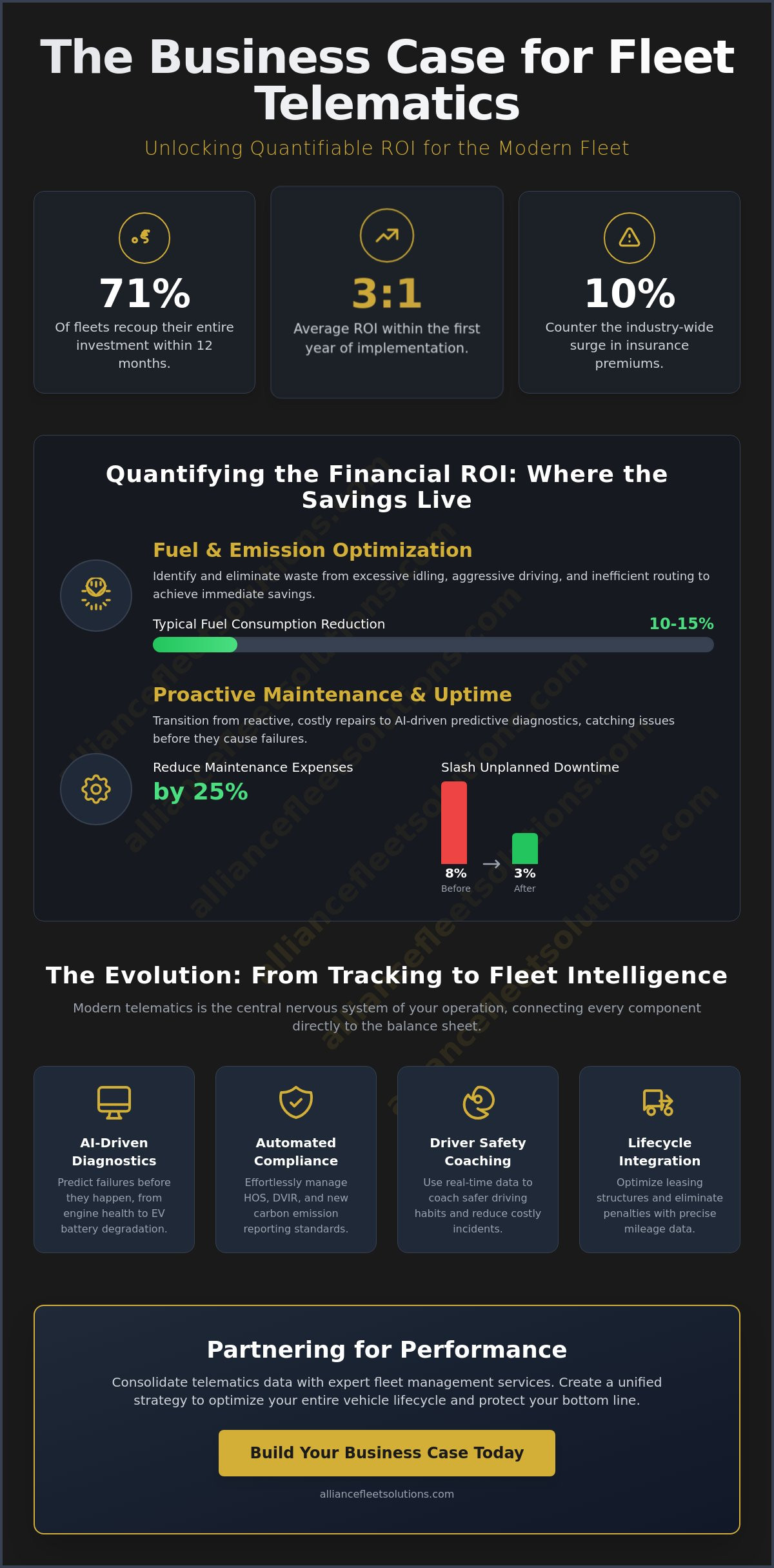
Did you know that 71% of fleets recoup their entire telematics investment within just 12 months? In an industry where the average ROI is 3:1 within the first year, building a business case for fleet telematics is no longer a luxury for large carriers. It’s a survival strategy for any operation facing the 10% surge in insurance premiums seen this year.
You’re likely dealing with the stress of rising fuel costs and the lack of visibility into asset health that leads to expensive, unplanned downtime. It’s difficult to justify new technology when soft benefits like safety feel hard to measure on a balance sheet. We understand that you need more than just tracking. You need a strategic partner to help protect your bottom line. This article provides a clear roadmap to quantify the financial and operational value of telematics to help you secure executive buy-in and slash your total cost of ownership. We’ll break down the 2026 ROI framework, from reducing maintenance expenses by 25% to leveraging new safety regulations for lower premiums.
Key Takeaways
- Modern telematics has evolved into a central nervous system for your fleet, utilizing AI-driven diagnostics to monitor everything from engine health to EV battery performance.
- Strengthening your business case for fleet telematics requires moving beyond simple tracking to quantify direct savings in fuel waste and the reduction of reactive maintenance costs.
- Discover how real-time mileage and usage data can help you choose the right leasing structure while eliminating expensive end-of-lease penalties.
- Successful implementation starts with a clear roadmap of KPIs, such as specific targets for idling reduction and accident prevention, to ensure rapid ROI.
- Consolidating your telematics data with physical fleet management services creates a unified strategy that optimizes the entire vehicle lifecycle.
The Evolution of Telematics: Why the Business Case Has Changed for 2026
The era of passive tracking has ended. By 2026, the global fleet management market is projected to reach $30.1 billion, reflecting a massive shift in how companies view their vehicles. A modern fleet telematics system acts as the central nervous system of a business, connecting every mechanical component directly to the balance sheet. This evolution has transformed the business case for fleet telematics from a simple security feature into a non-negotiable requirement for operational viability. Managers no longer just watch dots move across a map; they manage a flow of real-time intelligence that dictates the health of the entire organization.
The focus in 2026 has shifted to AI-driven predictive diagnostics and specialized monitoring for mixed-fuel fleets. These systems don’t just report location; they analyze how an EV battery is degrading over time or when a diesel particulate filter requires cleaning before it triggers a derate. This level of insight is the primary driver for achieving a lower total cost of ownership. By integrating this data into your vehicle lifecycle, you transition from simply maintaining assets to optimizing a high-performance business machine.
From Reactive to Proactive Fleet Management
Waiting for a dashboard warning light is an expensive way to run a business. Real-time data allows you to intercept minor mechanical issues before they spiral into catastrophic failures. With 5G connectivity now standard, the speed of data transfer enables instant route optimization and real-time driver coaching. You’re no longer looking at historical reports to see what went wrong last week. You’re making decisions based on cab conditions and engine performance as they happen. This shift to proactive management is why many fleets see downtime drop from an average of 8% to just 3% after implementation.
Addressing the Compliance Landscape
The regulatory environment in 2026 is significantly more complex. In the EU, newly registered heavy vehicles must now include Event Data Recorders and advanced braking systems. In the U.S., the FMCSA is finalizing ELD rule revisions that prioritize technical modifications and digital audits. Telematics platforms automate the reporting for Hours of Service and DVIR, removing the risk of human error that leads to heavy fines. Additionally, new carbon emission reporting standards require precise data on fuel burn and idling. A robust telematics platform handles this documentation automatically, ensuring your fleet remains compliant while protecting cybersecurity in an increasingly connected environment.
Quantifying the Financial ROI: Where the Savings Live
Telematics isn’t just a cost center; it’s a revenue protector. When you build a business case for fleet telematics, you’re highlighting how data translates into immediate liquid savings. Research shows that 71% of fleets recoup their entire investment within 12 months. This rapid ROI isn’t magic. It’s the result of gaining precise control over the three largest variable costs in any operation: fuel, maintenance, and insurance. By moving from estimates to exact data, you’re able to identify exactly where your budget is leaking and plug those holes in real time.
The U.S. Department of Transportation highlights several benefits of telematics for trucking fleets, specifically noting how integrated data reduces the frequency of high-cost safety incidents. Beyond safety, the financial impact extends to labor efficiency. Automating administrative tasks like HOS logging and dispatching allows your team to focus on moving freight rather than pushing paper. This operational clarity is the backbone of a high-performance business, ensuring that every hour paid results in maximum productivity.
Fuel and Emission Optimization
Fuel remains a massive variable, and telematics systems typically reduce consumption by 10% to 15% within the first year. This happens by identifying excessive idling, aggressive acceleration, and inefficient routing. Small changes across a 50-vehicle fleet can lead to five-figure annual savings. Integrating fuel management programs with real-time telematics data allows you to spot fuel card fraud and ensure every gallon purchased is used productively. For those managing mixed-fuel fleets, these systems also monitor EV charging efficiency and battery health to prevent premature degradation.
Extending Asset Lifespan and Resale Value
Predictive analytics can reduce your maintenance costs by 25%. By leveraging engine diagnostics, you can address a failing sensor before it causes a roadside breakdown. This proactive approach also protects your vehicle remarketing value. When it’s time to cycle out an asset, having a verified digital history of every oil change and repair proves a “clean bill of health” to buyers. You can also maximize the ROI of professional upfitting by monitoring how specific equipment, like liftgates or auxiliary power units, is actually used in the field. If you’re looking to turn these insights into a concrete plan, a strategic fleet assessment can show you exactly where your current savings are hiding.
Operational Synergy: Integrating Telematics into the Leasing Lifecycle
Most operators view telematics as a tool for driver oversight, but the true power of this technology lies in how it reshapes the capital structure of your fleet. Integrating real-time data into the leasing lifecycle allows you to move away from guesswork when selecting between open-end and closed-end leasing structures. This strategic alignment is a critical pillar of a comprehensive business case for fleet telematics. By matching the right lease type to actual vehicle usage patterns, you protect your cash flow and eliminate the expensive surprises that often surface at the end of a contract.
If a vehicle consistently runs high mileage, a closed-end lease might result in heavy overage penalties that erase your profit margins. Telematics provides the odometer accuracy needed to pivot your strategy or rotate vehicles within your fleet before those penalties trigger. Conversely, for specialized equipment, data-driven insights help you identify which specifications underperform in the field, allowing for smarter vehicle acquisition in the next cycle. According to a guide from the U.S. Department of Energy, the operational efficiency gained through these systems directly impacts the long-term viability of fleet investments. This efficiency is further amplified when data drives proactive maintenance management, ensuring leased assets remain in peak condition to avoid end-of-term reconditioning fees.
Telematics and Leasing Flexibility
Mid-sized businesses often struggle with the burden of fixed fleet costs during seasonal shifts. Using real-time usage data supports a fractional fleet management model, where you can scale your operational intensity based on actual demand. You can dynamically adjust your fleet size by monitoring which vehicles are underutilized and identifying those that are sitting idle too often. This level of connectivity reduces the financial risk of hidden downtime. You’ll know exactly when a vehicle is technically available but mechanically compromised, preventing it from becoming a liability on the road.
Strategic Remarketing and Disposal
When the time comes to cycle an asset out of your fleet, your telematics logs serve as a verifiable “Carfax for business fleets.” This historical record of careful driving habits and on-time service can significantly boost resale value during vehicle remarketing. Data also helps you identify the exact tipping point for disposal. Instead of replacing a truck based on a generic calendar schedule, you can replace it when the data shows a consistent spike in critical maintenance alerts that outpaces the vehicle’s earning potential. Aligning these disposal cycles with real-time asset health ensures you exit the asset at the peak of its value.
Overcoming Implementation Hurdles: A Roadmap for Success
The transition from a manual operation to a data-driven fleet isn’t always seamless. Even the most compelling business case for fleet telematics can stall if you don’t address the cultural and technical friction of implementation. Success requires a structured approach that prioritizes quick wins and clear communication. By following a phased roadmap, you can prove the value of the system to both your drivers and your executive board without overwhelming your daily operations.
- Step 1: Define clear KPIs. Start with measurable targets, such as reducing idling by 15% or decreasing at-fault accident claims by 20%. These specific benchmarks make the ROI undeniable.
- Step 2: Select a platform that integrates. Your telematics shouldn’t live in a vacuum. Ensure it connects directly with your existing fuel management and maintenance programs to create a unified data stream.
- Step 3: Launch a pilot program. Test the hardware and software on a subset of your fleet. This allows you to iron out technical kinks and gather internal success stories before a full rollout.
- Step 4: Establish a Driver Safety Program. Shift the focus from punishment to protection. Use the data to reward high-performing drivers and provide targeted coaching where it’s actually needed.
- Step 5: Continuously audit data. Technology evolves. Regularly review your reports to ensure the system is still driving business decisions rather than just collecting digital dust.
Winning the ‘Big Brother’ Debate
Driver pushback is the most common hurdle in telematics adoption. The key is to frame the technology as a tool for driver protection rather than surveillance. When a driver is involved in a “he-said, she-said” incident, telematics and AI video evidence provide the exoneration needed to protect their career and your company’s reputation. Implementing gamification and incentive programs also turns safety into a competition. When drivers see that high safety scores lead to bonuses or recognition, they become partners in your success rather than skeptics of the system.
Avoiding Data Fatigue
You don’t need to see every data point to run a successful fleet. Data fatigue happens when managers are buried under hundreds of irrelevant alerts. Use customizable dashboards that highlight only critical exceptions, like engine fault codes or severe safety violations. If your team is already stretched thin, leveraging fractional fleet management can bridge the gap. These experts handle the heavy lifting of data analysis, delivering only the actionable insights you need to optimize your operation. This ensures your team stays focused on the road while we keep an eye on the numbers.
Partnering for Performance: The Alliance Fleet Solutions Advantage
Most software providers hand you a login and leave the heavy lifting to you. Alliance Fleet Solutions takes a different path. We bridge the gap between digital insights and physical wrenches by integrating telematics directly into your leasing and maintenance workflows. This unified approach solidifies your business case for fleet telematics because it removes the burden of data interpretation from your desk. You aren’t just buying a GPS tool; you’re investing in a strategic asset that drives efficient fleet operations. By consolidating vehicle acquisition, upfitting, and maintenance management under one roof, we ensure that every byte of data leads to a concrete business result.
Dealing with four different vendors for leasing, maintenance, upfitting, and telematics creates data silos that lead to missed opportunities. Alliance breaks those silos. When your telematics system flags a critical engine fault, our maintenance team is already alerted. We can have the parts ordered and a replacement vehicle ready before your driver even returns to the yard. This level of synergy is what separates a simple service provider from a strategic partner. We don’t just fix trucks. We optimize your entire financial performance by using data to guide remarketing timing and lease structure adjustments, moving the fleet from a necessary expense to a competitive advantage.
Fractional Management: Expert Oversight Without the Overhead
Mid-sized fleets often lack the budget for a full-time data analyst. Our fractional fleet management model provides expert oversight without the permanent salary cost. We monitor your alerts, identify trends in aggressive driving, and schedule repairs before a breakdown occurs. This turns raw data into a proactive maintenance schedule that we manage on your behalf. You get the technology ROI without the administrative headache. This partnership ensures your internal staff can focus on core operations while we handle the technical upkeep and compliance reporting that keeps your business running smoothly.
Custom Upfitting Informed by Real-World Data
One of the most overlooked benefits of telematics is how it informs your next vehicle build. We use historical performance data to understand exactly how your equipment is used in the field. If your liftgates are cycling more frequently than anticipated or your auxiliary power units are underutilized, we adjust your future vehicle specs accordingly. This ensures every upfitted asset is perfectly optimized for its industry role. We help you avoid the cost of over-specifying equipment you don’t need or the frustration of under-equipping your team for the job at hand. This data-driven approach to upfitting is a key component of a strong business case for fleet telematics, as it ensures your capital investments are backed by hard evidence of field performance.
Securing Your Fleet’s Financial Future
The decision to implement advanced data solutions isn’t about following a trend. It’s about protecting your operation against the rising costs and regulatory shifts of 2026. By integrating real-time intelligence into your leasing, maintenance, and upfitting cycles, you transform your fleet from a cost center into a strategic business asset. You’ve seen how data-driven decisions can slash fuel waste and prevent catastrophic mechanical failures. Now it’s time to put those insights into practice.
Building a strong business case for fleet telematics requires more than just software. It requires a partner who understands the high-stakes nature of logistics and the mechanics of heavy-duty equipment upkeep. Alliance Fleet Solutions specializes in B2B fleet lifecycle management. We offer expert fractional management services that turn raw data into actionable results. Our team provides integrated leasing, upfitting, and telematics solutions designed to maximize your uptime and ROI.
We’re here to ensure your operation stays reliable, safe, and profitable for years to come.
Frequently Asked Questions
What is the typical ROI timeline for fleet telematics?
Most commercial fleets achieve a full return on investment within 12 months of implementation. This rapid payback is a cornerstone of any business case for fleet telematics. While initial hardware costs exist, the immediate reduction in fuel consumption and unauthorized vehicle use provides a steady flow of savings. Many operators report a 3:1 return in the first year as predictive maintenance prevents high-cost failures.
How does telematics specifically help reduce insurance premiums?
Insurance carriers offer lower rates to fleets that provide objective proof of safe driving behavior. By using AI-enabled dash cams and telematics, you can reduce at-fault accident claims by up to 40%. This data allows you to negotiate from a position of strength, showing insurers that your drivers are lower risk than the industry average. Proactive coaching based on this data further lowers your risk profile over time.
Can telematics be integrated into an existing fleet leasing agreement?
You can integrate telematics into almost any existing lease structure to improve asset oversight. This integration is often a critical step in building a strong business case for fleet telematics. Monitoring real-time mileage helps you avoid expensive end-of-lease overage penalties in closed-end agreements. It also ensures you’re making informed decisions about vehicle rotation to keep wear and tear balanced across the entire fleet.
What are the most important KPIs to track when building a business case?
Focus on idling time, harsh braking events, and diagnostic trouble codes. These three metrics have the most direct impact on your bottom line and operational efficiency. Reducing idling time by just 10% can save thousands in fuel costs per year across the fleet. Meanwhile, tracking engine health prevents minor sensor issues from turning into expensive engine replacements or long-term downtime.
How do we handle driver privacy concerns during implementation?
Transparency is the most effective way to manage privacy concerns. Frame the system as a tool for “Driver Protection” rather than surveillance. Explain how telematics data and video evidence can exonerate a driver after an incident. When you use safety scores to trigger rewards and bonuses, drivers begin to see the technology as a benefit rather than a burden that monitors their every move.
Is telematics only for large fleets, or do small businesses benefit too?
Small businesses often see the most dramatic impact from telematics because they don’t have room in the budget for waste. Even a fleet of five vehicles can lose significant revenue to inefficient routing or unplanned downtime. The technology provides small operators with the same technical authority and oversight typically reserved for national carriers, allowing them to compete more effectively on service and price.
How does telematics improve vehicle remarketing and resale value?
Telematics creates a comprehensive digital service history that acts as a “clean bill of health” for potential buyers. When you can prove that a vehicle was never driven aggressively and received every scheduled oil change on time, you can command a higher price. This verified data removes the uncertainty that usually lowers the value of used commercial assets, ensuring you get the maximum return at disposal.
What is the difference between OEM telematics and third-party solutions?
OEM solutions are built into the vehicle at the factory but are usually limited to a single manufacturer’s data. Third-party solutions provide a unified platform for mixed-brand fleets and integrate more deeply with specialized equipment. It’s essential to use a third-party system if you need to monitor custom upfitting or coordinate maintenance across various vehicle makes from a single dashboard.