
Recent industry data reveals that fuel costs can consume up to 60% of your total operating budget, yet many managers still rely on crumpled paper receipts and manual spreadsheets. You’re likely tired of the monthly sticker shock when the bill arrives or the nagging suspicion that slippage is draining your bottom line. It’s frustrating to watch your profits evaporate through unpredictable expenses and suspected fuel card fraud. Implementing robust fuel management programs isn’t just about tracking gallons. It’s about reclaiming expert control over your company’s most volatile variable through an alliance of technology and strategy.
We’ll show you how to transform fuel from a chaotic expense into a predictable strategic asset using data-driven management. You’ll learn how to eliminate manual data entry errors and stop fraud before it impacts your 2026 profit margins. This guide explores the latest mobile technologies and proactive optimization strategies that ensure every drop of fuel drives your business forward. We’ll break down the transition from reactive spending to a streamlined, automated system that maximizes your return on investment and keeps your fleet moving efficiently.
Key Takeaways
- Shift from passive tracking to proactive energy management to mitigate inflation and stabilize your 2026 fleet expenses.
- Uncover how to reclaim up to 15% of your fuel budget by identifying “hidden leaks” such as fraud, theft, and inefficient driving habits.
- Compare hardware, software, and service tiers to select the right fuel management programs for your specific fleet size and operational needs.
- Follow a 5-step strategic framework to implement new fuel protocols seamlessly while ensuring driver transparency and buy-in.
- Align your fuel data with vehicle leasing choices to optimize your total cost of ownership and maximize long-term fleet uptime.
What are Fuel Management Programs and Why Do They Matter in 2026?
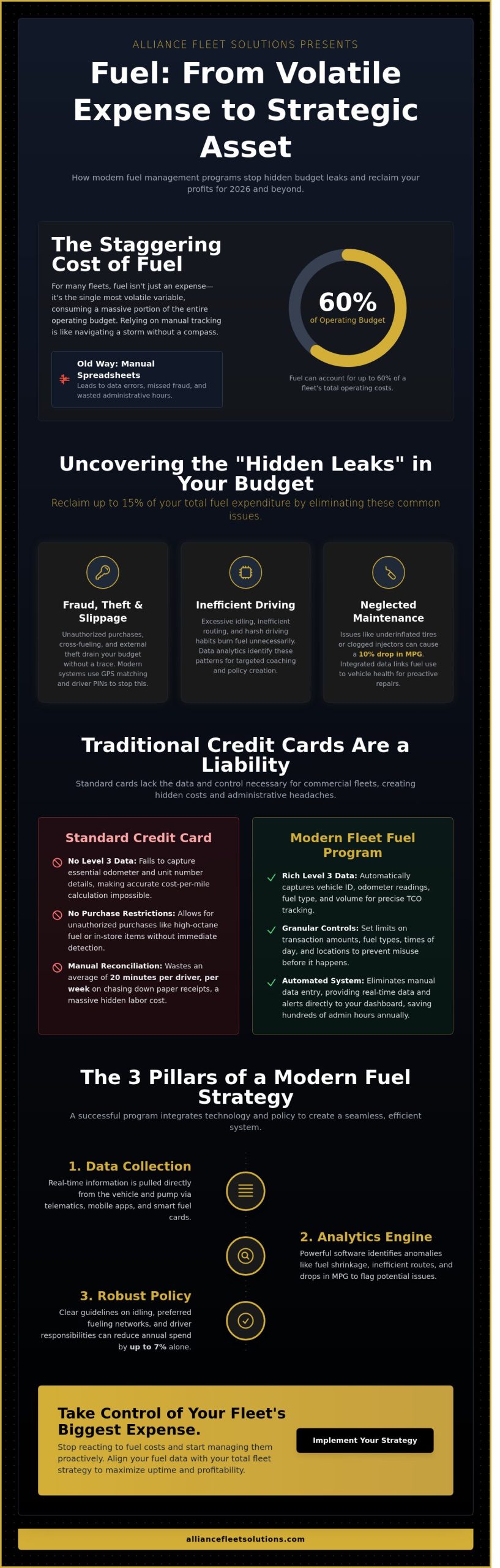
Fuel remains the most volatile variable in a fleet’s budget, often representing up to 60 percent of total operating expenses. A Fuel management system is more than a simple tracking tool; it’s a sophisticated combination of hardware, software, and corporate policy designed to maximize every unit of energy consumed. By 2026, the industry has moved past reactive bookkeeping. Managers now rely on fuel management programs to act as a proactive defense against high inflation and fluctuating energy markets. These programs provide the technical authority needed to control the Total Cost of Ownership (TCO) for every vehicle in the line-up.
Managing a fleet in the current climate requires a shift in perspective. It’s no longer just about the price per gallon. It’s about total energy efficiency across a mixed-energy landscape. As businesses integrate electric vehicles alongside traditional diesel and gas units, the complexity of tracking energy consumption increases. Fuel management programs streamline this transition by consolidating kilowatt-hour (kWh) data and traditional fuel transactions into a single, actionable dashboard. This unified view ensures that uptime stays high while energy waste is eliminated.
The Core Components of a Modern Fuel Strategy
A dependable strategy relies on three functional layers. Data collection starts the process, using telematics and mobile apps to pull real-time information directly from the vehicle and the pump. Next, analytics engines identify anomalies like fuel shrinkage or inefficient routing. Finally, a robust policy provides clear guidelines for drivers. Establishing strict rules for idling and preferred fueling networks can reduce annual fuel spend by 7 percent based on 2025 industry case studies. This structured approach builds an alliance between drivers and management to reach mutual efficiency goals.
Why Traditional Credit Cards Fail Commercial Fleets
Standard credit cards are a liability for serious logistics operations. They fail to capture Level 3 data, which includes essential metrics like odometer readings and specific unit numbers. Without this information, calculating an accurate cost-per-mile is impossible. Additionally, these cards lack granular purchase restrictions. A driver can easily use a standard card for unauthorized in-store purchases or premium fuel upgrades without immediate detection. This leads to an administrative nightmare. Manual receipt reconciliation takes an average of 20 minutes per driver each week, a hidden cost that erodes profit margins and creates unnecessary friction in the back office.
Identifying and Eliminating the ‘Hidden Leaks’ in Your Fuel Budget
Fuel budget leaks often hide in plain sight, masquerading as standard operating costs. Most fleets lose capital through three primary channels: theft, driver behavior, and neglected maintenance. In unmanaged environments, slippage accounts for up to 15% of total fuel expenditure. This isn’t just a rounding error; it’s a direct hit to your bottom line that compounds over every mile driven. While many managers rely on retroactive spreadsheets to track these costs, a spreadsheet only tells you what you already lost. A strategic approach to fuel management programs identifies these leaks in real time, allowing for immediate correction.
Vehicle health plays a decisive role in fuel economy. A truck with a clogged fuel injector or misaligned tires can see a 10% drop in MPG, yet these issues often go unaddressed until a component fails. By integrating maintenance data with fuel consumption metrics, you can spot performance dips before they become mechanical crises. A proactive approach to maintenance management for business fleets ensures that vehicle health issues are caught early, directly protecting your fuel economy and reducing total cost of ownership. Choosing the right Types of Fleet Fuel Management Systems provides the visibility needed to link mechanical uptime with fuel efficiency. When you partner with a dedicated fleet expert, you move from guessing why costs are rising to knowing exactly how to lower them.
Combating Fuel Slippage, Theft, and Fraud
Slippage occurs when fuel funds are diverted through theft, cross-fueling, or unauthorized card use. Modern fuel management programs eliminate this by using GPS matching to verify that the vehicle is physically at the pump during a transaction. Implementing secure driver PINs and RFID tags ensures that only authorized equipment receives fuel. If a transaction occurs ten miles away from a truck’s logged location, real-time alerts notify management instantly, stopping fraud before the tank is even full.
The High Cost of Excessive Idling and Route Inefficiency
Driver behavior often creates “vampire” idling habits that drain resources. Industry data confirms that one hour of idling consumes approximately one gallon of fuel in heavy-duty diesel engines. Telematics software identifies these specific patterns, allowing managers to coach drivers and reduce unnecessary burn. Additionally, poor route planning leads to dead-head miles, which are miles driven without a load. By optimizing routes and reducing idle time, fleets frequently recover 5% to 8% of their fuel budget without changing their hardware or fuel providers. This proactive oversight ensures your fuel is used for progress, not just for keeping the heater running.
Comparing Fuel Management Solutions: Hardware, Software, and Service
Selecting the right tier for fuel management programs depends on your operational scale and technical readiness. Small fleets with 5 to 15 vehicles often find success with basic fuel cards that provide purchase controls and simplified accounting. Mid-sized fleets with 20 to 100 units require integrated telematics to gain visibility into idling and route efficiency. For large-scale operations, fully managed fractional services offer a dedicated analyst to audit data, ensuring every gallon is accounted for. This tiered approach allows you to scale your investment as your fleet grows and your data needs become more complex.
Fleet Fuel Cards vs. On-Site Fueling Systems
Installing a private tank at your yard requires a significant upfront investment, but it pays off if your fleet consumes more than 10,000 gallons monthly. On-site fueling eliminates the 15 to 20 minutes drivers spend deviating to retail stations, which directly boosts daily uptime and reduces unauthorized spending. Conversely, national fuel card networks provide the flexibility needed for long-haul routes where a central hub isn’t accessible. These networks also simplify the recovery of the 18.4 cents per gallon federal tax for off-road equipment like reefers or construction machinery. When building your strategy, consult NAFA’s guide to sustainable fueling to align your infrastructure with future energy needs and alternative fuel trends.
The Role of Telematics in Fuel Optimization
Telematics provides the “why” behind your spending by merging fuel transactions with GPS data. This integration is a cornerstone of modern fuel management programs, as it identifies “out of route” fueling events where drivers bypass cheaper options for personal convenience. Monitoring driver behavior is equally critical to your bottom line. According to EPA data, harsh braking and rapid acceleration can lower fuel economy by 33% at highway speeds. By tracking these metrics, you can implement targeted coaching that saves thousands annually. Telematics also triggers maintenance alerts based on actual engine hours. A clogged fuel injector or a dirty air filter can reduce MPG by 10%, so catching these issues early prevents fuel-heavy engine failures and keeps your trucks on the road. This proactive approach ensures your fleet remains a strategic asset rather than a cost center.
Implementing a Fuel Program: A Strategic Framework for Fleet Managers
Successful execution of fuel management programs requires a methodical approach that prioritizes operational stability. To minimize friction and ensure long-term success, managers should follow a structured five-step plan. First, audit current fueling habits and vendor contracts to identify hidden fees. Second, establish a clear data baseline using your existing telematics. Third, select a fuel management partner that integrates with your current dispatch software. Fourth, launch a pilot program with 10% of your vehicles to test the workflow. Finally, scale the solution across the entire fleet once you’ve refined the process based on pilot feedback.
Transparency with your team is the foundation of this framework. Drivers often view new monitoring systems with skepticism, fearing “Big Brother” oversight. You must explain that these tools exist to maximize company health and protect job security by keeping the fleet competitive. We recommend a “crawl, walk, run” approach to data analysis. Start by simply observing data without making changes, then identify high-impact trends, and only then implement corrective actions. This patience builds trust and ensures your team doesn’t feel overwhelmed by sudden shifts in protocol.
Setting Benchmarks and Key Performance Indicators (KPIs)
You can’t improve what you haven’t measured. Establish a baseline by calculating your current cost per mile and average MPG across specific vehicle classes. According to 2023 American Transportation Research Institute data, fuel represents approximately 28% of total operating costs, making it the second-largest expense after driver wages. Use these industry figures to see where your fleet is underperforming. For instance, if your Class 8 trucks are averaging 5.8 MPG while the industry standard is closer to 6.5, you’ve identified a clear area for optimization.
Driver Training and Incentive Programs
Gamification transforms fuel efficiency from a chore into a rewarding competition. Leaderboards that highlight the most efficient drivers create a culture of excellence. When drivers see their names at the top, they take pride in their professional skill. This approach streamlines the adoption of better habits, such as reducing hard braking and optimizing route choices. Regular education is also vital. Provide brief, three-minute efficiency tips during weekly huddles to keep fuel savings top of mind without disrupting the fast-paced logistics schedule. Professional drivers respond better to partnership than they do to policing.
At Alliance Fleet Solutions, we view fuel efficiency as a pillar of overall fleet health. By combining smart technology with expert maintenance management practices, we help you turn your fuel strategy into a strategic business asset. To see how we can support your operational goals, explore our comprehensive fleet maintenance solutions today.
The Alliance Advantage: Integrating Fuel into Your Fleet Strategy
Fuel management doesn’t exist in a vacuum. It’s one piece of a complex operational puzzle that begins the moment you select a vehicle. At Alliance Fleet Solutions, we view fuel as a predictable variable rather than an uncontrollable cost. By embedding fuel oversight into your broader strategy, we protect your margins from the volatility of the energy market. A well-executed program transforms fuel from a fluctuating expense into a revenue-protecting asset that supports your bottom line.
Decisions made during fleet truck leasing negotiations set the ceiling for your fuel efficiency for the next five years. Selecting a powertrain that’s mismatched for your typical load weight can increase consumption by 12% across the life of the lease. We help you align vehicle specifications with real-world duty cycles to lock in efficiency from day one. This proactive approach ensures you aren’t fighting an uphill battle against poor aerodynamics or inefficient engine configurations.
How Fractional Fleet Management Simplifies Fuel Oversight
Managing a modern fleet often leads to data fatigue. Your team shouldn’t spend 10 hours a week cross-referencing fuel receipts against GPS logs. Our fractional management model provides expert oversight without the overhead of a full-time fuel analyst. We perform third-party auditing on every transaction to catch “slippage” or unauthorized purchases. These discrepancies typically account for 3% to 5% of total fuel spend in unmanaged fleets. This approach ensures your business captures every available tax credit, particularly for off-road fuel usage, without adding administrative burdens to your dispatchers or accounting staff. To see this model in action, explore how Alliance Fleet Solutions transforms fleet operations from a chaotic cost center into a high-performing strategic asset through integrated leasing and fractional management.
Leveraging Lifecycle Data to Maximize Fuel ROI
Effective fuel management programs serve as an early warning system for your fleet’s health. When a vehicle’s MPG drops by 8% over a 90-day period, it’s often a signal for urgent maintenance or a prompt for vehicle remarketing. We use this data to identify the exact tipping point where a truck becomes more expensive to fuel than it’s worth to keep.
- Upfitting Analysis: We evaluate how body choices impact your aerodynamics.
- Route Optimization: Integration with fuel data reveals which lanes are draining your profits.
- Asset Replacement: We use real-time consumption rates to justify cycling out older, thirstier units. For mixed fleets that include specialized equipment, a proactive approach to sourcing telehandler parts and national fleet uptime management is equally critical to keeping your total cost of ownership under control.
By treating fuel data as a strategic tool, we help you make informed decisions that extend beyond the pump. Our goal is to create a seamless alliance between your equipment and your energy spend. Partner with Alliance Fleet Solutions to streamline your fuel management today.
Take Control of Your Fleet’s Financial Future
The logistics landscape is shifting rapidly. By 2026, simply monitoring mileage won’t be enough to protect your bottom line. Industry reports from the American Transportation Research Institute show fuel is a top tier expense, often representing 24% of total operating costs. You’ve seen how identifying hidden leaks and integrating hardware with software creates a shield against rising expenses. Success now depends on moving from reactive spending to a proactive, data-driven strategy.
Alliance Fleet Solutions provides the expertise needed to master complex fuel management programs through a partnership built on results. Our team delivers expert fractional fleet management to provide daily oversight without the executive price tag. We leverage comprehensive telematics integration to provide total visibility into consumption patterns. By combining this with customized upfitting for maximum efficiency, we ensure your vehicles are engineered to save money. It’s time to transform your fuel spend from an unpredictable burden into a controlled strategic asset.
Optimize Your Fleet’s Fuel Strategy with Alliance Fleet Solutions
Your path to a more profitable and streamlined operation starts today.
Frequently Asked Questions
How much can a fuel management program actually save my business?
Most businesses realize a 10% to 15% reduction in total fuel expenditures within the first 12 months of implementation. According to data from Geotab, optimizing routes and reducing idle time can cut fuel consumption by 10% across a standard fleet. These savings stem from eliminating unauthorized purchases and improving driver behavior. You’ll see immediate ROI as fuel management programs flag inefficient routes that waste gallons daily.
Is fuel management software worth it for a small fleet of under 10 vehicles?
Small fleets often benefit most from these systems because they have less capital to waste on inefficiency. A fleet of 5 trucks idling for 30 minutes a day can waste over $2,000 in fuel annually based on 2024 national average diesel prices. Software provides the oversight you can’t provide manually while you’re busy running the business. It automates data collection, ensuring you don’t miss tax recovery opportunities.
Can a fuel management system help prevent fuel card skimming and fraud?
Modern systems prevent fraud by requiring odometer readings and Driver IDs at the pump. If a fuel card is swiped at a location that doesn’t match the vehicle’s GPS coordinates, the system can automatically decline the transaction. This level of security is vital, as the FBI reported that skimming costs consumers and businesses over $1 billion annually. You’ll receive instant notifications of suspicious activity before the tank is even filled.
How do fuel management programs handle electric vehicle (EV) charging?
Integrated platforms now track kilowatt-hour (kWh) usage alongside traditional gallon consumption to provide a total energy cost view. By 2026, most major providers will offer mixed-fleet reporting that treats charging stations like fuel pumps. This allows you to monitor charging speeds and costs at different times of day. You’ll be able to compare the cost per mile of your EVs against your diesel units in one report.
Do I need to install hardware in every truck for these programs to work?
You can run a basic program using only fuel cards, but installing telematics hardware provides 100% data accuracy. Hardware connects directly to the engine’s ECM to report exact fuel burn and idle times. Many fleets use plug-and-play OBD-II devices that take less than 5 minutes to install. This hardware ensures that the data you’re analyzing comes directly from the truck’s computer, not manual driver entries.
What is the difference between a standard credit card and a dedicated fleet fuel card?
Dedicated fleet cards capture Level 3 data, which includes the driver ID, odometer reading, and specific items purchased. Standard credit cards only show the total dollar amount and the merchant name. With a fleet card, you can restrict purchases to fuel only, preventing drivers from buying snacks or unauthorized supplies. This level of control is essential for maintaining a lean operation and preventing budget leakage.
How do I explain a new fuel monitoring program to my drivers without causing friction?
Focus your communication on how the data protects drivers from false accusations of fuel theft or poor performance. Explain that the program streamlines their paperwork by automating mileage logs for IFTA. When you present the system as a way to ensure they have well-maintained, efficient equipment, buy-in increases. Transparent communication about the goals of the alliance between management and drivers reduces the big brother stigma.
Can fuel management data help with IFTA reporting and tax compliance?
Fuel management programs simplify IFTA compliance by matching GPS trip data with fuel purchase timestamps. This eliminates the need for drivers to manually record state line crossings and keep paper receipts. According to IFTA Inc., accurate digital records reduce the risk of audit penalties, which can exceed $5,000 for systemic record-keeping failures. You’ll spend 80% less time on quarterly filings while ensuring total accuracy.