
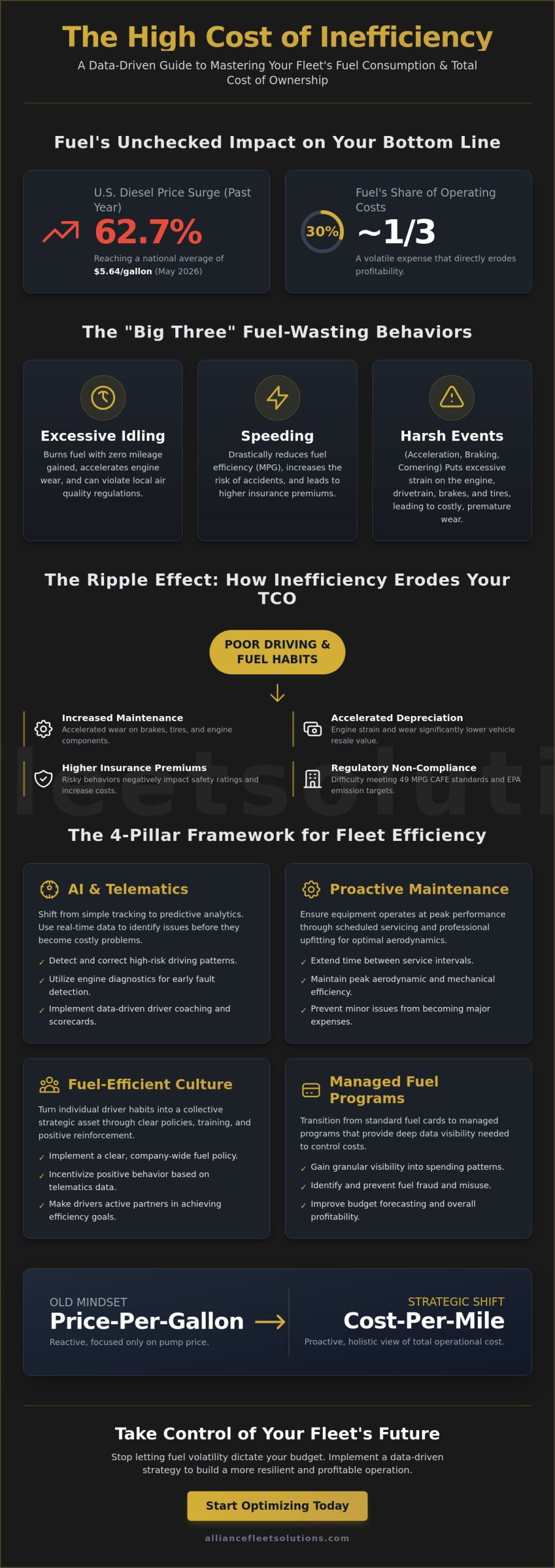
Did you know that U.S. on-highway diesel prices have surged by 62.7 percent over the past year, reaching a national average of $5.64 per gallon as of May 2026? For industry managers, this volatility isn’t just a line item; it’s a constant threat to your bottom line. We understand that unpredictable costs and a lack of visibility into driver behavior can make finding out how to improve fleet fuel efficiency feel like a moving target. It’s frustrating to watch fuel waste eat away at your margins while maintenance costs climb due to poor driving habits.
This guide provides a comprehensive, data-driven framework to slash your expenses and optimize performance. You’ll discover the tools needed to lower your total cost of ownership by leveraging the latest AI-powered telematics, proactive maintenance management, and strategic vehicle acquisition. We’ll show you how to transform raw data into actionable insights that stabilize your budget. From mastering 2026 CAFE standards to implementing sophisticated fuel management programs, we’re covering the essential strategies you need to build a more resilient and profitable operation.
Key Takeaways
- Identify why fuel consumption represents nearly 30 percent of your total operating costs and how to mitigate these expenses through a data-driven lifecycle strategy.
- Discover how to improve fleet fuel efficiency by deploying AI-powered telematics to detect and correct high-risk driving patterns like idling and harsh acceleration in real time.
- Leverage proactive maintenance management and professional upfitting to ensure your equipment operates at peak aerodynamic and mechanical performance.
- Transition from standard fuel cards to managed fuel programs that provide the deep data visibility needed to control costs and improve profitability.
- Create a sustainable operational culture by implementing a clear fuel policy that turns individual driving habits into a collective strategic asset.
Fuel Efficiency as a Pillar of Total Cost of Ownership (TCO)
In 2026, understanding how to improve fleet fuel efficiency requires looking far beyond the fuel pump. Efficiency now represents the critical intersection of advanced telematics, precision hardware maintenance, and refined driver behavior. It’s a holistic ecosystem where a single weak link can compromise your entire budget. We view fuel not as an isolated expense, but as a primary lever for controlling the total financial health of your operation.
Fuel expenses typically account for nearly 30 percent of total fleet operating costs. With U.S. national average diesel prices sitting at approximately $5.64 per gallon as of May 2026, even minor inefficiencies scale into massive financial losses across a large operation. The true cost of fuel waste isn’t just the price on the receipt; it’s the accelerated vehicle depreciation caused by engine strain and poor driving habits. When a vehicle is driven harshly, its residual value at the time of vehicle remarketing drops significantly. Shifting your strategy from a simple “price-per-gallon” mindset to a comprehensive “cost-per-mile” strategy allows you to treat fuel as a manageable variable. This shift is the first step in mastering how to improve fleet fuel efficiency across your entire equipment lifecycle.
Calculating the Real Impact of Inefficiency
Aggressive driving does more than burn extra fuel. It increases maintenance frequency for brakes and tires while shortening the overall vehicle lifecycle. These behaviors create a ripple effect that damages your safety ratings and can lead to higher insurance premiums. By implementing energy-efficient driving techniques, fleets reduce mechanical wear and extend the time between service intervals. In the context of 2026 fleet management, TCO is the comprehensive sum of acquisition, fuel, maintenance, and remarketing costs, all optimized through precise data visibility and behavioral control.
The 2026 Landscape: Volatility and Regulation
Navigating the current regulatory environment requires a proactive approach. The NHTSA now mandates an industry-wide fleet average of approximately 49 mpg for light-duty vehicles, and EPA standards for greenhouse gas emissions are tighter than ever. Fuel efficiency data is no longer just for internal budgeting; it’s a requirement for corporate sustainability reporting. Managers who prioritize these metrics gain a distinct competitive advantage in the logistics sector. They offer more reliable pricing to their clients because they’ve insulated their operations from the worst effects of fuel price volatility. Efficiency makes your fleet a strategic business asset rather than a liability.
Leveraging Telematics and AI for Real-Time Optimization
Telematics has moved far beyond simple dots on a map. In 2026, the transition from basic GPS tracking to AI-driven predictive analytics has redefined the standard for operational control. Modern systems, such as the Geotab Ace generative AI assistant, allow managers to query their data in real-time to uncover hidden inefficiencies that were previously invisible. This technology serves as the backbone of any serious strategy regarding how to improve fleet fuel efficiency because it provides granular visibility where there was once only guesswork. It allows you to move from reactive reporting to proactive, data-driven decision-making.
We consistently identify “The Big Three” fuel killers as the primary obstacles to profitability: excessive idling, speeding, and harsh acceleration. These behaviors don’t just waste expensive diesel; they indicate a lack of operational discipline that ripples through your entire TCO. By utilizing real-time engine diagnostics, you can identify mechanical issues like failing oxygen sensors or clogged fuel injectors long before they trigger a dashboard warning. Catching these fuel-sapping mechanical glitches early prevents minor maintenance tasks from becoming major line-item expenses. It’s about maintaining a state of constant readiness rather than waiting for a failure to occur.
Turning Data into Driver Coaching
Effective management requires moving from a punitive monitoring style to a collaborative efficiency program. Using telematics scorecards allows you to incentivize positive behavior through transparent, objective data. When drivers understand how their specific habits impact the company’s success, they become active partners in your efficiency goals. Integrating professional telematics and gps solutions into your daily workflows creates a culture of accountability. This approach ensures that every member of the team is working toward the same bottom-line objectives. Today’s AI-powered dash cameras, like the GO Focus Pro, detect distraction in real-time, helping to identify the root causes of inefficient driving before they impact your fuel budget.
AI and Predictive Routing
Empty miles are the enemy of profitability and the largest source of unnecessary fuel spend. Today’s AI tools provide dynamic dispatching that accounts for weather patterns, real-time traffic congestion, and specific vehicle load weights to optimize every single trip. This level of precision aligns perfectly with the Federal Energy Management Program framework for high-level strategic fleet oversight. By using smarter stop sequencing and “smart” idling policies, you reduce the overall carbon footprint while protecting your margins from volatility. If you are ready to modernize your approach, incorporating these AI-driven tools into your fleet management strategy is a critical first step for long-term growth.
Optimizing Hardware: Maintenance and Professional Upfitting
While driver behavior and data analytics set the stage for savings, the physical condition of your equipment determines your fleet’s maximum possible economy. Hardware optimization serves as a critical, often overlooked component of how to improve fleet fuel efficiency. If a vehicle’s mechanical systems aren’t operating at peak performance, even the most skilled driver will struggle to meet efficiency targets. We view hardware as a two-pronged strategy: maintaining the integrity of your current assets and intelligently configuring new acquisitions through Professional Upfitting.
Tire management remains a top priority in 2026. Modern rolling resistance standards and automated pressure monitoring systems are essential for preventing “fuel drag.” A single tire under-inflated by just 10 psi can reduce fuel economy by 1 percent while significantly increasing tread wear. When combined with misaligned wheels, these small mechanical oversights create a permanent tax on your profitability. High-performing Class 8 tractors have demonstrated that achieving 11.6 miles per gallon is possible, but only when every mechanical component is tuned for minimal resistance.
Strategic Maintenance Management
Effective maintenance management prevents the gradual “efficiency creep” that occurs when systems become clogged or misaligned. Modern engines require high-efficiency filters and synthetic lubricants to maintain the tight tolerances required by 2026 emissions standards. We recommend a “no-fail” schedule for tire rotations and alignment checks to ensure your vehicles move with the least possible friction. This proactive approach keeps your fleet in peak condition and extends the overall lifecycle of every asset.
Upfitting for Efficiency
Professional Upfitting ensures your vehicles are “right-sized” for their specific tasks. Selecting lightweight materials, such as aluminum shelving instead of heavy steel, allows you to increase your payload capacity without killing your MPG. Aerodynamics also play a massive role in highway efficiency. Every roof rack, ladder rack, or body extension changes the vehicle’s drag profile. “Over-spec’ing” a vehicle, such as choosing a heavy-duty chassis for a light-duty route, creates a permanent fuel penalty that no amount of driver coaching can fix. Conversely, “under-spec’ing” leads to engine strain and premature failure. We help you find the precise balance that supports your operational needs while protecting your bottom line.
Developing a Fuel-Efficient Fleet Culture
Technology and hardware provide the foundation for a lean operation. However, the individual behind the wheel remains the most significant variable in the fuel economy equation. Cultivating a culture that prioritizes efficiency is the final, essential step in learning how to improve fleet fuel efficiency for the long term. A top-down approach ensures that saving fuel is seen as a core business value rather than an optional suggestion. When leadership treats fuel conservation as a strategic priority, that mindset filters down to every driver and technician in the organization.
A formal policy provides a clear roadmap for how to improve fleet fuel efficiency across diverse teams and regions. We recommend creating a “Fuel Efficiency Handbook” tailored to your specific industry requirements. This document should move beyond generic advice to provide technical guidance on how your specific equipment performs best. Transparency builds trust; sharing fleet-wide efficiency goals and progress reports with the entire team turns a management objective into a collective mission. When everyone sees the data, everyone understands their role in the company’s financial health.
Incentivizing the “Smooth Driver” through gamification and rewards systems transforms a routine job into a performance-based challenge. Modern telematics allow you to track “smoothness” metrics that correlate directly with fuel savings. By rewarding the behavior you want to see, you reduce the need for constant oversight and create a self-sustaining culture of excellence. Our fuel management programs provide the granular data visibility needed to track these improvements and reward your top performers fairly.
Drafting an Enforceable Fuel Policy
Setting clear limits on idling time and maximum highway speeds is the first step toward behavioral change. Your policy should define unauthorized vehicle use and off-route miles, as these “hidden” trips significantly impact your bottom line. Integrate this fuel policy into your onboarding process so new hires understand these expectations from their first day on the job. An enforceable policy isn’t about punishment; it’s about establishing a professional standard for equipment operation.
The Partnership Approach to Training
Effective training uses data-driven feedback to provide personalized coaching rather than generic lectures. Drivers respond better when you explain the technical “why” behind smooth acceleration and braking, such as how it reduces heat in the braking system and prevents tire scalloping. To drive engagement, implement a clear incentive: “Any operator who maintains a fuel economy rating 5 percent above their quarterly baseline will receive an Elite Efficiency bonus and a gift card of their choice.” This collaborative approach positions you as a supportive partner in their professional growth.
Managed Fuel Programs: The Strategic Advantage
Many fleet managers believe they’ve solved the fuel problem simply by handing out company credit cards. However, having a piece of plastic is not the same as having a strategy. In 2026, how to improve fleet fuel efficiency depends on how you interpret and act on the data behind every transaction. A piece of plastic only records a cost; a managed program analyzes that cost to find opportunities for reduction. True optimization requires moving beyond simple tracking to a system of active oversight and procurement control.
Small-to-medium fleets often lack the internal bandwidth to scrutinize every fuel receipt for anomalies. This is where fuel management programs offer a decisive competitive edge. These programs bridge the gap between raw data collection and strategic execution. By utilizing Fractional Fleet Management, growing businesses gain access to executive-level expertise without the overhead of a full-time hire. This specialized oversight ensures that fuel efficiency becomes a permanent part of your operational DNA, allowing you to compete with much larger carriers on a level playing field.
The Benefits of Outsourced Management
Professional managers look for patterns that basic software might miss. They identify fraud, “slippage” from unauthorized non-fuel purchases, and simple waste that drains your budget. Outsourcing this task allows you to leverage national purchasing power for both fuel and maintenance, providing cost benefits usually reserved for the largest national corporations. It’s a partnership that protects your margins. This approach frees your internal staff to focus on your core business operations while we handle the technical complexities of your equipment upkeep and fuel spend. We act as the essential backbone of your operation, ensuring every gallon is accounted for and every mile is optimized.
Next Steps for Your Fleet
Your path toward a lower TCO begins with a baseline fuel audit. This process identifies the immediate “low-hanging fruit,” such as excessive idling or inefficient routing, that you can correct this week. Transitioning to an efficient fleet operations model ensures that your business remains resilient against the fuel price volatility we’ve seen throughout 2026. By combining telematics, proactive maintenance, and professional oversight, you transform your fleet from a cost center into a strategic business asset.
Ready to take control of your operating costs? Contact Alliance Fleet Solutions for a comprehensive fleet efficiency audit and let us help you build a more profitable future through data-driven management.
Securing Your Fleet’s Financial Future
Managing a modern fleet in 2026 demands more than just reacting to market volatility. It requires a proactive commitment to data-driven decision making and hardware excellence. By integrating AI-powered telematics with a robust maintenance schedule, you protect your margins from the high costs of idling and mechanical wear. Mastering how to improve fleet fuel efficiency requires a holistic approach that balances cutting-edge technology with disciplined operational standards. This strategy doesn’t just lower your immediate fuel spend; it extends the lifecycle of your assets and improves your total cost of ownership.
You don’t have to navigate these complexities alone. We provide the technical authority and strategic partnership needed to execute these high-level efficiency goals. Whether you need expert Fractional Fleet Management, customized Professional Upfitting, or access to our national maintenance and fuel programs, we act as the essential backbone of your operation. It’s time to transform your fuel data into a competitive advantage.
Optimize Your Fleet’s Efficiency with Alliance Fleet Solutions
We look forward to helping you build a more profitable and resilient fleet operation.
Frequently Asked Questions
How much can telematics actually save on fuel costs?
Telematics provides the data visibility needed to reduce fuel waste from idling, speeding, and aggressive driving. While results vary by operation, industry benchmarks indicate that fleets using these systems often see a 10 percent reduction in fuel costs within the first year. This technology identifies the specific behaviors that drain your budget, allowing you to implement targeted coaching programs that produce immediate results.
Is it better to lease or buy vehicles for maximum fuel efficiency?
Leasing often provides a strategic advantage because it allows you to cycle out older equipment more frequently. Open-end leasing ensures your fleet benefits from the latest 2026 CAFE standards and newer, more efficient engine technologies without a massive upfront capital expenditure. This approach prevents you from being locked into aging, inefficient assets as fuel prices and regulations continue to shift.
What is the most effective way to reduce engine idling in a fleet?
Combining real-time telematics alerts with a clear, enforceable idling policy is the most effective solution for most operations. Setting an automated threshold, such as five minutes of stationary engine time, helps drivers stay mindful of their consumption patterns. This proactive management style addresses the root cause of waste before it impacts your annual budget or triggers unnecessary engine wear.
How does vehicle weight affect fuel economy in commercial trucks?
Vehicle weight has a direct, linear impact on your fuel economy because heavier loads require more energy to accelerate and maintain speed. This is why right-sizing your assets through professional upfitting is so critical for your bottom line. Using lightweight aluminum components instead of traditional steel can significantly lower your curb weight without sacrificing the structural integrity needed for heavy-duty tasks.
Are fuel cards worth it for small business fleets?
Fuel cards are essential for basic tracking, but their real value lies in the data they provide to a comprehensive fuel management program. For small businesses, these tools offer the visibility needed to prevent fraud and identify inefficient vehicles that need maintenance. It’s a strategic asset that helps you manage your total cost of ownership more effectively than simple credit cards.
Can professional upfitting really improve my fleet’s MPG?
Professional upfitting improves efficiency by reducing both aerodynamic drag and total vehicle weight. High-quality upfitters use specialized body shapes and lightweight interior shelving to ensure your vehicle is optimized for its specific duty cycle. This technical precision prevents the engine from overworking, which is a key component of how to improve fleet fuel efficiency in the modern logistics sector.
How often should I audit my fleet’s fuel consumption data?
We recommend conducting high-level reviews weekly and a comprehensive data audit every month. Frequent data checks allow you to spot mechanical issues, like a failing oxygen sensor or misaligned wheels, before they lead to major repairs or significant fuel waste. Consistent auditing is the most reliable way to maintain a lean, profitable operation and ensure your efficiency strategies remain on track.
What are the common signs of fuel theft or ‘slippage’ in a fleet?
Discrepancies between a vehicle’s GPS location and the fuel pump, or transactions that exceed a vehicle’s fuel tank capacity, are primary indicators of slippage. Professional fuel management programs use automated algorithms to flag these events in real-time by cross-referencing telematics data with purchase records. This level of oversight protects your margins from both internal waste and external theft.