
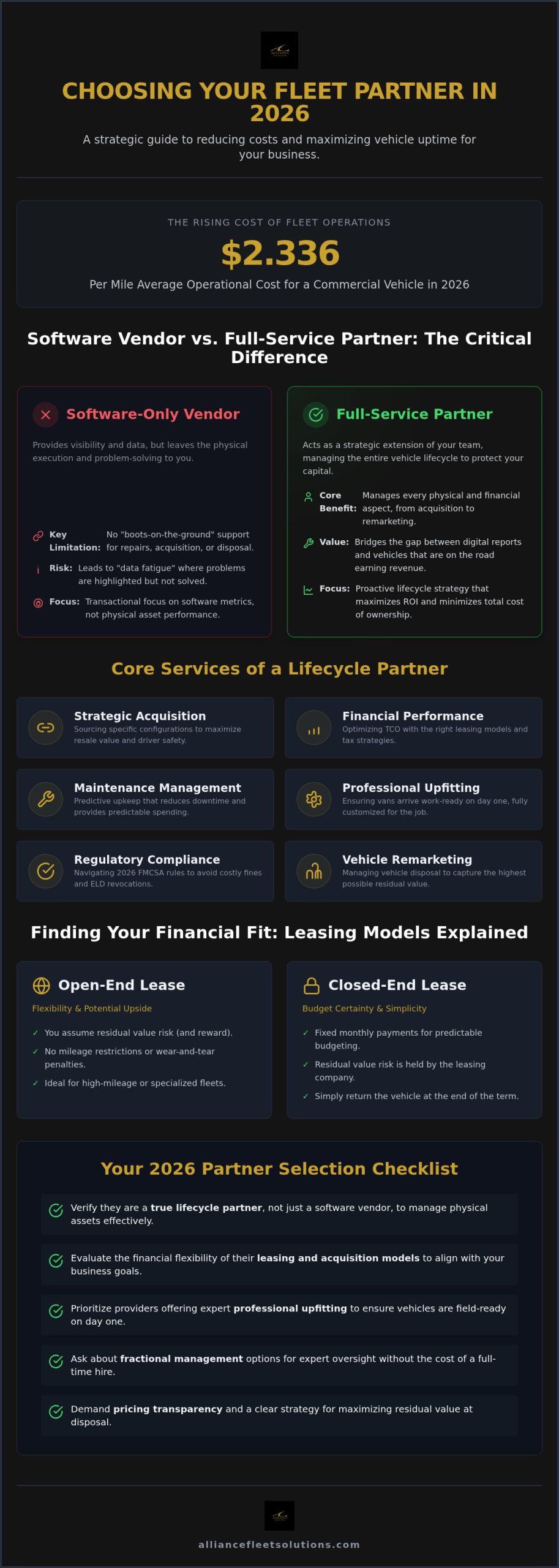
With the average operational cost for a commercial vehicle reaching $2.336 per mile in 2026, your fleet is likely the most volatile line item on your balance sheet. You already know that every hour of unexpected downtime or an inefficiently configured van eats directly into your margins. Learning how to choose a fleet management company is no longer just about finding a vendor to handle paperwork. It’s about securing a strategic partner who understands the high-stakes mechanics of your specific industry.
We agree that unpredictable maintenance costs and confusing leasing terms are more than just a nuisance; they are obstacles to your growth. This strategic guide promises to help you identify a partner that reduces your total cost of ownership while delivering custom-upfitted vehicles that are ready for the field on day one. You’ll gain a clear roadmap for selecting a provider that offers predictable monthly spending and expert guidance on vehicle disposal. We will examine the critical criteria for 2026, including the benefits of fractional management, the impact of new FMCSA digital compliance rules, and how to leverage telematics for real-time efficiency.
Key Takeaways
- Distinguish between a software vendor and a true lifecycle partner to ensure your physical assets receive the same level of attention as your data.
- Evaluate the financial flexibility of open-end leasing and acquisition models to better align your fleet spend with long-term business goals.
- Prioritize professional upfitting during your selection process to guarantee vehicles are fully configured and field-ready upon delivery.
- Discover how to choose a fleet management company that offers fractional management, giving mid-sized fleets expert oversight without the overhead of an in-house hire.
- Use a strategic 2026 checklist to vet potential partners for pricing transparency and their ability to maximize residual value during vehicle disposal.
Defining Your Needs: Software Vendor vs. Fleet Management Partner
A Fleet management company (FMC) serves as a strategic backbone for your operations, not just a software provider. When researching how to choose a fleet management company, you’ll encounter two distinct paths: transactional software vendors and comprehensive lifecycle partners. A true partner manages every physical and financial aspect of your vehicles, from initial acquisition to final remarketing. This shift from reactive maintenance to a proactive lifecycle strategy ensures your capital is protected through every mile driven.
The Limitations of Software-Only Solutions
Software tools provide excellent visibility, but they don’t execute repairs or source inventory. Many managers suffer from data fatigue, where a dashboard highlights a problem but offers no boots-on-the-ground solution. Metrics alone can’t navigate the 15 to 20 week order-to-delivery timelines projected for 2026. Without physical expertise in vehicle acquisition and remarketing, you’re left holding the data while your ROI slips away. Software vendors focus on the what, but a partner focuses on the how and when. They bridge the gap between a digital report and a truck that’s actually on the road earning revenue.
What a Full-Service Fleet Partner Actually Does
A full-service partner handles the heavy lifting that software cannot touch. This includes negotiating complex leasing jargon and managing professional upfitting so your vans arrive work-ready on day one. By integrating comprehensive fleet management services, you bridge the gap between digital insights and physical execution. A partner acts as a seasoned expert, providing the essential backbone for a functional operation. Consider these core responsibilities of a lifecycle partner:
- Strategic Acquisition: Sourcing specific industry configurations to avoid operational friction and ensure driver safety.
- Maintenance Management: Moving beyond reactive fixes to predictive upkeep that reduces downtime and controls costs.
- Financial Performance: Balancing open and closed-end leasing to optimize your total cost of ownership and tax deductions.
- Regulatory Compliance: Navigating 2026 FMCSA rules regarding ELD revocations and digital inspection reports to avoid $19,000 fines.
- Vehicle Remarketing: Managing the disposal process to ensure you capture the highest possible residual value at the end of the lifecycle.
Choosing a partner means choosing someone who shares your goals. It’s the difference between buying a tool and hiring a team that ensures that tool never fails.
Evaluating Leasing and Acquisition Models
Your choice of financial structure determines whether your fleet is a controlled asset or a mounting liability. When researching how to choose a fleet management company, you must evaluate how a potential partner handles vehicle acquisition and the specific leasing models they offer. Acquisition isn’t just about the initial purchase price. It involves calculating the total cost of ownership (TCO) across the entire lifecycle, including the 12% Federal Excise Tax on heavy-duty trucks and the rising costs of new vehicles, which averaged $50,000 in early 2026.
Open-End vs. Closed-End Leasing: Which Fits Your Budget?
Commercial fleets typically lean toward open-end leasing because of its inherent flexibility. In this model, you assume the residual value risk but also reap the rewards if the vehicle sells for more than its book value at the end of the term. It’s ideal for businesses with high-mileage requirements or specialized equipment, as there are no mileage restrictions or wear-and-tear penalties. If you prefer absolute budget certainty, closed-end leasing might be the safer choice. You pay a fixed monthly amount and return the keys at the end of the term, leaving the residual risk to the management company. A seasoned partner will help you analyze your cash flow and usage patterns to determine which model maximizes your capital.
Strategic Vehicle Acquisition
Focusing on the lowest sticker price is a common mistake that often leads to higher long-term costs. Strategic acquisition involves sourcing vehicles that maintain high resale value and meet specific operational needs. For example, selecting a heavy vehicle with a GVWR over 14,000 lbs allows you to leverage the full 2026 IRS Section 179 deduction of $2,560,000, significantly offsetting the initial investment. A partner with technical authority will also guide you toward sustainable fleet management practices, such as right-sizing your vehicles to improve fuel efficiency and reduce carbon footprints. This ensures your procurement strategy accounts for the projected 2026 diesel price of $4.76 per gallon.
This proactive approach ensures your assets are ready for efficient fleet operations from the moment they join your line-up. If you’re looking to optimize your current acquisition strategy, consider discussing your specific industry requirements with an expert in flexible leasing solutions to find the best fit for your balance sheet.
The Upfitting and Customization Factor
Securing a vehicle chassis is only half the battle. When you evaluate how to choose a fleet management company, you must look beyond the leasing terms to the physical configuration of the asset. Standard vehicles rarely meet the specific demands of heavy-duty industries. Professional upfitting ensures that your trucks aren’t just transportation; they’re mobile workstations designed for maximum output. A partner who manages this process during procurement prevents the logistical headache of coordinating third-party vendors after the vehicle arrives.
Why ‘Off-the-Lot’ Vehicles Often Fail Commercial Needs
Buying a stock van might seem faster, but it often leads to hidden costs and operational friction. Secondary modifications performed after delivery frequently result in higher labor rates and extended downtime. Specialized equipment like ergonomic shelving, cranes, and advanced safety tech improves technician efficiency by reducing search times and physical strain. Professional upfitting is the bridge between a base vehicle and a functional work tool. Without this integration, your drivers spend their first week organizing a makeshift setup rather than completing service calls. This inefficiency directly impacts your bottom line and delays your return on investment.
Managing the Upfitting Timeline
A strategic partner like Alliance Fleet Solutions integrates upfitting directly into the acquisition phase. This approach drastically reduces the ‘time-to-work’ for new fleet additions. Instead of waiting weeks for a local shop to install racks or telematics, your vehicles arrive at your facility fully configured and ready for the field. This level of coordination is a hallmark of a robust fleet management framework, ensuring that every asset is optimized from day one. It eliminates the gap between delivery and productivity, which is vital in a fast-paced logistics environment.
Certified upfitting also protects your investment by ensuring warranty compliance. Improperly installed electrical systems or structural modifications can void manufacturer warranties, leaving you vulnerable to expensive repairs. A professional partner uses certified installers who understand the technical specifications of your specific make and model. This expertise guarantees that your safety systems and vehicle sensors remain functional, keeping your fleet compliant with 2026 safety standards. By handling these technical details during the procurement phase, your fleet partner acts as a seasoned expert who understands both the mechanics of your industry and the financial performance of your business.
Fractional Fleet Management: A Modern Solution for Mid-Sized Fleets
Many mid-sized operations struggle with a specific bottleneck: they’re too large to manage vehicles off the side of a desk, yet too small to justify the six-figure salary of a full-time fleet director. Fractional fleet management has emerged as the strategic answer to this dilemma. It provides the expert oversight and technical authority of a seasoned professional on a scalable basis. When you evaluate how to choose a fleet management company, check if they offer this flexible model. It allows you to access sophisticated lifecycle management without the permanent headcount, ensuring your fleet remains a productive asset rather than a source of administrative stress.
Solving the Headcount Dilemma
Mid-sized fleets often fall into the trap of “management by committee.” In this scenario, the finance department handles leasing, while a shop foreman or office manager reacts to maintenance emergencies. This fragmented approach creates blind spots, especially regarding the 2026 FMCSA digital compliance rules and rising operational costs. Fractional services eliminate this risk by providing a single point of expert contact. You gain access to “big fleet” tools, such as premium telematics and predictive analytics, which typically require dedicated staff to monitor. This partnership ensures that your vehicle configurations and disposal strategies are handled with professional precision, protecting your margins as you grow.
Integrating Fuel and Maintenance Programs
Fractional oversight brings much-needed discipline to your daily operational spend. These partners don’t just provide cards; they actively manage fuel management programs to catch waste, idling issues, and potential fraud. With diesel prices projected to average $4.76 per gallon in 2026, even a 5% reduction in fuel waste can save thousands of dollars annually. Beyond fuel, fractional managers take charge of maintenance management. They coordinate with service providers to ensure your equipment follows a logical, proactive schedule. This prevents the costly equipment failures that lead to operational downtime, keeping your technicians in the field and your vehicles on the road.
This modern approach bridges the gap between basic software tools and a full-scale internal department. It gives you the essential backbone of a functional operation without the financial burden of a full-time hire. If you want to streamline your oversight and reduce your total cost of ownership, consider how our fractional fleet management solutions can transform your business efficiency.
Your 2026 Fleet Management Selection Checklist
Selecting the right partner is the final, most critical step in securing your operational future. Understanding how to choose a fleet management company requires a systematic approach to the Request for Proposal (RFP) process. You aren’t just looking for a service provider; you’re looking for a strategic asset that protects your capital. A thorough vetting process ensures that your partner’s capabilities align with the physical and financial realities of your 2026 fleet requirements.
The RFP Process: Questions You Must Ask
Start by scrutinizing their remarketing process. In a market where new vehicle prices have climbed 31% since 2019, capturing maximum residual value at the end of a vehicle’s life is mandatory for a healthy bottom line. Ask potential partners for documented success rates in vehicle disposal. They should demonstrate a proactive strategy that identifies the optimal time to sell, rather than simply waiting for a lease to expire. This expertise prevents you from becoming part of the statistic where 34% of service spend comes from vehicles over 10 years old.
Next, evaluate their approach to maintenance management. A partner’s value is often tested during a breakdown in a remote location. Verify that they maintain a robust national network of preferred vendors across the United States. This network should offer more than just coverage; it should provide data-driven oversight to prevent overcharging and ensure that repairs are performed to industry standards. Ask if they provide flexible, on-location service capabilities, which distinguish a modern partner from traditional, stationary competitors. Transparency in pricing and a commitment to reducing total cost of ownership (TCO) should be evident in every answer they provide.
Finalizing the Partnership
The culture of the company matters as much as their technical specs. Large, impersonal corporate structures often struggle to provide the responsive, collaborative relationship that high-stakes logistics require. Consider the benefits of a family-owned and operated partner that prioritizes long-term reliability over quarterly shareholder reports. This type of seasoned expert acts as a supportive backbone, speaking the language of business efficiency while understanding the mechanics of heavy-duty equipment.
Ensure the partner offers both open and closed-end lease structures to maintain your financial agility. They should provide a clear roadmap for how they will manage your entire vehicle lifecycle, from acquisition and professional upfitting to remarketing. This comprehensive oversight is what transforms a vendor into a strategic business asset. If you’re ready to move beyond transactional tools and secure a partner dedicated to your success, contact Alliance Fleet Solutions for a customized fleet analysis.
Securing Your Fleet’s Strategic Future
Your fleet represents more than just a collection of vehicles; it’s the heartbeat of your service delivery. Understanding how to choose a fleet management company is the first step toward reclaiming your operational margins and eliminating the stress of unexpected downtime. By prioritizing a lifecycle partner over a simple software vendor, you ensure that every asset is acquired, upfitted, and managed with professional precision. Whether you need the flexibility of open-end leasing or the expert oversight of fractional management, the right partnership transforms your fleet from a cost center into a strategic business asset.
Alliance Fleet Solutions has been family-owned and operated since 2018, providing the national service coverage and technical authority required to navigate the complexities of 2026 logistics. We specialize in both open-end and closed-end leasing, ensuring your financial structure matches your specific usage patterns. It’s time to move beyond reactive fixes and implement a proactive strategy that secures your long-term success. Optimize your fleet operations today with Alliance Fleet Solutions and take the first step toward a more reliable, efficient future. Your operation deserves the essential backbone of expert control.
Frequently Asked Questions
What is the difference between a fleet management company and a leasing company?
A leasing company primarily focuses on the financing and acquisition of vehicles, acting as a source of capital. In contrast, a fleet management company acts as a comprehensive lifecycle partner. They handle everything from professional upfitting and maintenance management to fuel programs and final vehicle remarketing. This holistic approach ensures you aren’t just paying for an asset but optimizing its entire operational life to reduce your total cost of ownership.
How much does fleet management typically cost for a small business?
Costs for fleet management depend on your specific needs, such as the total vehicle count and the depth of services required. Some businesses opt for entry-level software tracking, while others invest in full-service maintenance and fuel management programs. When researching how to choose a fleet management company, look for transparent fee structures that align with the business value provided, such as reduced downtime and lower fuel waste across your operation.
Can a fleet management company help with vehicle upfitting?
Yes, a professional fleet partner manages the upfitting process during the procurement phase to ensure vehicles are ready for work upon delivery. They coordinate the installation of specialized equipment like shelving, safety technology, and racks. This integration prevents the logistical delays and extra labor costs associated with hiring third-party vendors after you’ve already taken delivery of a base vehicle, allowing your drivers to start work immediately.
What is fractional fleet management and who is it for?
Fractional fleet management provides mid-sized businesses with the expertise of a seasoned fleet director without the high cost of a full-time salary. It’s designed for companies that have outgrown “management by committee” but don’t yet need a dedicated internal department. This model allows you to scale expert oversight on a part-time basis, ensuring your vehicles remain compliant and efficient as your logistics operations grow and become more complex.
How do fleet management companies reduce fuel and maintenance costs?
Partners reduce these expenses through managed fuel programs that track idling and prevent fraud, alongside predictive maintenance schedules. By moving away from reactive repairs, you avoid the high costs of emergency equipment failures and operational downtime. These programs utilize telematics data to identify inefficient driving habits and mechanical issues before they lead to expensive breakdowns or excessive fuel consumption, which is vital with 2026 diesel prices.
Is it better to choose a local or national fleet management company?
National fleet management companies generally offer superior value through extensive vendor networks and consistent service standards across the United States. While a local provider might offer proximity, a national partner ensures your drivers receive reliable maintenance and support regardless of their location. This scale also provides better leverage when negotiating vehicle acquisition prices and managing large-scale remarketing efforts to maximize your returns at the end of the vehicle lifecycle.
What happens to my vehicles at the end of a fleet management contract?
At the end of a contract, the management company handles the vehicle remarketing process to capture the highest possible residual value. This includes inspecting the asset, determining the best sales channel, and managing the entire disposal transaction. If you’re using open-end leasing, any equity gained from the sale typically returns to your business, helping to offset the cost of your next vehicle acquisition and keeping your capital fluid.
Can I use my own telematics software with a fleet management partner?
Most fleet partners allow you to integrate your existing telematics software, though many offer their own premium solutions for better data synchronization. When considering how to choose a fleet management company, ask about their ability to consolidate data from different GPS and fuel platforms into a single dashboard. This integration is essential for maintaining accurate digital inspection reports and ensuring compliance with the latest 2026 FMCSA digital compliance regulations.