
If your fleet vehicles could speak, would they tell you they’re bleeding money through excessive idling and missed service intervals, or would they tell you exactly how to reclaim your bottom line? Understanding the benefits of telematics for commercial fleets is no longer just about tracking locations; it’s about solving the constant pressure of unpredictable maintenance costs and rising fuel waste. We understand that in the high-stakes logistics sector, any moment of operational downtime is a direct hit to your profitability and your reputation.
Discover how integrating these smart solutions transforms raw data into actionable ROI through optimized fuel use, predictive maintenance, and enhanced driver safety. In this guide, we’ll preview how these tools lower your total cost of ownership, automate complex compliance reporting, and even protect your vehicle resale value through documented, expert care. It’s time to move beyond simple tracking and start viewing your fleet as a high-performance engine for long-term growth and reliability. By treating your data as a strategic business asset, you can turn passive equipment into a proactive strategy for success in 2026 and beyond.
Key Takeaways
- Learn how to slash fuel waste and eliminate excessive idling by leveraging real-time data to optimize routing and driver behavior.
- Shift from rigid calendar-based schedules to usage-based proactive maintenance, catching minor engine faults before they lead to costly breakdowns.
- Discover the core benefits of telematics for commercial fleets in 2026, specifically how “Fleet Intelligence” transforms raw data into a lower total cost of ownership.
- Automate your ELD compliance and improve driver safety with real-time coaching, reducing the risk of expensive fines and accidents.
- See how telematics data informs future vehicle acquisitions and upfitting while boosting resale value through a documented history of care.
What is Fleet Telematics and Why is it Essential in 2026?
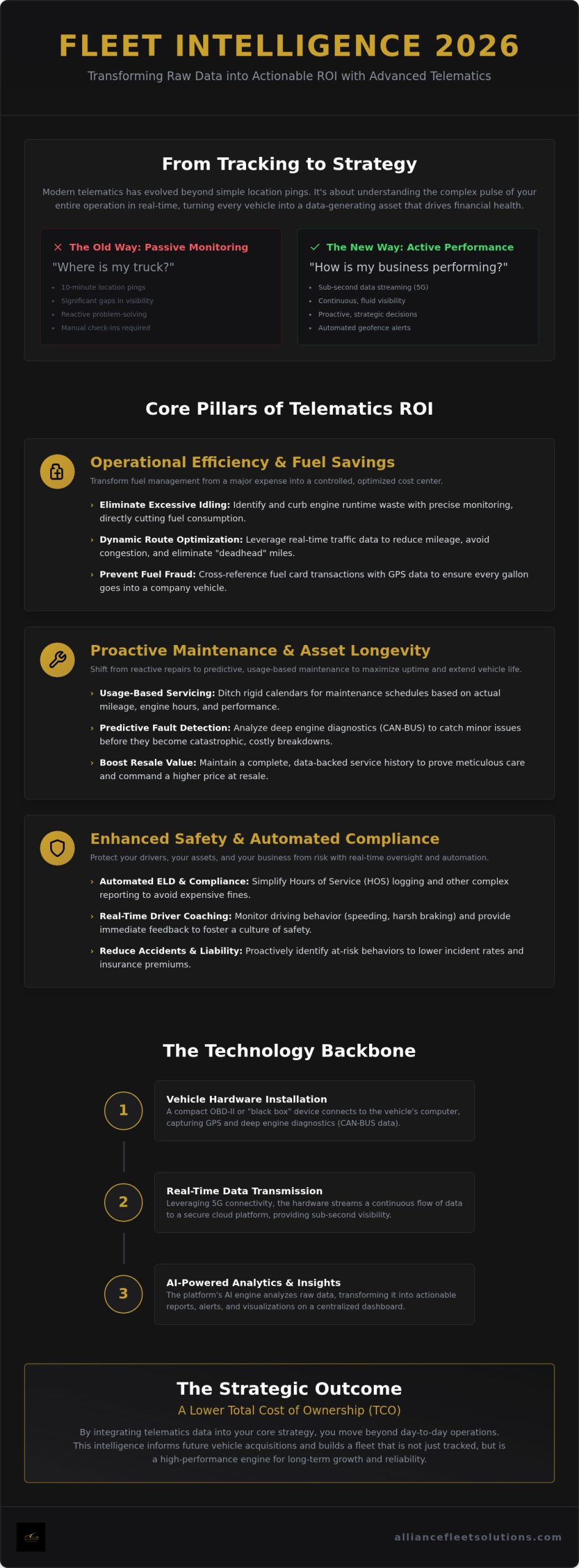
Fleet telematics represents the powerful convergence of telecommunications and informatics. In the fast-paced logistics environment of 2026, this technology has evolved far beyond simple dots on a map. By leveraging 5G connectivity and AI-driven analytics, modern systems provide what we call “Fleet Intelligence.” This isn’t just about tracking an asset; it’s about understanding the complex pulse of your entire operation in real-time. One of the primary benefits of telematics for commercial fleets is the ability to transform raw technical data into strategic business decisions that protect your margins.
The industry has shifted its focus. Managers no longer ask “where is my truck?” because they already know. Instead, they ask “how is my business performing at this exact moment?” This transition from passive monitoring to active performance management is what defines a successful operation today. It allows for a level of expert control that was previously impossible, turning every vehicle into a data-generating asset that contributes to the company’s financial health.
How Telematics Hardware Works
Reliable data starts with robust hardware. Most systems utilize a compact “black box” or a plug-and-play OBD-II device that connects directly to the vehicle’s internal computer. These devices do more than just transmit GPS coordinates; they extract deep engine diagnostics that reveal the true state of your equipment. CAN-BUS data is the digital fingerprint of vehicle health. By capturing this information, you gain a clear view of fuel consumption, engine load, and upcoming maintenance needs before they escalate into costly failures. This hardware serves as the essential backbone for efficient fleet operations, ensuring every repair is based on actual usage rather than guesswork.
The Evolution of Real-Time Fleet Visibility
In the past, fleet managers had to settle for 10-minute pings that left huge gaps in visibility. Today, 5G infrastructure supports sub-second data streaming, providing a fluid and continuous view of your fleet’s movements. This level of precision makes geofencing a critical tool for operational security. You can set digital boundaries around job sites or warehouses, receiving instant alerts the moment a vehicle arrives or departs. These automated notifications streamline communication between the field and the office, reducing the need for manual check-ins. Centralized dashboards now aggregate this multi-state data into a single, polished interface. It gives you the technical depth needed for complex oversight while remaining accessible enough for quick, high-stakes decisions. Realizing the full benefits of telematics for commercial fleets means using this visibility to eliminate bottlenecks and ensure your team is always moving toward the next goal.
Maximizing ROI Through Operational Efficiency and Fuel Savings
Operational efficiency isn’t just a buzzword; it’s the difference between a profitable quarter and an operational deficit. One of the most immediate benefits of telematics for commercial fleets is the ability to shine a light on hidden fuel waste. Excessive idling is a silent profit killer. By monitoring exactly when and where engines are running without purpose, managers can implement targeted policies that slash fuel consumption almost overnight. This visibility allows you to address the root cause of waste rather than just the symptoms.
Dynamic routing takes this a step further by integrating real-time traffic data into every dispatch decision. Instead of following static paths, your vehicles navigate around congestion and construction, reducing total mileage and wear. This data doesn’t just sit in a silo. It serves to validate fuel management programs by matching GPS location data with fuel card transactions. This cross-referencing is essential for preventing fraud and ensuring every gallon purchased actually went into a company tank.
Optimizing Routes for High-Volume Fleets
Smarter dispatching reduces “deadhead” miles, those expensive stretches where a vehicle is moving but not generating revenue. By analyzing historical route data, you can identify seasonal bottlenecks that consistently slow down your operations. This foresight allows you to adjust schedules before the delays happen. Accurate, data-backed ETAs improve customer satisfaction, providing a level of reliability that builds long-term trust. It turns your logistics department into a strategic asset that delivers on its promises every time.
Curbing Wasteful Driver Habits
Driver behavior directly impacts your bottom line. Speeding and harsh braking don’t just increase accident risks; they significantly degrade fuel economy and accelerate tire wear. Implementing gamification through driver scorecards encourages more efficient habits by turning safety and savings into a friendly competition. Maximizing the benefits of telematics for commercial fleets requires this holistic approach that connects driver coaching with precise route planning. Beyond the road, telematics automates your fuel tax reporting (IFTA). This eliminates hours of manual administrative work and reduces the risk of human error during audits. If you’re looking to tighten your budget, exploring our telematics and GPS solutions is the first step toward total operational control.
Proactive Maintenance: Reducing Downtime and Extending Asset Life
Relying on a static calendar for vehicle service is an outdated practice that often leads to either wasted spend or catastrophic failure. One of the most significant benefits of telematics for commercial fleets is the transition to usage-based maintenance. By tracking actual engine hours and mileage in real-time, you ensure that every service dollar is spent exactly when it’s needed. This proactive approach eliminates the guesswork that plagues traditional fleet operations, replacing it with a data-driven schedule that keeps your assets on the road longer.
When a vehicle throws an engine fault code, the system doesn’t just record it; it triggers a sophisticated workflow. Real-time alerts allow your team to catch minor sensor issues before they snowball into full-scale engine rebuilds. Integrating these alerts into your maintenance management strategy turns reactive stress into a controlled process. This documentation also creates a “gold-standard” service history, which is vital when it comes to vehicle remarketing. A buyer is far more likely to pay a premium for a truck with a fully transparent, data-backed maintenance log.
Predictive Diagnostics and the End of Roadside Failures
Modern telematics systems in 2026 use AI to monitor battery health, tire pressure, and engine temperatures remotely. Predictive maintenance is the use of historical data to forecast component failure. These predictive alerts empower you to schedule “overnight fixes” for parts nearing the end of their life, effectively bypassing the frustration of mid-day breakdowns. It’s a strategic shift that moves your team from putting out fires to preventing them entirely. This ensures your drivers stay productive and your deliveries arrive on time, maintaining the steady, logical rhythm your business depends on.
Extending the Vehicle Lifecycle
Consistent monitoring prevents the cascading failure of truck components, where a small issue like a faulty coolant sensor leads to a warped engine head. By stopping these chains of events, you significantly extend the usable life of every asset in your fleet. This level of care is particularly important for managing long-term leasing health, as it ensures you return vehicles in peak condition. Beyond daily repairs, the data helps you decide exactly when to cycle a vehicle out of the fleet. You’ll know the precise moment when the cost of maintenance begins to outweigh the vehicle’s operational value, allowing for smarter vehicle acquisition decisions. This long-term perspective is one of the ultimate benefits of telematics for commercial fleets, providing the expert control needed to maximize your total investment.
Enhancing Fleet Safety and Regulatory Compliance
Safety is the cornerstone of any dependable fleet operation. Beyond the physical protection of your team, one of the primary benefits of telematics for commercial fleets is the ability to mitigate the massive financial risks tied to accidents and litigation. Integrating real-time driver coaching and dashcam technology allows you to address risky behaviors like tailgating or distracted driving before they result in a collision. When an incident does occur, the “Exoneration Factor” becomes your most vital asset. Telematics data provides an objective, technical record of speed, braking, and location. This evidence often proves driver innocence in complex situations where they might otherwise face unfair blame.
Insurance providers in 2026 prioritize fleets that can prove their commitment to safety through hard data. By maintaining a verified record of safe driving, you can often negotiate lower premiums and reduce the total cost of your insurance program. This transparency protects your reputation and your bottom line, transforming safety from a cost center into a strategic business advantage. It ensures your operation remains grounded in reliability while respecting the high stakes of the logistics sector.
Safety as a Driver Retention Tool
We believe telematics should be a tool for partnership rather than simple surveillance. Shifting away from a “big brother” mindset allows you to implement performance-based rewards that recognize your most professional operators. Harsh-event data shouldn’t just be a reason for discipline; it should guide targeted training that helps drivers improve their skills. Creating a culture of safety shows your team that you’re invested in their well-being and long-term success. This approach leads to lower driver turnover, as skilled professionals want to work for a company that provides the best security and support on the road. It builds a collaborative environment where safety goals are shared across the entire organization.
Streamlining Regulatory Compliance
Compliance is a high-stakes requirement that often creates administrative headaches, but modern technology removes the burden of manual logging. Automated Electronic Logging Devices (ELD) track Hours of Service (HOS) with absolute precision, eliminating the paperwork errors that lead to expensive fines. Digital Driver Vehicle Inspection Reports (DVIR) ensure that every check is documented and easily searchable for audits. This system guarantees that every vehicle in your fleet meets national safety standards without the need for constant manual oversight. By centralizing these records, you stay prepared for any regulatory check with confidence and ease. To secure your operation and simplify your paperwork, consider how Alliance Fleet Solutions can integrate telematics and GPS solutions into your daily workflow.
The Alliance Advantage: Integrating Telematics into Fleet Strategy
Telematics is often marketed as a standalone software solution, but we view it as the strategic foundation of your entire lifecycle management. It’s the nervous system of efficient fleet operations, providing the technical depth needed to refine your entire business model. One of the most significant benefits of telematics for commercial fleets is the ability to close the loop between current performance and future investment. By treating your data as a strategic asset, you can move beyond day-to-day tracking and start making high-stakes decisions with absolute confidence.
Our approach turns raw data into a roadmap for long-term growth. We use performance metrics to guide custom professional upfitting for your future acquisitions, ensuring every new vehicle is built specifically for the demands of your unique routes. This level of expert control prevents the common mistake of over-specifying or under-equipping your assets. It ensures your fleet remains a high-performance engine for your business rather than a collection of depreciating hardware.
Data-Driven Vehicle Acquisition
Most fleet managers guess when they need to expand or downsize, but your data tells the real story. We analyze your current utilization rates to determine if your fleet size is truly optimal for your workload. If your telematics show a specific vehicle class is consistently under-utilized or over-burdened, we adjust your next vehicle acquisition strategy accordingly. This data also dictates whether Open-End or Closed-End Leasing is the right fit for your cash flow. By aligning your leasing structure with actual mileage and wear patterns, you avoid the frustration of end-of-term surprises and keep your total cost of ownership as low as possible.
Partnering for Long-Term Success
Alliance Fleet Solutions acts as more than just a provider; we serve as your fractional fleet management partner. This gives you access to seasoned expert oversight and a national service network without the overhead of a massive in-house department. We act as your data analyst to find hidden savings that simple software might miss, such as identifying when the cost of maintenance on an older unit finally exceeds the price of a new lease. This partnership ensures the technical benefits of telematics for commercial fleets are translated directly into financial performance and operational stability. It’s time to optimize your fleet’s performance with Alliance Fleet Solutions and secure the backbone of your functional operation for the years ahead.
Securing Your Fleet’s Future with Data-Driven Intelligence
The transition toward a fully connected fleet is no longer a luxury; it’s a necessity for maintaining a competitive edge in 2026. By embracing the full range of benefits of telematics for commercial fleets, you move from reactive troubleshooting to a state of calm, expert control. You’ve seen how real-time insights can slash fuel waste, eliminate the stress of roadside breakdowns through predictive maintenance, and foster a culture of safety that keeps your best drivers on the road. This technology isn’t just a software tool; it’s the strategic backbone of a functional operation that prioritizes long-term reliability and financial performance.
Alliance Fleet Solutions is here to act as your seasoned partner in this journey. We combine Expert Fractional Fleet Management with a National Maintenance Network and Comprehensive Leasing & Remarketing to ensure your data translates into a lower total cost of ownership. Don’t let operational downtime dictate your schedule. Schedule a Fleet Efficiency Audit with Alliance Fleet Solutions today to start optimizing your assets. We’re committed to your success and ready to help you build a fleet that works as hard as you do.
Frequently Asked Questions
What are the primary benefits of telematics for small commercial fleets?
Small commercial fleets gain enterprise-level visibility without the need for a massive administrative staff. The technology automates maintenance tracking and dispatching, which reduces the daily stress of managing multiple assets. By leveraging these insights, small business owners can compete more effectively by ensuring their equipment stays on the road and their operational costs remain predictable and controlled.
How does telematics help in reducing fleet fuel consumption?
Telematics targets fuel waste by identifying excessive idling and inefficient routing. By monitoring engine data and traffic patterns, managers can direct drivers toward more fuel-efficient paths and habits. This visibility is among the key benefits of telematics for commercial fleets, as it turns hidden waste into measurable savings that impact the bottom line immediately and consistently.
Can telematics data really lower my commercial insurance premiums?
Many insurance carriers now incentivize the use of telematics by offering lower premiums for fleets with documented safe-driving records. By providing objective data on speed and braking habits, you demonstrate a proactive approach to risk management. This transparency often leads to better insurance rates and protects your business from the rising costs of commercial litigation and accident claims.
Is telematics difficult to install in older commercial vehicles?
Installation is typically straightforward, even for older vehicles in a mixed fleet. Most hardware uses standard OBD-II or J1939 ports for a quick, plug-and-play setup. For much older equipment, simple hardwiring solutions ensure you can still capture essential engine data. This flexibility allows you to modernize your entire operation without needing to replace every older asset in your current inventory.
What is the difference between simple GPS tracking and full fleet telematics?
Simple GPS tracking only provides the physical location of a vehicle at set intervals. Full telematics goes much deeper, connecting directly to the engine’s computer to monitor diagnostics, fuel levels, and driver safety events. It transforms a basic tracking tool into a comprehensive fleet intelligence system that informs every part of your business strategy and maintenance schedule.
How do drivers usually react to the implementation of telematics?
Initial driver pushback is common if the system is viewed as a surveillance tool. Successful managers frame telematics as a partnership that offers protection through accident exoneration and rewards for professional behavior. When drivers see how the data proves their innocence in collisions or earns them performance bonuses, they typically become much more supportive of the technology and its benefits.
Will telematics help with ELD and HOS compliance?
Telematics systems are essential for maintaining ELD and HOS compliance by automating the recording of driving hours. This removes the risk of human error and paperwork gaps that often lead to heavy fines during audits. By centralizing this data, your operation stays prepared for regulatory inspections while significantly reducing the time spent on manual log management and administrative oversight.
How does telematics improve the resale value of my fleet vehicles?
A vehicle with a complete, data-backed maintenance history is far more valuable on the secondary market. Telematics provides a digital log of every oil change, repair, and engine alert, proving that the asset was cared for according to professional standards. This transparency builds trust with buyers and allows you to maximize your financial return during the vehicle remarketing process.