
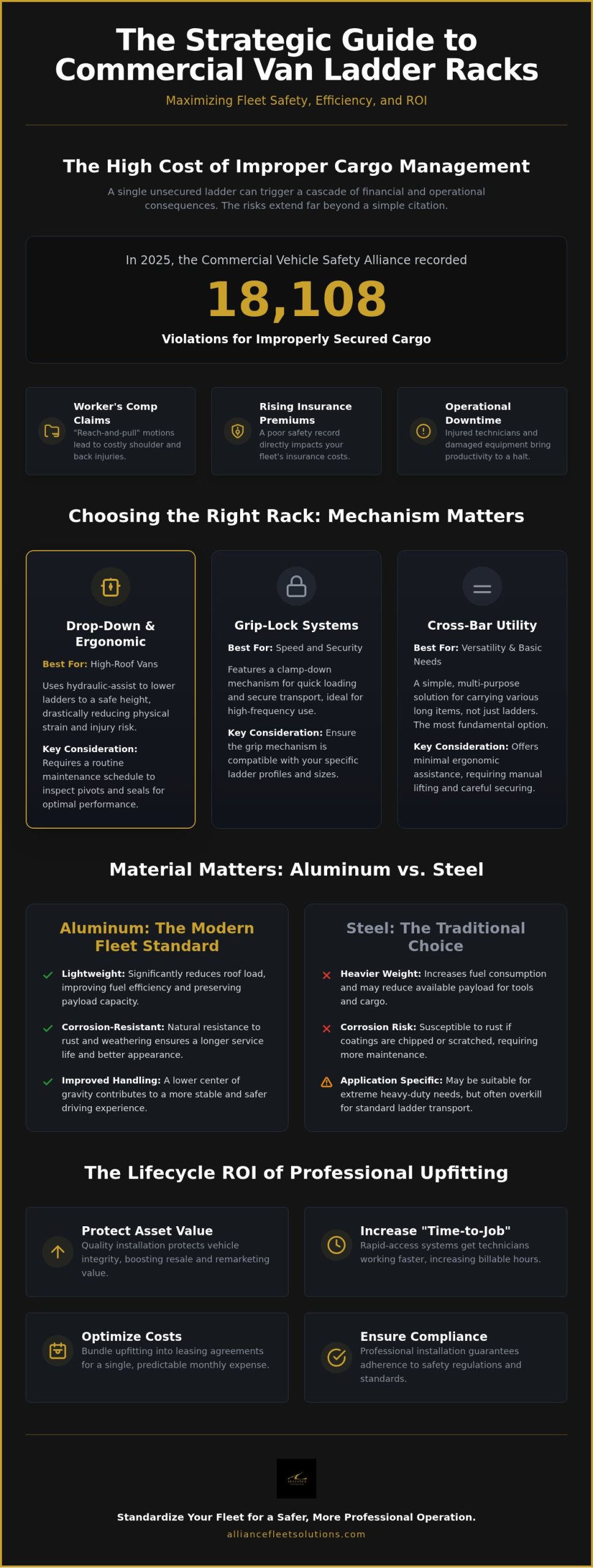
In 2025, the Commercial Vehicle Safety Alliance recorded 18,108 violations for improperly secured cargo. This statistic serves as a sobering reminder that selecting the right commercial van ladder racks is a strategic safety decision rather than a simple hardware purchase. You’re likely already feeling the pressure of rising insurance premiums and the constant risk of technician shoulder or back injuries. It’s a high-stakes environment where a single poorly installed rack can lead to both operational downtime and costly worker compensation claims.
We understand that managing upfitting across multiple van makes is complex and often frustrating. This guide promises to simplify that process by showing you how to select, install, and manage ladder rack systems to maximize safety and fleet efficiency. We will examine the latest 2026 ergonomic trends, such as hydraulic drop-down systems and lightweight aluminum materials, that help reduce your total cost of ownership. By the end of this article, you’ll have a clear roadmap for standardizing your fleet upfitting to create a more reliable and professional operation.
Key Takeaways
- Understand the direct link between ergonomic ladder storage and the reduction of worker compensation claims across your fleet.
- Evaluate the performance benefits of different commercial van ladder racks, comparing lightweight aluminum materials with heavy-duty steel options for better fuel efficiency.
- Match specific rack mechanisms, such as drop-down or grip-lock systems, to your van’s roof height and weight capacity requirements.
- Identify the safety and liability risks associated with DIY installation and the importance of professional upfitting for regulatory compliance.
- Discover how to leverage leasing and maintenance management programs to bundle upfitting costs and maximize the lifecycle of your vehicle assets.
The Strategic Role of Commercial Van Ladder Racks in Modern Fleet Operations
Selecting the right commercial van ladder racks is a strategic decision that turns a standard vehicle into a high-impact productivity asset. In a competitive logistics environment, every minute saved during equipment retrieval translates to improved bottom-line performance. By moving bulky ladders to the exterior of the vehicle, you reclaim internal cargo space for specialized tools and high-value inventory. This shift doesn’t just organize the van; it fundamentally changes the workflow for your field teams.
Your “Time-to-Job” efficiency depends on how quickly a technician can transition from arriving on-site to starting the actual work. Rapid-access rack systems eliminate the struggle of manual lifting, allowing your team to deploy equipment in seconds. This speed is a competitive advantage that compounds over hundreds of service calls throughout the year.
Maximizing Fleet ROI Through Strategic Upfitting
Professional upfitting is a critical component of a vehicle’s lifecycle. High-quality installations protect the vehicle’s structural integrity, which directly influences resale value during vehicle remarketing. You can preserve your operational capital by integrating these upfitting costs into commercial vehicle leasing structures. This approach allows you to treat the entire vehicle setup as a single, predictable monthly expense. You should also consider how rack weight affects your fuel management programs. Choosing lightweight materials ensures you don’t sacrifice payload capacity or fuel efficiency for storage capability.
Technician Safety: The Core Objective of Roof Equipment
The primary driver for upgrading commercial van ladder racks is often safety. Traditional racks force technicians into risky “reach-and-pull” motions that are a leading cause of shoulder and back injuries. These ergonomic hazards lead to rising worker compensation claims and expensive technician downtime. When a skilled worker is off the road, the loss of billable hours far exceeds the cost of a premium rack system. Standardizing ergonomic hardware across your fleet ensures that every driver, regardless of the vehicle make, follows the same safety protocols. Familiarity with different Types of roof racks and their specific securement methods helps reduce operational errors and keeps your team in the field longer. This consistency is the backbone of a professional, reliable operation.
Types of Commercial Ladder Racks: Evaluating Mechanisms and Materials
Selecting commercial van ladder racks requires a balance between mechanical complexity and long-term durability. By 2026, the industry has shifted toward modular systems that allow fleet managers to swap components as tool requirements evolve. You aren’t just buying a frame; you’re investing in a system that must withstand thousands of deployment cycles. Choosing the wrong mechanism can lead to equipment failure or, worse, safety violations during an inspection. Standardizing your hardware starts with understanding the three primary categories: Cross-Bar utility racks, Grip-Lock systems, and ergonomic Drop-Down racks.
Drop-Down and Ergonomic Systems
For high-roof vans, drop-down racks are the gold standard for safety. These systems use hydraulic-assist mechanisms to lower the ladder to a manageable height, significantly reducing the physical force required for loading. This design aligns with OSHA safety standards regarding vehicle equipment and worker protection. Urban fleets often prefer side-loading configurations because they allow technicians to access ladders without stepping into rear-end traffic. However, these mechanical systems require more attention than static racks. In high-cycle environments, you must implement a maintenance schedule to inspect pivot points and hydraulic seals. Neglecting these components can lead to operational delays that far outweigh the initial ergonomic benefits.
Material Science: Aluminum vs. Steel
The choice between aluminum and steel involves more than just a price comparison. Aluminum has become the preferred material for most modern fleets because it’s naturally corrosion-resistant and significantly lighter. Reducing the weight on the roof lowers the vehicle’s center of gravity, which improves handling safety and prevents top-heavy instability during sharp turns. This weight reduction also supports your fuel management programs by preserving payload capacity for internal shelving and heavy tools.
- Aluminum: Best for coastal or high-salt environments where rust is a constant threat. It offers a high strength-to-weight ratio.
- Steel: Provides maximum durability for heavy-duty applications but requires consistent coating maintenance to prevent structural degradation.
Regardless of the material, you should prioritize no-drill installation methods. Modern commercial van ladder racks utilize factory mounting points to protect the vehicle’s body from rust and water leaks. This approach preserves the structural integrity of the roof and simplifies the removal process when it’s time for vehicle remarketing. If you’re looking to optimize your fleet’s hardware, professional upfitting ensures your equipment is installed correctly the first time, reducing future liability and maintenance costs.
Selection Criteria: Matching Ladder Racks to Your Fleet’s Operational Needs
Choosing the right hardware requires a deep understanding of your fleet’s specific duty cycle. A “one-size-fits-all” approach often leads to expensive mistakes, such as purchasing a rack that is incompatible with your van’s roof height or weight limits. When you evaluate commercial van ladder racks, you must consider the physical limitations of your technicians and the technical specifications of your vehicles. A high-roof Mercedes-Benz Sprinter requires a completely different accessibility strategy than a low-roof Ford Transit. If your team can’t safely reach the equipment, the most durable rack in the world becomes a liability rather than an asset.
You should also determine whether your operations require multi-ladder transport or a single-ladder system. For contractors handling diverse projects, a dual-sided rack provides the flexibility to carry both an extension ladder and a step ladder simultaneously. This configuration maximizes the utility of each vehicle, ensuring your technicians have every tool they need for efficient fleet operations on every service call.
Defining Your Payload and Capacity Needs
Before selecting a rack, calculate the total roof load by adding the weight of the rack itself to the heaviest ladders in your inventory. Most heavy-duty aluminum racks support between 500 and 800 pounds, but you must never exceed the vehicle manufacturer’s stated roof capacity. Proper securement is equally vital; while basic straps are common, integrated clamping mechanisms offer superior security and faster deployment. These systems must align with OSHA ladder safety standards to ensure the equipment remains stable during transit. Dynamic Load Rating refers to the maximum weight a rack system can safely support while the vehicle is in motion, accounting for the additional forces of braking, turning, and acceleration.
Vehicle-Specific Compatibility and Aerodynamics
Universal “rain-gutter” mounts are often a recipe for structural damage and water leaks. You should prioritize custom-fit kits designed specifically for makes like the RAM ProMaster or Ford Transit. These kits utilize factory-drilled mounting points, which preserves the vehicle’s structural integrity and protects its resale value. Aerodynamics also play a significant role in your fuel management programs. High-quality commercial van ladder racks often include wind deflectors to reduce cabin noise and minimize drag. While it might seem like a small detail, reducing wind resistance can lead to measurable fuel savings across a national fleet, directly impacting your total cost of ownership.
Professional Installation and Long-Term Maintenance: Ensuring Safety and Compliance
Professional installation is the dividing line between a high-performing asset and a significant liability. While some may view mounting commercial van ladder racks as a simple weekend task, DIY attempts frequently lead to structural damage and chronic water leaks. These leaks don’t just damage the vehicle’s interior; they can compromise the sensitive electrical systems found in modern 2026 van models. Beyond physical damage, a poorly installed rack creates immense legal risk. If a ladder detaches during transit due to improper mounting, the business owner faces severe liability and potential negligence claims that can dwarf the cost of professional upfitting.
Adhering to OSHA guidelines for securing overhead loads is not optional for a professional fleet. You must integrate these requirements into your daily operations through strict pre-trip inspection protocols. Drivers should verify the tightness of all mounting hardware and the functionality of locking mechanisms before every shift. This proactive approach ensures your team stays on the right side of cargo securement regulations, which remain a primary focus for roadside inspections in 2026.
The Importance of Professional Upfitting
Certified upfitters do more than just bolt hardware to a roof. They ensure every installation complies with Federal Motor Vehicle Safety Standards (FMVSS), specifically regarding weight distribution and structural integrity. By utilizing factory-approved mounting points, professional installers preserve the vehicle manufacturer’s warranty, which is a critical factor for vehicle remarketing. This level of precision ensures long-term equipment reliability and prevents the rack from interfering with safety features like side-curtain airbags. If you want to eliminate the stress of equipment failure, professional upfitting provides the technical authority and peace of mind your business needs.
Creating a Preventive Maintenance Schedule
Your commercial van ladder racks require a dedicated maintenance strategy to survive high-cycle environments. You should integrate these tasks into your broader maintenance management schedule to ensure nothing is overlooked. Pivot points and hydraulic-assist mechanisms in drop-down systems need regular lubrication to prevent seizing, especially in northern climates where road salt is prevalent. Technicians should also inspect mounting brackets for stress fractures or signs of corrosion during every oil change.
- Mechanical Checks: Test the tension of all springs and dampers to ensure smooth operation.
- Visual Inspections: Look for wear on protective padding that prevents metal-on-metal contact with the ladder.
- Hardware Audits: Fleet operators should perform a comprehensive bolt-torque check on all ladder rack mounting hardware every 5,000 miles to ensure structural integrity remains within manufacturer specifications.
Consistency in maintenance doesn’t just prevent accidents; it extends the life of your equipment and protects your investment. A well-maintained rack system operates quietly and efficiently, allowing your technicians to focus on the job at hand without the frustration of faulty hardware.
Optimizing Your Fleet Lifecycle with Professional Upfitting and Leasing Solutions
Alliance Fleet Solutions approaches commercial van ladder racks as a core component of your vehicle acquisition strategy. Instead of treating hardware as an afterthought, we integrate upfitting into the procurement phase. This allows you to bundle the cost of your rack systems directly into your monthly lease agreement. By capitalizing these expenses, you preserve your operational budget for core business activities while ensuring your team has the highest quality tools from day one. It’s a financial strategy that aligns your equipment needs with your cash flow requirements.
Standardizing your upfit packages is essential for multi-state fleet deployments. It ensures that every technician, regardless of their location, operates under the same safety and efficiency standards. This consistency simplifies maintenance and training, reducing the likelihood of operational errors. When the lease term ends, our vehicle remarketing expertise comes into play. We understand how professional upfitting adds value to a used van, and we leverage that knowledge to maximize your return at disposal. A well-maintained, professionally upfitted vehicle is a more attractive asset on the secondary market.
Partnership vs. Procurement
Successful fleet managers are moving away from transactional purchasing toward strategic fleet partnerships. A transactional approach often leads to mismatched equipment and fragmented maintenance schedules. In contrast, our fractional fleet management model provides you with the expert oversight needed to make informed upfitting decisions without the overhead of a full-time staff. We act as an extension of your team. We ensure that every vehicle in your national fleet meets the same rigorous safety benchmarks. This collaborative relationship focuses on long-term goals rather than one-off fixes.
Getting Started with Custom Upfitting
Designing the ideal van configuration requires a deep dive into your daily operations. Our experts consult with you to select commercial van ladder racks that align with your specific roof heights and payload requirements. We also consider how these exterior additions impact your broader fuel management programs. Properly selected aerodynamic racks minimize drag, helping you maintain efficiency across your entire fleet. We don’t just sell equipment; we provide comprehensive business solutions that protect your drivers and your bottom line.
If you’re ready to transform your vehicles into safer, more productive assets, contact Alliance Fleet Solutions today for a comprehensive upfitting consultation. We’ll help you design a standardized fleet that drives your business forward.
Future-Proofing Your Fleet Operations
Transitioning from basic procurement to a strategic asset strategy is a fundamental shift that protects your bottom line. By selecting high-quality commercial van ladder racks, you’re prioritizing technician safety while reducing the risk of long-term operational downtime. Standardizing your upfit across the entire fleet ensures consistent performance and simplifies maintenance management; it keeps your vehicles on the road where they belong. This proactive approach doesn’t just save money on repairs; it builds a culture of reliability that your drivers can trust.
Alliance Fleet Solutions provides the national expertise and integrated leasing models required to streamline your vehicle lifecycle. As a family-owned company, we’re deeply committed to the reliability and safety of every configuration we deploy. We handle the technical complexities of upfitting so you don’t have to worry about compliance or installation errors. Take the next step toward a more efficient and safer mobile workforce by partnering with a team that understands the high stakes of your industry.
Optimize your fleet with professional upfitting from Alliance Fleet Solutions
Frequently Asked Questions
What is the most ergonomic commercial van ladder rack for high-roof vans?
Drop-down systems, often referred to as hydraulic-assist racks, are the most ergonomic choice for high-roof vans. These systems lower the ladder to the side of the vehicle, eliminating the need for technicians to reach above their heads or use a step stool. This design minimizes the risk of shoulder and back injuries, which is a primary concern for high-cycle fleet operations.
How much weight can a standard commercial van roof rack safely hold?
Most heavy-duty aluminum and steel commercial van ladder racks support between 500 and 800 pounds. However, the vehicle’s roof capacity is the ultimate limiting factor. You must check your specific van’s owner manual to ensure the combined weight of the rack and the ladders doesn’t exceed the manufacturer’s structural limits, as overloading can compromise vehicle handling and safety.
Do I need to drill into my van’s roof to install a professional ladder rack?
Professional installations typically utilize no-drill methods that leverage factory mounting points or gutter clamps. This approach protects the vehicle’s body from rust and water leaks, which are common issues with DIY drilling. Using factory points also preserves the vehicle’s structural integrity and ensures a higher resale value when you decide to transition the vehicle through vehicle remarketing at the end of its lifecycle.
How do ladder racks affect the fuel efficiency of a commercial fleet?
Ladder racks impact fuel efficiency through increased wind resistance and added weight. Aerodynamic designs featuring wind deflectors help mitigate drag, while choosing aluminum materials reduces the overall payload impact. Standardizing lightweight, low-profile racks across your fleet can lead to measurable fuel savings, especially for vehicles that spend significant time at highway speeds during daily service calls.
Are aluminum ladder racks durable enough for heavy-duty construction use?
Aluminum racks are exceptionally durable and are often the preferred choice for heavy-duty construction environments. They offer a high strength-to-weight ratio and natural resistance to corrosion, which is vital in regions with high humidity or road salt. Unlike steel, aluminum won’t rust if the protective coating is scratched, ensuring the rack remains structurally sound for the entire life of the vehicle.
What are the OSHA requirements for securing ladders on commercial vehicles?
OSHA and FMCSA regulations require that ladders be secured to prevent shifting or falling during transit. For ladders longer than five feet, a minimum of two tiedowns is required. Additionally, the aggregate working load limit (WLL) of the tiedowns must be at least 50% of the weight of the ladder being secured. Integrated clamping systems are often safer and more reliable than manual straps for meeting these standards.
Can I transfer my ladder rack system to a new van at the end of a lease?
You can transfer a ladder rack system to a new vehicle if the mounting hardware and dimensions are compatible with the new van make and model. However, it’s often more cost-effective to include new upfitting in your vehicle acquisition strategy. This ensures the equipment is covered under a new maintenance management plan and doesn’t negatively impact the remarketing value of the original vehicle during disposal.
How often should I perform maintenance on a drop-down ladder rack system?
You should perform a comprehensive maintenance check on drop-down systems every 5,000 miles or during every scheduled oil change. This includes lubricating pivot points and hydraulic seals to ensure smooth operation. You should also conduct a bolt-torque check to verify that all mounting hardware remains tight, as vibrations from daily driving can loosen fasteners and compromise structural integrity over time.