
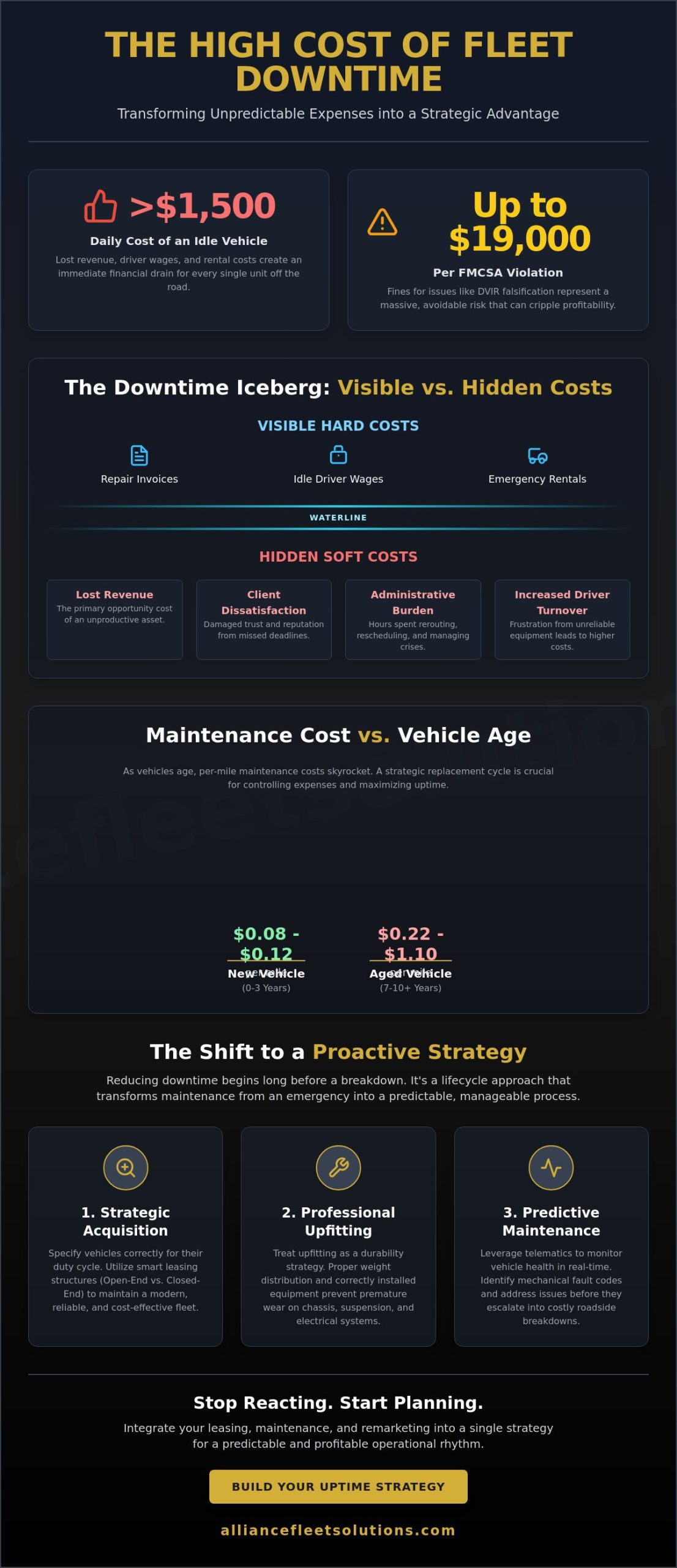
Did you know that for a single service vehicle, the daily cost of being off the road can now exceed $1,500? With FMCSA fines for DVIR falsification reaching up to $19,000 per violation as of February 2026, the stakes for reducing fleet vehicle downtime have never been higher. You’re likely dealing with the headache of unpredictable repairs and the steep expense of short-term rentals while waiting on backlogged technicians. We understand that every hour a unit sits idle, your bottom line and your driver’s morale take a direct hit.
It’s time to stop viewing maintenance as a series of emergencies and start seeing it as a strategic asset. You’ll discover how to transform these costly operational hurdles into a competitive advantage through smarter lifecycle management and telematics. This guide outlines how to achieve a predictable operational rhythm that lowers your total cost of ownership and keeps your best drivers behind the wheel. We’ll show you how to move from reactive fixes to a proactive system that ensures your fleet remains the backbone of a successful business.
Key Takeaways
- Learn to calculate the true financial impact of idle units by accounting for driver wages and emergency costs beyond the repair invoice.
- Discover why the most effective strategies for reducing fleet vehicle downtime begin during the vehicle acquisition and professional upfitting phase.
- Shift from reactive repairs to predictive maintenance frameworks by using telematics to identify mechanical fault codes before they lead to a breakdown.
- Identify how driver behavior influences mechanical wear and how fractional fleet management provides expert oversight to protect your assets.
- Understand how integrating leasing, maintenance management, and remarketing into a single strategy creates a more predictable and profitable operational rhythm.
Calculating the True Financial Impact of Fleet Vehicle Downtime
Downtime isn’t merely a vehicle sitting in a repair bay. It’s any period where a revenue-generating asset is unavailable for its intended purpose. For many logistics managers, reducing fleet vehicle downtime is the primary lever for protecting profit margins. When a unit goes offline, the financial bleeding begins immediately. You aren’t just paying for a repair; you’re paying for the absence of a tool that should be producing income.
Direct costs represent the visible portion of this financial burden. These include the immediate repair invoices, the hourly wages paid to a driver who is now non-productive, and the high cost of emergency rentals to cover the gap. These expenses are easy to track on a balance sheet, but they rarely tell the whole story. The “Downtime Ripple Effect” often causes more damage than the initial mechanical failure. When one vehicle fails, your entire schedule shifts. Other units must take on extra miles, accelerating their own wear and tear, while dispatchers spend hours rerouting deliveries to meet service level agreements.
Hard Costs vs. Soft Costs: A 2026 Perspective
Soft costs are the intangible losses that erode your business from within, such as diminished client trust and the administrative burden of managing a crisis. In 2026, supply chain dynamics have made these costs more volatile than ever. Persistent technician shortages and parts availability issues mean a simple fix can keep a truck off the road for weeks rather than days. Many businesses attempt to mitigate this risk by “over-fleeting,” or maintaining more vehicles than necessary. This is an expensive defensive move that ties up capital in depreciating assets rather than investing in effective fleet management to ensure existing units remain reliable.
Opportunity Cost: What Your Idle Assets Are Really Costing You
To understand the true loss, you must calculate your revenue per vehicle per day. If a medium duty truck generates $1,200 in daily revenue and sits idle for five days, you’ve lost $6,000 in gross income alone. This calculation doesn’t even touch the impact on driver morale. Drivers want to spend their time on the road, not in a waiting room. Frequent breakdowns lead to frustration and increased turnover, which adds the massive cost of recruiting and training new personnel to your list of problems. If you’re looking for a way to stabilize these variables, our Comprehensive Fleet Management Services provide the oversight needed to keep your assets moving. Reducing fleet vehicle downtime starts with acknowledging that an idle truck is a liability that costs far more than the price of a new alternator.
Strategic Prevention: Acquisition and Professional Upfitting
Most managers treat mechanical failure as a maintenance problem. In reality, reducing fleet vehicle downtime begins months before a truck ever hits the road. It starts during the vehicle acquisition phase. If you specify a vehicle that’s underpowered for its duty cycle, you’re essentially scheduling its future breakdowns. Data from 2026 shows a clear “downtime curve” tied to vehicle age. Newer trucks (0 to 3 years old) typically cost between $0.08 and $0.12 per mile to maintain. Once a vehicle passes the 7 to 10 year mark, those costs can skyrocket to anywhere from $0.22 to $1.10 per mile. Strategic acquisition ensures you aren’t fighting a losing battle against physics and depreciation.
Leasing structures play a critical role in managing this curve. Open-end leasing offers the flexibility to cycle vehicles out based on market conditions, while closed-end leasing provides a hard stop that prevents “aged-out” units from draining your budget. By maintaining a disciplined replacement cycle, you ensure your drivers are always in the most reliable equipment. This proactive approach to vehicle acquisition transforms your fleet from a collection of aging liabilities into a high-performance asset pool.
Custom Upfitting as a Durability Strategy
Professional upfitting is about more than just shelving or ladder racks. It’s a fundamental durability strategy. Mismatched equipment or poor weight distribution puts unnecessary strain on the chassis, suspension, and braking systems. This leads to premature wear and frequent “secondary” repairs. For example, a poorly installed liftgate can cause electrical drains that lead to repeated battery failures and no-start conditions. When equipment is engineered for the specific task at hand, it lasts longer and breaks less. Ergonomic design also plays a role; if a driver can’t easily access their tools, they’re more likely to use equipment in ways that cause mechanical damage.
Acquisition Logic: Specifying for Reliability
Specifying the right engine and transmission for your specific geography and payload is vital. A van climbing hills in the Pacific Northwest requires different specs than one idling in Florida traffic. Standardizing these specs across your fleet also simplifies your maintenance rhythm. When your units are uniform, parts replacement becomes faster and more predictable. Modern acquisition also means ensuring every new unit is equipped with integrated telematics for efficient fleet management from day one. This allows you to monitor performance data immediately, catching minor assembly issues before they turn into major road calls. For more insights on building a resilient fleet, explore our guide on Efficient Fleet Operations.
Leveraging Telematics and Predictive Maintenance Frameworks
Traditional maintenance often feels like a guessing game. You follow a calendar or a mileage interval, hoping to catch problems before they happen. While preventive maintenance is better than waiting for a breakdown, it still results in unnecessary shop visits or, worse, missing a critical issue that occurs between scheduled services. For managers focused on reducing fleet vehicle downtime, the answer lies in shifting to a data-driven, predictive maintenance framework. By utilizing telematics and GPS solutions, your vehicles communicate their health in real time, allowing you to move from a defensive posture to an offensive strategy.
Modern telematics systems do more than track location. They monitor the vehicle’s internal computer, instantly identifying “fault codes” or Diagnostic Trouble Codes (DTCs). When a sensor detects an anomaly in the cooling system or fuel injectors, an automated alert is sent to your dashboard. This visibility allows you to schedule a repair during a planned window of inactivity rather than dealing with a roadside emergency. By integrating these alerts with your shop’s scheduling software, you streamline the entire repair process, ensuring parts are ordered and technicians are ready before the truck even arrives.
The Shift from Reactive to Predictive Maintenance
The transition to predictive maintenance is the single most effective way to protect your operational rhythm. Research indicates that every $1 spent on proactive care can save between $4 and $5 in emergency repair and downtime costs. By catching a failing water pump before it leads to an overheated engine, you avoid the thousands of dollars associated with a total engine overhaul and the weeks of downtime that follow.
| Maintenance Strategy | Primary Trigger | Impact on Uptime |
|---|---|---|
| Reactive | Mechanical Failure | Low (High Unplanned Downtime) |
| Preventive | Calendar or Mileage | Moderate (Scheduled Downtime) |
| Predictive | Real-Time Data/AI | High (Maximum Uptime) |
Telematics data transforms a technician’s role from a detective searching for a needle in a haystack into a surgeon performing a precision strike. This data significantly reduces diagnostic time at the shop, getting your drivers back on the road faster.
Integrating Fuel and Maintenance Data
Fuel management programs offer an often-overlooked window into vehicle health. A sudden spike in fuel consumption is rarely just a change in driver behavior; it’s frequently an early warning sign of clogged filters, failing fuel injectors, or dragging brake calipers. By cross-referencing fuel data with engine diagnostics, you identify mechanical inefficiencies that don’t yet trigger a dashboard light. This holistic approach to Maintenance Management ensures you’re monitoring the entire lifecycle of critical components, from tires to transmissions. Telematics can also cut overall maintenance costs by approximately 14% by providing these timely reminders, ensuring your fleet remains the high-performing backbone of your business.
The Human Element: Driver Training and Fractional Management
Technology provides the data, but your drivers provide the execution. Reducing fleet vehicle downtime requires a culture of accountability where every operator understands they’re the first line of defense against mechanical failure. Driver behavior directly impacts the longevity of your assets. Harsh braking doesn’t just wear out pads; it stresses the entire drivetrain and suspension. Excessive idling, a common habit, is a primary cause of Diesel Particulate Filter (DPF) clogging, which can sideline a truck for days of forced regeneration or expensive cleaning.
To turn drivers into uptime advocates, implement a clear, five-step daily inspection protocol. This isn’t just about compliance; it’s about catching minor issues before they escalate into road calls. A consistent routine ensures that small leaks or worn belts are identified in the yard, not on the shoulder of a highway.
- Fluids: Check oil, coolant, and DEF levels daily to prevent engine derate or overheating.
- Tires: Look for low pressure or uneven tread wear that signals alignment issues or impending blowouts.
- Lights: Verify all signals and headlights are functional to avoid preventable DOT stops and fines.
- Dash: Document any active or intermittent warning lights immediately to trigger a service alert.
- Leaks: Scan the ground under the vehicle for fresh drips that indicate failing seals or hoses.
Implementing High-Impact Driver Accountability
Gamifying telematics data is an effective way to encourage “gentle” driving habits. By ranking drivers on metrics like idle time and smooth acceleration, you turn maintenance preservation into a professional standard. Pre-trip and post-trip inspections serve as the bookends of this accountability. When drivers provide detailed, consistent reporting, they significantly reduce the “technician discovery phase” at the shop. A mechanic who receives a specific report about a grinding sound during left turns spends less time diagnosing and more time wrenching, which directly shortens the repair cycle.
Fractional Fleet Management: Expert Oversight on Demand
Mid-sized fleets often face a unique challenge. They’re too large for the owner to manage every oil change, yet too small to justify the $120,000 salary of a full-time fleet director. This is where Fractional Fleet Management provides a strategic advantage. Reducing fleet vehicle downtime becomes manageable when an expert partner audits your repair invoices for “scope creep” and holds shops accountable for turnaround times.
A fractional manager leverages established vendor relationships to ensure your units are prioritized. They speak the language of the shop, ensuring you aren’t paying for unnecessary “while-we-are-at-it” repairs. This professional oversight also extends to vehicle remarketing. By timing the sale of an asset before its maintenance costs spike, a manager ensures you exit the vehicle at peak value, avoiding the heavy downtime associated with aging units. If your team is stretched thin, our Fractional Fleet Management services can provide the backbone your operation needs to stay on the road.
Partnering for Uptime: The Alliance Fleet Solutions Advantage
Achieving a high-performance operation requires more than just reactive fixes; it demands a unified strategy that addresses every stage of a vehicle’s life. Alliance Fleet Solutions positions itself as your essential partner by integrating vehicle acquisition, professional upfitting, and maintenance management into a single, seamless workflow. By consolidating these functions, we remove the friction that typically leads to extended shop stays. Our national service network ensures that whether your unit is in a local yard or across the country, it receives the same high standard of care and consistent repair quality. This level of oversight is vital for reducing fleet vehicle downtime and maintaining a predictable operational rhythm that keeps your business moving forward.
We view fleet management not as an unavoidable cost center, but as a strategic business asset that can drive profitability. When your leasing structures are aligned with a professional vehicle remarketing strategy, you ensure that units are cycled out before they reach the high-cost portion of the maintenance curve. This lifecycle approach keeps your fleet young, reduces your liability exposure, and keeps your drivers satisfied. By framing technical tasks as comprehensive business solutions, we elevate your fleet from a collection of equipment into a competitive advantage in a fast-paced logistics sector.
A Comprehensive Lifecycle Approach
Our process begins at procurement, where we match the right vehicle specs to your specific duty cycle to prevent future failures. We then move into professional upfitting, ensuring that every tool, shelf, and liftgate is installed to reduce mechanical strain on the chassis. As the vehicle enters service, our maintenance management and telematics solutions take over to monitor health in real time. Finally, our fractional fleet management acts as the missing link for your operational efficiency. We provide the expert oversight needed to audit repair invoices and manage shop turnaround times, allowing you to focus on your core business while we handle the technical complexities of your fleet.
Next Steps: Auditing Your Current Downtime
The first step toward optimization is understanding your current baseline. You should begin by auditing your maintenance records to identify your biggest downtime drivers. Are you seeing recurring patterns in specific components, or are certain shops taking longer than others to complete basic repairs? In a volatile 2026 market where parts and labor costs remain unpredictable, a proactive partnership is your best defense against rising operational expenses. Don’t let unpredictable schedules disrupt your deliveries or drain your budget. We invite you to Schedule a Fleet Consultation with Alliance Fleet Solutions to see how our integrated solutions can transform your downtime into uptime.
Securing Long-Term Fleet Reliability
Managing a commercial fleet in 2026 requires a fundamental shift from reactive repairs to a comprehensive lifecycle strategy. You’ve seen how the true cost of an idle vehicle extends far beyond the shop invoice, impacting everything from driver morale to client trust. Reducing fleet vehicle downtime is achieved by aligning your acquisition logic with real-time telematics and high-impact driver accountability. When you treat maintenance as a strategic business asset rather than a recurring headache, you create a predictable operational rhythm that protects your bottom line.
Alliance Fleet Solutions acts as the essential backbone of your operation by providing the expert oversight your team needs to stay on the road. We offer fractional fleet management expertise to audit repair cycles, professional national upfitting services to ensure equipment durability, and customized leasing structures for any industry. Our goal is to alleviate the stress of operational failure by projecting calm, expert control over your most valuable assets. We’re ready to help you turn your fleet into a high-performance tool for business growth.
Optimize Your Fleet Uptime with Alliance Fleet Solutions and start building a more resilient operation today. Your success depends on a fleet that stays in motion, and we’re here to ensure it does.
Frequently Asked Questions
What is the most common cause of fleet vehicle downtime?
Neglecting scheduled maintenance and ignoring early warning signs from drivers are the most frequent causes of unplanned failures. While mechanical wear is inevitable, most breakdowns stem from a lack of consistent oversight during the pre-failure stage. By the time a dashboard light appears, the damage is often already done. Establishing a culture of accountability and strict adherence to service intervals is the most effective way to address these root causes.
How much does the average fleet vehicle downtime cost per day in 2026?
Daily downtime costs vary by industry, but for high-demand sectors like HVAC and plumbing, the daily cost can exceed $1,500 per vehicle. This figure includes lost revenue, driver wages, and the expense of securing replacement units. When you factor in the ripple effect on client schedules and administrative overhead, the total financial impact often climbs much higher than the initial repair estimate on the invoice.
Can telematics really prevent mechanical breakdowns?
Telematics systems identify mechanical fault codes before they lead to a complete breakdown on the road. By monitoring real-time engine diagnostics, these tools allow you to move from reactive repairs to a predictive maintenance model. Industry data shows that fleets utilizing telematics for maintenance reminders can cut overall maintenance costs by about 14%. This technology serves as a digital early warning system that protects your operational rhythm and long-term reliability.
What is fractional fleet management and how does it reduce downtime?
Fractional fleet management provides mid-sized companies with expert oversight on an as-needed basis, eliminating the need for a full-time executive salary. This service focuses on reducing fleet vehicle downtime by auditing repair invoices, managing vendor relationships, and ensuring vehicles are cycled out at the optimal time. An expert manager acts as a strategic partner, holding shops accountable for turnaround times and ensuring your fleet remains a productive business asset.
How does professional upfitting impact vehicle reliability?
Professional upfitting ensures that specialized equipment is correctly matched to the vehicle’s chassis and weight capacity. Mismatched or poorly installed components put excessive strain on the suspension and electrical systems, leading to frequent secondary repairs. By using industry-specific configurations and ergonomic designs, you reduce mechanical stress and prevent on-site equipment failures. Quality upfitting is a fundamental durability strategy that extends the service life of your entire unit while keeping it on the road.
Is it better to lease or buy vehicles to minimize downtime?
Leasing often provides a more predictable path to maximizing uptime because it facilitates a younger, more reliable fleet. Structures like open-end leasing allow you to cycle vehicles out before they reach the high-cost portion of the maintenance curve. While buying may seem cheaper initially, the downtime curve for older vehicles can lead to maintenance costs reaching $1.10 per mile. Leasing ensures you aren’t stuck with aging assets that consistently drain your budget and disrupt schedules.
What are the first steps to implementing a preventive maintenance program?
Start by auditing your current maintenance records to identify recurring failure points and the true cost of your downtime. Once you have a baseline, implement a digital inspection protocol for drivers to ensure pre-trip and post-trip checks are completed accurately. Transitioning to a data-driven schedule based on actual engine hours or mileage, rather than just the calendar, is the final step in building a resilient framework for reducing fleet vehicle downtime effectively.
How do I track downtime accurately across a diverse fleet?
Accurate tracking requires a centralized fleet management system that captures every hour a vehicle is unavailable for revenue-generating work. You must record the time from the initial breakdown to the moment the unit returns to service, including periods spent waiting for parts or technicians. By categorizing these events, you can identify which vendors or vehicle models are causing the most significant delays. This data allows you to make informed decisions about future acquisition and service partnerships.