
What if your fleet could operate like a well-oiled machine, eliminating downtime and slashing costs? Many fleet managers feel overwhelmed by the sheer volume of data generated by their operations. They grapple with rising fuel and repair expenses, while also striving to maintain compliance with federal regulations like ELD. This is where fleet management software comes into play, transforming your manual tracking processes into a streamlined, data-driven operation. In this article, you’ll discover how to successfully implement fleet management software, transitioning to a centralized system that provides a clear view of all your vehicle assets. You’ll learn about predictive maintenance alerts that can prevent costly breakdowns and how to generate insightful reports for your stakeholders. Get ready to optimize your fleet for maximum efficiency and reliability.
Key Takeaways
- Understand the critical role of fleet management software in transforming your operations from manual tracking to data-driven decision-making.
- Learn about key features that enhance fleet efficiency, driving down costs and maximizing vehicle uptime for improved ROI.
- Discover how to choose the right software by evaluating vendors based on your fleet size and industry, avoiding common pitfalls in contracts.
- Follow a step-by-step implementation plan that addresses both technology and the human element to ensure driver buy-in and operational success.
- Explore how partnering with experts at Alliance Fleet Solutions can bridge the gap between software data and tangible results in fleet management.
What is Fleet Management Software and Why Does Your Business Need It?
Traditionally, businesses relied on manual spreadsheet tracking to monitor vehicle performance and maintenance schedules. This method is fraught with risks, including human error and incomplete data. In contrast, fleet management software enables real-time automated data collection, allowing fleet managers to track performance indicators instantly and make informed decisions based on accurate insights.
The Core Components of a Modern Fleet Platform
- Real-time Telematics and GPS: These tools offer precise location tracking and monitor driver behavior, ensuring safety and efficiency.
- Maintenance Modules: They facilitate scheduling and track service history, helping to avoid unexpected breakdowns and extend vehicle lifecycles.
- Fuel Management Tools: These features enable monitoring of fuel consumption and help prevent fraud, which can save significant costs over time.
Why 2026 is the Year to Automate
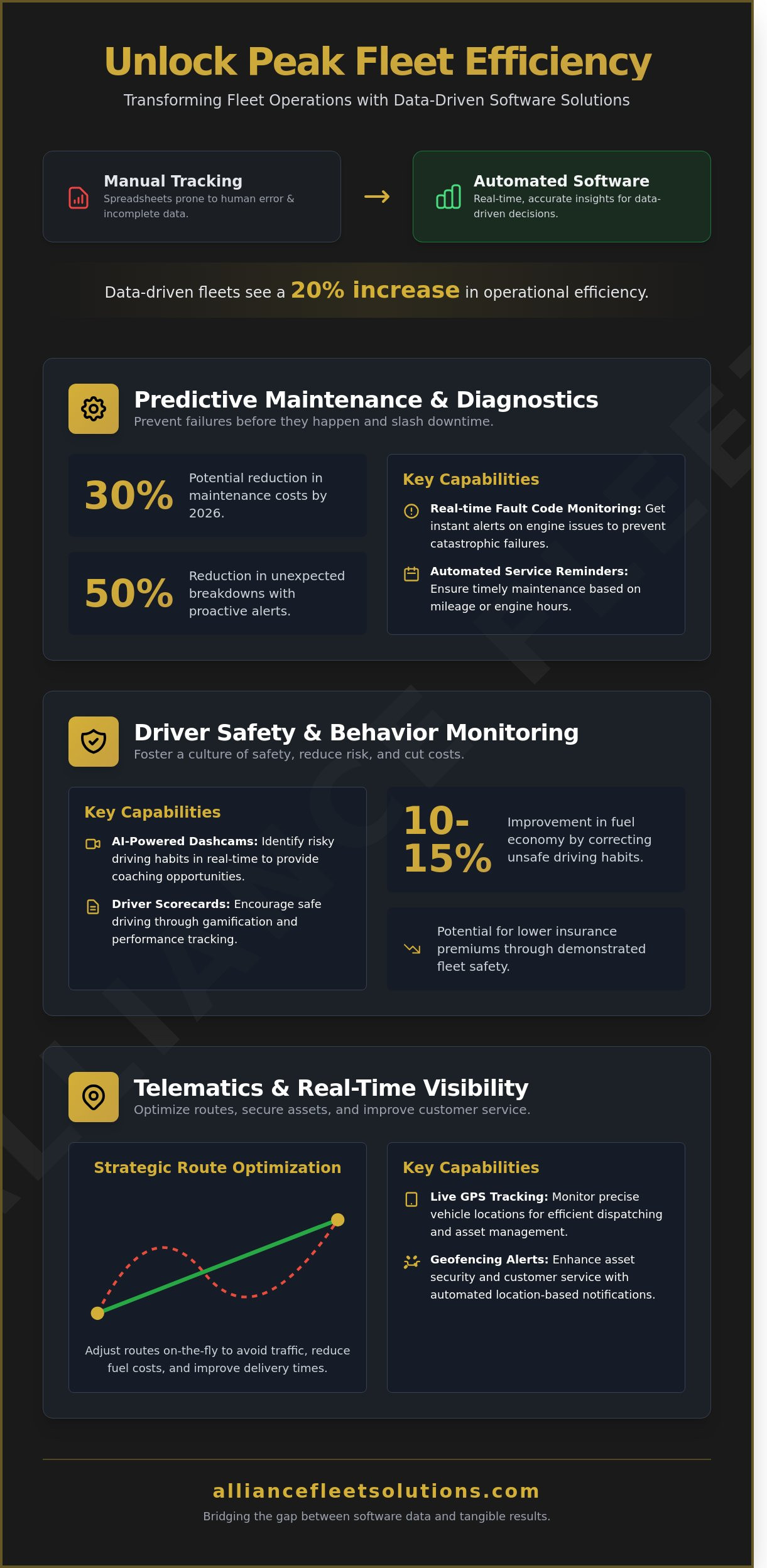
The logistics industry is facing rising repair costs, making it imperative for businesses to adopt predictive maintenance strategies. By 2026, industry experts predict that predictive maintenance can reduce maintenance costs by up to 30%, enabling fleets to operate more efficiently. Additionally, the regulatory landscape for commercial vehicles in the U.S. is evolving, increasing the need for compliance tracking and reporting. Fleet management software helps companies stay ahead of these changes.
Data-driven fleets are outpacing traditional operations. According to a 2022 report from the American Transportation Research Institute, companies utilizing advanced fleet management solutions have seen a 20% increase in operational efficiency compared to those relying on outdated methods. This competitive edge is crucial as businesses strive to meet growing consumer demands and navigate the complexities of modern logistics.
Key Features That Drive Fleet Efficiency and ROI
Implementing fleet management software is a strategic move that can significantly enhance operational efficiency and return on investment (ROI). Focusing on features that directly impact the bottom line is essential for maximizing total cost of ownership (TCO). The right software tools work in harmony to create a proactive fleet environment, allowing managers to anticipate issues rather than react to them. This approach is crucial for maintaining efficient fleet operations and ensuring long-term profitability.
Predictive Maintenance and Diagnostic Alerts
One of the standout features of modern fleet management software is predictive maintenance. By monitoring engine fault codes in real-time, fleets can prevent catastrophic mechanical failures before they disrupt operations. For those managing high-performance European assets, specialized service from Eurotech Automotive ensures these alerts are handled with technical precision. Automated reminders for routine services based on mileage or engine hours help ensure that vehicles get timely maintenance. This proactive approach reduces Vehicle Down Productivity (VDP) losses, which can account for up to 30% of a fleet’s operational costs. For instance, a fleet that implements regular maintenance alerts could see a reduction in unexpected breakdowns by as much as 50%.
Driver Safety and Behavior Monitoring
Driver safety monitoring is another critical feature of fleet management software. Integrating dashcam technology and artificial intelligence enables the identification of risky driving habits. Data shows that improving driver behavior can enhance fuel economy by 10-15%, directly impacting your bottom line and potentially lowering insurance premiums. For business owners looking to extend this protection to their families and key personnel, LifeInsure.com provides an easy way to obtain instant term life insurance quotes without sharing personal details. Implementing driver scorecards also fosters a culture of safety, encouraging drivers to improve their habits and contributing to overall fleet efficiency.
Telematics and Real-Time Visibility
Telematics, including GPS solutions, provide strategic advantages in route optimization and asset management. With real-time visibility, fleet managers can adjust routes on-the-fly to avoid traffic, reducing fuel costs and improving delivery times. Geofencing capabilities further enhance asset security and customer service accuracy by alerting managers to unauthorized movements or ensuring timely arrivals. By integrating data from professional upfitting, fleet management software can also monitor specialized equipment, ensuring that all assets are functioning optimally. Effective telematics performance monitoring transforms raw GPS data into actionable insights that meaningfully reduce your total cost of ownership.
The combination of these features empowers fleet managers to create a cohesive operational strategy that prioritizes efficiency, safety, and cost savings. As the logistics industry continues to evolve, leveraging the capabilities of fleet management software will be essential for staying competitive. Explore how your fleet can benefit by partnering with us for tailored solutions.
Choosing the Right Software: A Comparison Framework
Selecting the right fleet management software is a critical step for any business looking to enhance efficiency and reduce costs. To make an informed decision, you need a structured approach to evaluate different vendors based on your fleet size and industry requirements.
Start by assessing your fleet’s unique requirements. Ask yourself key questions: Do you need ELD compliance? Are you managing specialized upfitted equipment? Understanding these specifics will help you narrow down options that meet your particular needs.
Assessing Your Fleet’s Unique Requirements
Consider whether your infrastructure requires in-house servers or if a cloud-based SaaS solution is more suitable. Cloud solutions offer flexibility and scalability, which can be crucial as your fleet grows. Additionally, evaluate the level of customer support and training provided; these factors can significantly impact your ability to utilize the software effectively.
As you delve deeper into your options, watch for “red flags” in software contracts. Hidden hardware fees, lack of API access, and vague terms can lead to unexpected costs down the line. Ensure you understand the contract fully before making a commitment.
Scalability is another vital aspect to consider. The fleet management software you choose should not only meet your current needs but also grow with your business. A platform that can adapt as your fleet expands or changes will save you from the hassle of switching systems later.
Decide whether to opt for an “all-in-one” platform or “best-of-breed” integrations. All-in-one solutions provide a comprehensive package that can simplify management. However, best-of-breed integrations allow you to select the most effective tools for each function, ensuring optimal performance across all aspects of fleet management.
Integration Capabilities with Fleet Partners
Your fleet management software must seamlessly connect with maintenance providers and leasing partners. This integration is critical for real-time data sharing and decision-making. Open APIs are particularly valuable for linking fuel cards and accounting software, enabling a holistic view of your fleet’s performance.
Finally, consider data portability. If you decide to switch platforms later, having the ability to transfer your data without loss is essential. This flexibility protects your business and ensures continuity in operations.
In conclusion, evaluating fleet management software requires careful consideration of your unique needs, potential hidden costs, scalability, and integration capabilities. By approaching this process methodically, you can select a solution that serves as a reliable partner in optimizing your fleet operations.
A Step-by-Step Implementation Plan for Your Business
Implementing fleet management software requires a strategic approach that balances technical setup and human factors. The following step-by-step plan outlines how to transition from purchase to full operational use effectively. Remember, this process is a marathon, not a sprint, and it requires commitment and engagement from all stakeholders involved.
Phase 1: Hardware Installation and Data Baseline
Your first step involves managing the logistics of installing hardware, such as OBD-II devices or dashcams, across your fleet. This can include scheduling installations during off-peak hours to minimize downtime. Once installed, establish a 30-day data baseline. This period allows you to collect critical metrics without making immediate operational changes. Ensure data accuracy by verifying readings across various vehicle makes and models, as discrepancies can lead to misleading insights.
Phase 2: Driver Training and Policy Updates
Next, update your company vehicle policy to incorporate telematics and data usage guidelines. This is crucial for maintaining transparency and trust within your team. Conduct hands-on training sessions to familiarize drivers with the mobile app interface. Consider creating an incentive program based on metrics derived from the fleet management software. For example, rewarding drivers for improved fuel efficiency can foster a culture of accountability and promote better driving habits.
Phase 3: Optimization and Reporting
After training, focus on optimization. Set up automated weekly reports for key stakeholders to keep them informed about fleet performance. Use the data captured by your fleet management software to identify the first “low-hanging fruit” for cost savings, such as reducing idle time or optimizing routes. Additionally, refine maintenance schedules based on real-world usage data to enhance vehicle uptime and reduce unexpected breakdowns.
Throughout this implementation process, maintaining open lines of communication is essential. Engage with your drivers and stakeholders regularly to discuss progress, address concerns, and celebrate successes. This collaboration not only enhances buy-in but also ensures that everyone is aligned with the company’s goals.
In conclusion, a successful implementation of fleet management software hinges on meticulous planning and execution. By following these phases, you can ensure a smooth transition that maximizes the benefits of your new system. To further streamline your fleet operations and explore tailored solutions, contact us today.
Maximizing the Alliance: Software Meets Expert Management
In the competitive landscape of fleet operations, Alliance Fleet Solutions stands as a crucial bridge between the data provided by fleet management software and the tangible results that drive business success. By leveraging software analytics, we transform raw data into actionable strategies, ensuring that your fleet operates at peak efficiency. This synergy allows us to remove the burden of data analysis from our clients, granting them more time to focus on core business objectives.
Fractional fleet management is a game changer. It alleviates the pressure on busy business owners by placing the responsibility of monitoring software data in the hands of experts. This means less time spent deciphering analytics and more time dedicated to strategic growth. Our team utilizes the insights derived from software data to enhance the fleet management services we offer, creating a proactive partnership that fosters long-term operational reliability.
Data-Driven Vehicle Acquisition and Leasing
Understanding the lifecycle data generated by fleet management software is essential for making informed decisions regarding vehicle acquisition and leasing. For instance, software analytics can pinpoint the optimal time for vehicle remarketing, ensuring your assets retain maximum value. Additionally, performance data enables Alliance to source the right vehicles tailored to your specific needs, ultimately reducing total cost of ownership (TCO). By analyzing real-world wear patterns, we help you make informed upfitting choices that align with operational demands.
The Fractional Management Advantage
Ultimately, while software provides the “what,” our partnership offers the “how.” By combining advanced analytics with expert management, Alliance Fleet Solutions empowers your business to achieve greater efficiency, reduce costs, and enhance service delivery. In a landscape marked by rapid change, our commitment to excellence ensures that you stay ahead of the curve. Trust us to be your strategic partner in navigating the complexities of fleet management.
Take the Next Step Towards Fleet Optimization
Implementing fleet management software can significantly enhance your business operations, driving efficiency and maximizing ROI. By understanding key features and following a structured implementation plan, you can ensure your fleet is not only managed effectively but positioned for long-term success. Remember, choosing the right partner is crucial—expert management combined with advanced software creates a powerful alliance that can streamline operations and reduce downtime.
Ready to transform your fleet management experience? Let Alliance Fleet Solutions manage your data and your vehicles for maximum ROI. With our expertise in commercial leasing and professional upfitting since 2018, we’re committed to optimizing your fleet and enhancing your operations. Take the first step towards a more efficient future today!
Frequently Asked Questions
Is fleet management software expensive for small businesses?
Fleet management software can be affordable for small businesses, with many providers offering scalable pricing options. Some solutions start as low as $25 per vehicle per month, making it accessible for fleets of various sizes. Additionally, considering the potential savings in fuel, maintenance, and labor costs, the investment often pays for itself within a few months.
How does fleet management software improve driver safety?
Fleet management software enhances driver safety by providing real-time monitoring of driving behaviors. Features like speed alerts, harsh braking notifications, and route optimization help identify unsafe practices and encourage safer driving. For example, implementing this software can reduce accident rates by up to 30%, significantly improving overall fleet safety.
Can I use fleet management software for a mixed fleet of cars and heavy trucks?
Yes, fleet management software is designed to accommodate mixed fleets, including both cars and heavy trucks. Many solutions offer customizable features that cater to different vehicle types, ensuring that you can track maintenance, fuel consumption, and driver performance across all vehicles in your fleet efficiently.
What is the difference between GPS tracking and fleet management software?
GPS tracking is primarily focused on locating vehicles in real-time, while fleet management software encompasses a broader range of functionalities. Fleet management software integrates GPS tracking with additional features such as maintenance scheduling, fuel management, and driver performance analysis, providing a comprehensive solution for optimizing fleet operations.
How long does it take to see an ROI after implementing fleet software?
Businesses typically see a return on investment (ROI) within six to twelve months after implementing fleet management software. This timeline can vary based on the fleet size and the specific software features utilized. For instance, companies that actively monitor fuel usage and optimize routes can experience faster savings, often realizing ROI in as little as three months.
Does the software work with specialized upfitted vehicles?
Yes, many fleet management software solutions are compatible with specialized upfitted vehicles. These systems can integrate with various vehicle types, including those modified for specific industries like construction or delivery. It’s important to check with the software provider to ensure compatibility with your specific vehicle configurations.
Is driver buy-in difficult to achieve when installing tracking software?
Gaining driver buy-in can be a challenge, but it is not insurmountable. Clear communication about the benefits, such as enhanced safety and efficiency, can help alleviate concerns. Involving drivers in the implementation process and offering training can also foster acceptance, leading to a smoother transition and better overall engagement.
What happens to my data if I decide to cancel the software subscription?
If you cancel your fleet management software subscription, data retention policies vary by provider. Most reputable companies allow you to export your data before cancellation. It’s crucial to review the terms of service and discuss data handling with your provider to ensure your data is secure and accessible if you need it in the future.