
Is your fleet a genuine asset or a hidden drain on your operational agility? While tradition suggests ownership is the gold standard, the reality of 2026 logistics proves that holding onto aging equipment often creates more friction than value. A comprehensive fleet leasing vs buying analysis is no longer just a math exercise; it’s a survival strategy in a market where the 12% Federal Excise Tax can add up to $30,000 to the price of a single heavy-duty truck. You’re likely feeling the pressure of unpredictable maintenance costs and the heavy administrative lift required to dispose of older units.
We understand you need a fleet that scales with seasonal demand without trapping vital capital in depreciating metal. This guide provides the strategic framework required to present a clear ROI case to your board, focusing on minimizing downtime and stabilizing cash flow. We’ll examine the current 72.5 cents per mile IRS standard rate, the potential impact of the “Modern, Clean, and Safe Trucks Act,” and how specific leasing structures compare to traditional acquisition in the current interest environment.
Key Takeaways
- Shift your financial focus from initial purchase price to Total Cost of Ownership (TCO) to ensure your fleet remains a strategic asset rather than a liability.
- Conduct a data-driven fleet leasing vs buying analysis to determine how preserving credit lines can provide the capital necessary for core business expansion.
- Learn how to integrate professional upfitting and maintenance management into your acquisition model to eliminate massive upfront costs and unpredictable repair spikes.
- Apply a 5-point decision matrix to evaluate vehicle utilization and capital opportunity costs, ensuring every unit in your fleet justifies its impact on the balance sheet.
- Discover how fractional fleet management and end-to-end lifecycle oversight can remove the administrative burden of vehicle remarketing and disposal.
The 2026 Fleet Landscape: Why the Lease vs. Buy Debate Has Shifted
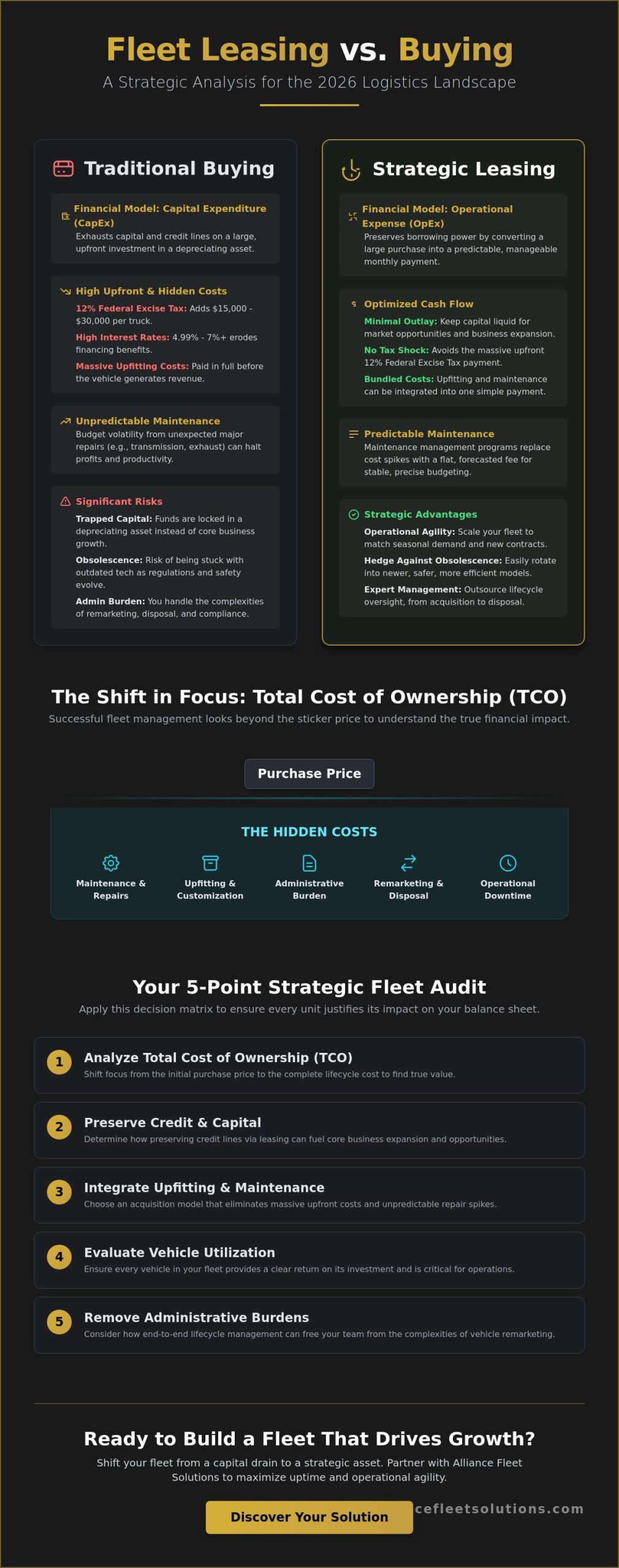
In 2026, the traditional logic of “owning for equity” is failing many business owners. The logistics sector is moving too fast for rigid ownership models to keep pace. When you perform a thorough fleet leasing vs buying analysis today, you’ll find that the math has shifted. Rising interest rates, which now range from 4.99% for new units to over 7% for used equipment, have eroded the benefits of traditional financing. Meanwhile, the 12% Federal Excise Tax (FET) continues to add $15,000 to $30,000 to the cost of new heavy-duty trucks, making the initial capital outlay a significant hurdle. Vehicle scarcity and long lead times mean you might pay a premium for an asset that is already technologically outdated by the time it hits the road.
We are seeing a fundamental transition in how industry leaders view their equipment. Instead of focusing on the prestige of ownership, successful managers are “buying a result.” That result is uptime. In a volatile market, your ability to remain agile is more valuable than a title in a filing cabinet. You need a fleet that serves your current contracts, not one that ties you to the technology of three years ago.
Defining TCO in the Modern Commercial Context
Total Cost of Ownership (TCO) is the cumulative financial impact of a vehicle, spanning from its initial acquisition and upfitting through its operational lifespan to its final remarketing. While the sticker price is visible, the soft costs often determine your bottom line. Administrative burdens, compliance tracking, and the cost of operational downtime frequently eclipse the hard costs of the monthly payment. Modern fleet management relies on telematics to turn these variables into predictable data points. By using real-time GPS and diagnostic solutions, businesses can forecast maintenance needs with surgical precision. This data-driven approach moves your operation away from reactive repairs that halt productivity and toward a model of expert control.
The Obsolescence Risk of Owned Assets
Owning a fleet in a period of rapid technological transition creates a significant risk of trapped capital. As regulators push for zero-emission vehicles and manufacturers introduce advanced safety systems, a truck purchased today may lose its competitive edge much faster than in previous decades. A fleet leasing vs buying analysis reveals that leasing acts as a vital hedge against this obsolescence. It allows your business to rotate into newer, more fuel-efficient models without the headache of vehicle disposal or the financial hit of a plummeting resale value. You don’t want your capital locked in a depreciating asset when you could be reinvesting those funds into core business expansion. This strategy ensures your fleet remains a functional mobile workshop that matches the specific payload and efficiency requirements of your 2026 service contracts.
Financial Deconstruction: Capital Expenditure vs. Operational Flexibility
Choosing between Capital Expenditure (CapEx) and Operational Expense (OpEx) is the cornerstone of any modern fleet leasing vs buying analysis. When you purchase a vehicle, you’re committing a massive amount of liquid capital or exhausting your primary credit lines. This decision often limits your ability to respond to new market opportunities or invest in core business expansion. Leasing, by contrast, preserves your borrowing power. It shifts the financial burden from a heavy upfront investment to a manageable, predictable monthly cost. This alignment is critical because it matches your payments to the revenue the vehicle generates each month, creating a much healthier cash flow cycle.
Ownership also introduces significant volatility into your budget. While a new truck might run perfectly for two years, an owned vehicle eventually hits a wall of unpredictable repair costs. A single transmission failure or exhaust system overhaul can derail a month’s profits. A detailed fleet leasing vs buying analysis highlights that leasing structures often include maintenance management, which replaces these spikes in spending with a flat, forecasted fee. This expert control allows you to manage your fleet with the same precision you apply to your logistics schedules.
Open-End vs. Closed-End Leasing: Which Fits Your Business?
Most commercial operations favor Open-End leasing because it offers the greatest flexibility for high-mileage use. In this model, your business takes on the residual value risk, which is often a benefit if you maintain your equipment well and the resale market is strong. Closed-End leasing is better for predictable, lower-mileage routes where you want the simplicity of returning the keys at the end of the term without further obligation. For a deeper dive into optimizing these models for your specific routes, consult our Strategic Guide to Efficient Fleet Operations.
Incentives, Discounts, and Fleet Purchasing Power
Buying at a local dealer is generally the most expensive way to build a fleet. Individual buyers rarely have the leverage to negotiate beyond standard retail incentives. Strategic fleet management partners utilize volume discounts and Tier 1 pricing that are typically reserved for large-scale government fleet vehicle acquisition programs. By tapping into these established relationships, you can significantly lower your acquisition costs from day one. If you’re looking to optimize your current vehicle acquisition strategy, leveraging this institutional purchasing power is the fastest way to improve your ROI.
The Hidden Costs of Ownership: Maintenance, Upfitting, and Remarketing
Many fleet managers hesitate to lease because they fear losing control over their equipment. They believe that holding the title grants them the final word on how a vehicle is used and maintained. However, a realistic fleet leasing vs buying analysis often reveals the opposite. Ownership frequently traps you in a cycle of reactive decision-making, where your schedule is dictated by equipment failure rather than strategic goals. True control isn’t about owning the asset; it’s about controlling the outcome. By shifting to a managed model, you gain a partner that handles the technical upkeep, allowing you to focus on high-stakes logistics and business growth.
The “Maintenance Cliff” is a critical factor in this transition. This is the specific point in a vehicle’s lifecycle where the cost of repairs and the value of lost productivity exceed the monthly payment of a new lease. When you own your vehicles, you’re often tempted to “squeeze one more year” out of an aging unit. This decision typically results in unpredictable engine failures or exhaust system issues that occur at the worst possible moments. A data-driven fleet leasing vs buying analysis identifies these cliffs before they happen, ensuring your fleet remains a reliable backbone of your operation rather than a source of constant stress.
Professional Upfitting: Customization Without the Upfront Hit
Commercial vehicles are rarely “road-ready” straight from the factory. Whether you need specialized shelving, climate-controlled refrigeration, or integrated telematics, professional upfitting is an essential part of maintenance management and operational readiness. When you buy, these customizations require a massive upfront cash outlay that can’t be recovered easily. Through a strategic lease, these costs are rolled into your monthly payment. This approach preserves your liquid capital and often increases the vehicle’s residual value, as the equipment is installed to professional standards from day one.
Remarketing: Maximizing the Back-End Value
Selling a used commercial vehicle is a complex, time-consuming process that distracts from your core business. Most owners who manage their own disposal end up selling at 15-20% below market value because they lack access to national buyer networks. According to a comprehensive guide to fleet management, vehicle remarketing is a specialized skill that requires timing the market perfectly. Professional remarketing services ensure you cycle your vehicles at the optimal point in their lifecycle, recovering maximum equity and eliminating the administrative burden of title transfers and negotiations. This ensures you aren’t left with a lot full of depreciating assets that no longer serve your mission.
Decision Matrix: A 5-Point Audit for Your Business Fleet
Moving from theory to action requires a structured fleet leasing vs buying analysis tailored to your specific operational data. You shouldn’t make this decision based on gut feelings or outdated accounting habits. Instead, use this 5-point audit to determine if your current acquisition model supports your 2026 growth targets. Start with a utilization audit. If your vehicles are hitting 30,000 miles a year, the maintenance curve on an owned asset will likely become a liability. Conversely, if units sit idle, you’re paying for “trapped capital” that could be better utilized elsewhere.
Consider the capital opportunity cost of your fleet. If you’re looking at a $500,000 purchase price for new equipment, ask yourself if that cash would generate a higher return if invested in your core business. Uptime is your reputation. An older, owned fleet that suffers from frequent breakdowns doesn’t just cost money; it hurts your brand image and professional reliability. Finally, you must have a lifecycle strategy for the vehicle on day 1,500. If you don’t have a plan for disposal and replacement before the first mile is driven, you’re already behind the curve.
Assessing Your Administrative Burden
Managing a fleet involves a relentless stream of paperwork, from plates and titles to vendor repair authorizations. Many businesses overlook the “hidden salary” cost of having an office manager or operations lead play the role of fleet coordinator. These man-hours represent a significant overhead drain. Outsourcing these tasks through a managed lease pays for itself by allowing your staff to focus on high-value logistics rather than administrative minutiae. You can gain expert control over your operations by partnering with a dedicated fleet management team to handle these complexities.
The Strategic Replacement Cycle
A fixed 36 or 48-month replacement cycle is far safer than the “drive it into the ground” mentality. Newer vehicles aren’t just more reliable; they’re essential for driver retention and safety. In 2026, drivers expect modern safety tech and comfortable cabs. Furthermore, newer units allow you to implement advanced Fuel Management Programs that leverage the latest engine efficiencies to reduce your OpEx. This proactive fleet leasing vs buying analysis ensures you’re always operating at the peak of the efficiency curve, rather than struggling with the diminishing returns of an aging fleet.
Alliance Fleet Solutions: The Strategic Partner for National Growth
Alliance Fleet Solutions acts as the essential backbone for companies ready to move beyond the limitations of traditional ownership. While a standard fleet leasing vs buying analysis provides the financial justification for a shift in strategy, our team provides the operational execution required to sustain it. We manage the entire lifecycle of your equipment, from initial vehicle acquisition and professional upfitting to the final stages of vehicle remarketing. This comprehensive oversight allows your leadership team to focus on customer acquisition and market expansion while we maintain expert control over your mobile assets.
Our approach is rooted in the concept of partnership rather than a purely transactional relationship. We understand that in the fast-paced logistics sector, any delay in procurement or maintenance is a direct hit to your bottom line. By leveraging our national reach and industry-specific expertise, we ensure your fleet remains a high-performing asset that matches your 2026 ROI targets. We provide the stability and technical authority necessary to navigate a volatile market, ensuring your drivers stay on the road and your capital stays liquid.
Fractional Fleet Management: The Alliance Difference
Many growing businesses face a common hurdle: they’ve outgrown basic spreadsheets but don’t yet require a full-time, high-salary fleet director. Our fractional fleet management model solves this problem by acting as a professional extension of your internal team. You gain access to seasoned experts who manage your telematics, fuel management programs, and maintenance schedules without the headcount burden. This model is the most cost-effective way for national fleets to implement sophisticated data-driven strategies, ensuring that every unit is optimized for payload, safety, and fuel efficiency.
Customized Acquisition and Upfitting
Alliance specializes in sourcing and configuring vehicles that meet the specific technical demands of your industry. We don’t just deliver trucks; we deliver complete mobile workshops tailored to your operational needs. Our streamlined procurement process significantly reduces your “Time to Street,” getting new units into service faster than traditional dealer-based models. Whether you require complex refrigeration units or specialized shelving systems, our professional upfitting services ensure your equipment is ready for the job on day one. To move your strategy forward, consult with an Alliance expert to run your custom Lease vs. Buy analysis. We’ll help you deconstruct the financial variables and choose the model that maximizes your cash flow and operational agility.
Secure Your Competitive Edge for 2026
The decision to lease or buy determines more than just a monthly payment; it defines your company’s ability to pivot in a fast-moving logistics market. By prioritizing Total Cost of Ownership over simple acquisition price, you protect your liquid capital and ensure your team always operates with modern, reliable equipment. You’ve seen how a thorough fleet leasing vs buying analysis reveals hidden administrative drains and the true financial impact of the maintenance cliff. Transitioning to a managed model isn’t just a financial shift; it’s a commitment to long-term reliability and safety.
Alliance Fleet Solutions provides the expert fractional fleet management and national fleet acquisition network you need to scale without the overhead. We specialize in professional upfitting that matches your specific industry requirements, ensuring every unit is road-ready and optimized for payload from day one. Our team handles the complexities of procurement and disposal so you can focus on high-value growth and customer satisfaction. Take the next step toward total operational control and financial predictability. Request a Custom Fleet TCO Analysis from Alliance Fleet Solutions today. We’re ready to help you build a more resilient, scalable operation.
Frequently Asked Questions
Is it better to lease or buy fleet vehicles for a small business?
The decision depends on your current cash flow and long-term growth plans. Leasing typically benefits small businesses by preserving credit lines and providing predictable monthly expenses. It avoids the high upfront capital requirements of purchasing, which is critical when interest rates for commercial loans range from 4.99% to 7.24%. This approach allows you to reinvest your liquid capital into core business operations instead of depreciating assets.
What is the difference between open-end and closed-end fleet leasing?
Open-end leasing places the residual value risk on your business, making it the preferred choice for high-mileage commercial applications. It offers maximum flexibility for vehicles that face heavy wear. Closed-end leasing allows you to return the vehicle at the term’s end without further obligation, provided you meet mileage and condition requirements. Choosing the right structure is a central part of any professional fleet leasing vs buying analysis.
How does fleet leasing impact a company’s taxes and balance sheet?
Leasing often allows you to categorize payments as an operational expense rather than a capital expenditure. This shift can keep your balance sheet lean and improve your debt-to-equity ratio. You should consult a tax expert regarding 2026 IRS regulations, such as the 72.5 cents per mile standard business rate, to ensure your acquisition model maximizes your available deductions and stabilizes your annual tax liability.
Can I customize or upfit a leased commercial truck?
Yes, professional upfitting is a standard offering during the vehicle acquisition process. You can integrate specialized shelving, refrigeration, or heavy-duty power systems directly into your lease agreement. This rolls the customization costs into your monthly payment, avoiding a massive upfront cash outlay. It ensures your vehicles are road-ready mobile workshops from day one while maintaining a consistent, professional brand image across your entire fleet.
What happens to a leased fleet vehicle at the end of the term?
The end-of-term process depends on your lease structure. In an open-end model, the vehicle is typically sold through a professional network, and any equity recovered beyond the depreciated book value returns to your business. In a closed-end model, you simply return the unit to the lessor. This transition allows you to rotate into newer, more fuel-efficient technology without the administrative headache of managing vehicle disposal yourself.
Is maintenance included in a commercial fleet lease?
Maintenance management can be bundled into your lease to provide a flat, predictable monthly fee for all scheduled upkeep. This strategy prevents the “maintenance cliff” where aging owned vehicles derail your budget with unplanned engine or exhaust repairs. By outsourcing these technical tasks, you gain expert control over your fleet’s uptime and reduce the administrative burden on your internal operations staff.
How does vehicle remarketing work for leased fleets?
Vehicle remarketing is the strategic process of selling off-lease units through national buyer networks to recover maximum equity. Professional managers monitor market data to time these sales for peak returns, often outperforming individual sellers who lack access to wholesale channels. This recovery of value is a critical component of a comprehensive fleet leasing vs buying analysis, ensuring you don’t leave money on the table at the end of the lifecycle.
Can I lease a fleet if my business operates nationally?
Yes, national fleet management partners provide the infrastructure to source, upfit, and maintain vehicles across the country. This centralized approach ensures consistent equipment standards and simplified billing regardless of where your units are deployed. It provides the operational backbone necessary for national expansion, allowing you to manage a geographically dispersed fleet with the same precision as a local operation.