
A plumbing truck is not just a vehicle; it’s a mobile workshop where the engineering of the chassis is just as vital as the organization of the shelving. You likely already know that every minute a technician spends hunting for a tool in a disorganized, overloaded van is a minute of lost revenue. Beyond the daily frustration, failing to account for weight ratings leads to premature wear and safety risks that drain your bottom line. Learning how to spec a work truck for plumbing requires a strategic balance between technical payload requirements and long-term financial performance.
We’ll show you how to master these variables to maximize billable hours and reduce your total cost of ownership. This guide covers everything from managing the $31,300 Section 179 deduction cap for 2026 work trucks to integrating AI-powered telematics for better safety. You will gain a clear blueprint for building a high-efficiency fleet that leverages professional upfitting to transform your vehicles into strategic business assets rather than mounting expenses.
Key Takeaways
- Learn why calculating “wet weight”—including tools, parts, and full water tanks—is essential for selecting a chassis that ensures long-term vehicle durability.
- Discover how to spec a work truck for plumbing using a strategic “Zone System” to organize high-frequency tools for faster technician access and increased billable hours.
- Understand how treating telematics as a core hardware requirement allows you to use predictive data to schedule maintenance before a breakdown happens.
- Compare open-end and closed-end leasing models to find the right financial structure for your business’s cash flow and tax optimization goals.
- Gain a competitive edge by leveraging fractional fleet management to oversee everything from professional upfitting to vehicle remarketing.
Determining the Right Foundation: Chassis, Payload, and GVWR
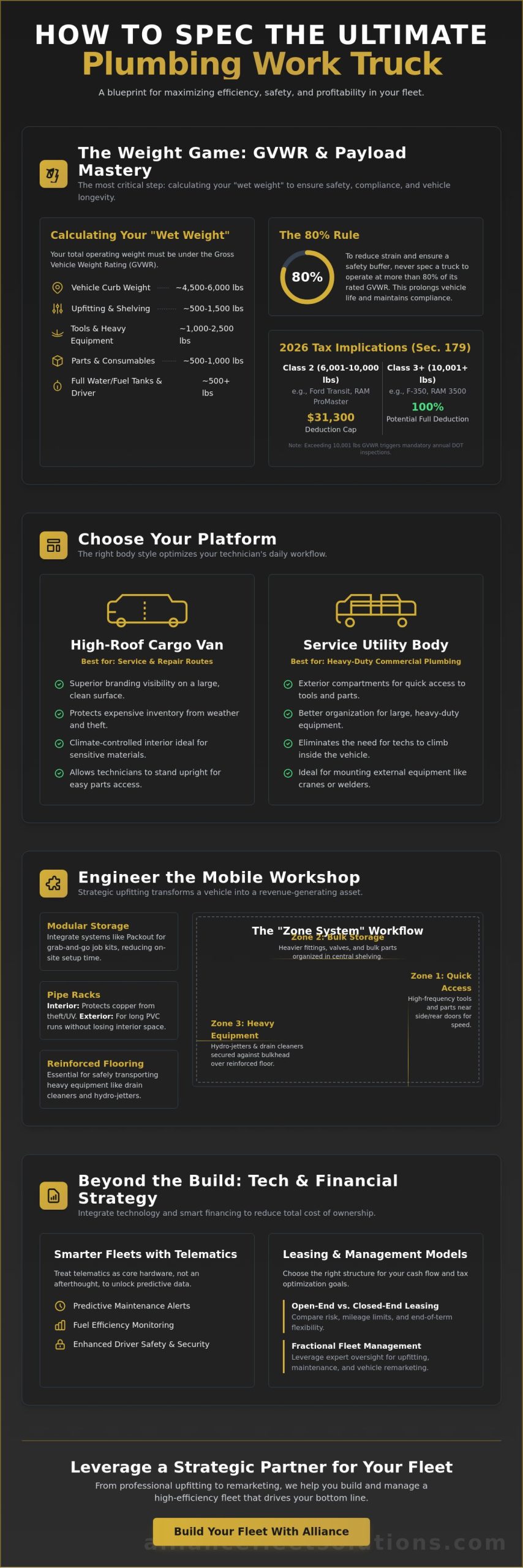
The chassis is the silent engine of your plumbing business. While many owners focus on the interior shelving, the most critical step in learning how to spec a work truck for plumbing is identifying your Gross Vehicle Weight Rating (GVWR). This number represents the maximum weight your vehicle can safely carry, including the chassis, fuel, passengers, and every piece of equipment. Exceeding this limit doesn’t just invite fines; it accelerates transmission wear and compromises braking distance. In the U.S., the truck classification system defines vehicles by these ratings, and crossing the 10,001 lbs threshold triggers mandatory annual DOT inspections under 49 CFR §396.17.
You must calculate your “wet weight” before signing a lease. This includes the weight of a full tank of fuel, the driver, and any specialized equipment like hydro-jetters that may carry their own water supply. For 2026, financial engineering is just as important as mechanical specs. Vehicles with a GVWR between 6,001 and 14,000 lbs are eligible for a Section 179 tax deduction capped at $31,300, while those over 14,000 lbs may allow for a full purchase price deduction. Choosing between a Class 2 and Class 3 vehicle is a decision that impacts your tax strategy, maintenance schedule, and driver licensing requirements.
Calculating Your Actual Payload Requirements
Precision matters when inventorying your mobile workshop. Heavy equipment like pipe threaders, drain cleaners, and large reels of PEX add up quickly. Beyond the machines, you must account for “consumable weight.” A full stock of copper fittings, brass valves, and cast iron pipe can easily add 500 to 1,000 lbs to your daily load. We recommend the 80% Rule: never spec a truck to operate at 100% of its rated capacity. Keeping your daily load at or below 80% of the GVWR provides a safety buffer, reduces strain on the suspension, and ensures your vehicle remains compliant even when you pick up extra materials for a large job.
Van vs. Service Body: Choosing the Right Platform
The choice of body style dictates your technician’s daily workflow. High-roof cargo vans offer superior branding visibility and keep your expensive inventory protected from the elements in a climate-controlled interior. They’re ideal for service and repair routes where techs need to stand upright while searching for small parts. Conversely, service utility bodies provide external compartment access, which is better for heavy-duty commercial plumbing. These bodies allow for better organization of large tools and specialized parts without the tech having to climb into the vehicle. As we move through 2026, consider your route density. If your plumbing routes are concentrated in urban centers, an EV chassis might offer lower lifecycle costs, provided your charging infrastructure can support the heavy payload demands of a fully stocked plumbing rig.
Designing the Mobile Workshop: Plumbing-Specific Upfitting
A plumbing truck is a revenue-generating tool. If your technician spends fifteen minutes every morning digging through a pile of loose fittings to find a specific brass coupling, you are losing billable hours and increasing frustration. Mastering how to spec a work truck for plumbing requires more than just buying generic shelves; it requires engineering a workflow that mirrors the technician’s on-site needs. While government agencies utilize Federal fleet management solutions to standardize their massive inventories, private plumbing fleets can achieve similar precision through customized interior layouts. A professional upfitting strategy ensures every cubic inch of your cargo space contributes to your profit margin.
The modern plumbing fleet is moving toward modularity. In 2026, we see a significant shift toward integrating portable storage systems, like Milwaukee Packout, directly into fixed shelving units. This allows a technician to grab a pre-stocked kit for a specific job—such as a water heater installation or a faucet repair—and bring it directly to the workspace. For long materials, the debate between interior and exterior pipe racks continues. Interior racks keep expensive copper and PEX protected from theft and UV damage, while exterior drop-down racks are essential for hauling 20-foot lengths of PVC without sacrificing interior standing room. If you carry heavy drain cleaners or hydro-jetters, spec’ing a reinforced floor and a lightweight aluminum ramp is a non-negotiable requirement to prevent technician injury and vehicle floor damage.
Optimizing the Interior Workflow
We recommend a three-zone approach to interior organization. The Primary Zone includes the areas immediately accessible from the side and rear doors. This space is reserved for tools used on every call, such as pipe wrenches, torches, and leak detectors. The Secondary Zone occupies the main shelving units, housing bulk inventory like PVC and PEX fittings. Finally, the Tertiary Zone is the deep interior or high-shelf space. Use this for emergency parts, specialized pumps, or seasonal equipment that isn’t required for daily service calls. This hierarchy ensures the most frequent tasks are completed with the least amount of movement.
Safety and Ergonomics in 2026
Safety is a business solution. High-output LED interior lighting is now a standard spec because it eliminates the “dark cave” effect that leads to lost parts and eye strain during late-night emergency calls. Ergonomics are equally vital. Drop-down ladder racks significantly reduce the risk of shoulder and back injuries by bringing the equipment down to a manageable height. Perhaps most importantly, never skip a crash-rated bulkhead. A solid partition doesn’t just keep the cabin quieter and easier to cool; it acts as a life-saving barrier between your driver and a thousand pounds of flying plumbing inventory in the event of a sudden stop.
Integrating Fleet Technology: Telematics and Maintenance
In 2026, the plumbing truck has evolved from a simple transport vehicle into a sophisticated, connected asset. When you evaluate how to spec a work truck for plumbing, technical hardware like sensors and GPS modules must be prioritized alongside shelving and partitions. Data from 2026 shows that 80% of fleet professionals now utilize GPS tracking technology. This adoption isn’t just about finding the nearest technician; it’s about business survival. Fleet managers using these integrated systems report average cost decreases of 11% to 19% across fuel, labor, and maintenance. By spec’ing your vehicle with factory-installed or aftermarket telematics from the start, you move from reactive repairs to a model of total uptime.
Predictive analytics have replaced the traditional “wait until it breaks” mentality. Modern AI-supported models analyze real-time engine data to identify early indicators of risk before they lead to a roadside breakdown. This is especially critical during high-scrutiny periods like the CVSA International Roadcheck scheduled for May 12-14, 2026, which focuses heavily on ELD compliance and cargo securement. Integrating these systems allows your business to maintain a proactive stance, ensuring that your mobile workshops stay on the road during your busiest seasons. Additionally, AI-powered video telematics now help 74% of fleets improve driver safety, which directly translates to lower insurance premiums and reduced accident-related costs.
The Role of Telematics in Plumbing Operations
Efficiency in plumbing requires precise dispatching to minimize “windshield time.” Real-time GPS allows dispatchers to reroute technicians based on live traffic data and emergency call priority. Beyond navigation, engine diagnostics provide a window into the health of your fleet, alerting you to cooling system issues or braking wear before a dashboard light even appears. We ensure a natural integration with telematics and gps solutions to provide a single, unified view of your entire operation’s performance.
Maintenance Management for High-Usage Vehicles
Plumbing routes often involve heavy stop-and-go city driving, which places extreme stress on standard components. To maximize vehicle life, spec heavy-duty brakes and high-output alternators that can handle the electrical load of charging tool batteries and running interior LED lighting. Standardizing these components across your fleet simplifies maintenance management and reduces the variety of spare parts you need to keep in stock. For businesses without a dedicated fleet department, leveraging fractional fleet management provides expert oversight of these service schedules without the overhead of a full-time salary.
Financial Engineering: Leasing Models and Total Cost of Ownership
Financial performance is the final metric for any fleet decision. Understanding how to spec a work truck for plumbing requires a shift from viewing a vehicle as a sunk cost to seeing it as a depreciating asset that can be optimized for tax efficiency. For the 2026 tax year, the maximum Section 179 deduction for qualifying equipment has reached $2.56 million. While vehicles with a GVWR between 6,001 and 14,000 lbs face a $31,300 cap, you can still apply a 20% bonus depreciation to the remaining cost after the initial deduction. Aligning your vehicle acquisition with these thresholds ensures you maximize immediate cash flow while building a high-performance mobile workshop.
Total cost of ownership (TCO) extends far beyond the monthly lease payment. It includes fuel, maintenance, and the hidden cost of technician downtime. When you spec a truck for plumbing, you must account for the vehicle’s entire lifecycle. Spec’ing your truck with modular professional upfitting today increases its resale value tomorrow. Buyers in the secondary market value organized, well-maintained service bodies. When you are ready to rotate your assets, our vehicle remarketing services ensure you capture the maximum return on your investment. Strategic planning prevents the financial drain of operating obsolete or inefficient equipment.
Leasing Strategies for Growing Plumbing Fleets
High-mileage service routes require a specific financial structure. An open-end leasing model often provides the best flexibility for plumbing businesses. Unlike closed-end leases that may penalize you for excessive wear or high mileage, open-end agreements allow you to manage the vehicle’s terminal value based on its actual use. This is vital when your trucks are carrying heavy payloads that increase mechanical strain. By matching lease terms to the five or seven-year lifecycle of your plumbing equipment, you avoid the capital drain of large cash outlays for fully upfitted vehicles.
Maximizing ROI Through Smart Spec’ing
Efficiency is the primary driver of ROI in the plumbing sector. Weight-optimized shelving and aerodynamic ladder racks help lower fuel consumption, which is further managed through integrated fuel management programs. Data from 2026 indicates that fleet managers using technology report average cost decreases of 11% to 19% in labor and maintenance. These savings stem from reduced “search time” for parts and more proactive service intervals. This efficiency directly impacts your bottom line by increasing the number of billable hours each technician can log. To build a fleet that balances technical performance with financial strength, contact our team for customized vehicle acquisition and leasing solutions.
Scaling Your Plumbing Fleet: The Alliance Partnership Advantage
Scaling a plumbing business requires more than just adding bodies to the payroll. It demands a repeatable, high-performance vehicle strategy. When you master how to spec a work truck for plumbing, you create a standard that ensures every new hire is as productive as your most seasoned veteran. Alliance provides a comprehensive vehicle acquisition and professional upfitting process that eliminates the guesswork. We handle everything from sourcing the right chassis to installing complex shelving systems, allowing you to focus on managing your service calls rather than managing a build schedule. This end-to-end approach ensures your fleet branding and technical specs remain consistent as you expand into new territories.
Many growing businesses reach a point where they need expert oversight but aren’t yet ready for a full-time fleet director. This is where fractional fleet management becomes a strategic asset. You gain access to seasoned experts who understand the nuances of vehicle remarketing, fuel programs, and maintenance schedules. This partnership ensures your fleet remains a functional backbone for your operation. We provide the same level of sophistication used by national corporations but tailor it to your specific local or regional footprint. It is a no-nonsense solution for owners who value operational uptime and financial clarity.
Why a Turnkey Solution Beats DIY Upfitting
Plumbers are skilled tradespeople, but using their billable hours to build out their own trucks is a hidden drain on your revenue. If a technician spends two days installing shelves and racks, that is 16 hours of lost labor income that you can never recover. Professional upfitting ensures that every modification is safety-compliant and preserves your vehicle warranty. By leveraging our fleet management services, you ensure that every truck in your fleet meets the same rigorous standards for ergonomics and organization. This consistency makes it easier for technicians to switch vehicles if a primary unit is in the shop, as the tool layout remains identical across the fleet.
Your Next Steps in Fleet Optimization
The first step toward a more efficient operation is a comprehensive fleet audit. We help you identify underperforming specs, such as vehicles that are consistently overloaded or those with high maintenance costs, and replace them with optimized alternatives. Establishing a standardized blueprint for how to spec a work truck for plumbing allows you to scale rapidly when market demand increases. Consulting with a specialist ensures your vehicle specs align with your long-term business goals, from tax optimization to technician retention. Stop treating your trucks as individual units and start managing them as a unified, high-efficiency system that drives your business forward.
Build Your High-Performance Plumbing Fleet Today
Spec’ing a plumbing truck for 2026 is an exercise in balancing technical precision with financial foresight. You now understand that the right foundation starts with an accurate GVWR calculation that accounts for “wet weight” and heavy tool inventory. By moving beyond generic shelving to a modular “Zone System” and integrating AI-powered telematics, you transform a simple van into a proactive business asset. These choices don’t just improve technician workflow; they protect your bottom line by reducing maintenance downtime and maximizing resale value through strategic vehicle remarketing.
Mastering how to spec a work truck for plumbing is a complex process, but you don’t have to navigate it alone. Partnering with experts who understand the intersection of heavy-duty logistics and business performance is the fastest way to scale your operations. We offer specialized plumbing upfit expertise and flexible open-end leasing options designed to match your specific route demands. Whether you need end-to-end vehicle acquisition or national fleet management, we provide the backbone your business needs to thrive. Let Alliance Fleet Solutions spec your next plumbing powerhouse and start building a more profitable, reliable fleet today.
Frequently Asked Questions
What is the best vehicle for a service plumber in 2026?
High-roof cargo vans like the Ford Transit or Mercedes-Benz Sprinter remain the top choice for service plumbers in 2026. These vehicles provide the necessary standing room for technicians to organize parts and branding space for company visibility. For heavy commercial work involving large drain cleaners, a chassis cab with a service utility body offers better external access. Your choice should depend on whether you prioritize interior climate control or external tool organization.
How much payload capacity does a plumbing truck actually need?
Most service plumbers require a payload capacity between 3,000 and 4,000 lbs to carry tools, inventory, and a full water heater safely. When you’re learning how to spec a work truck for plumbing, you must account for the weight of the technician and a full fuel tank. Operating too close to the GVWR limit increases maintenance costs and compromises braking distance. Always leave a 20% safety buffer for extra materials.
Is it better to lease or buy a work truck for a plumbing business?
Open-end leasing is generally superior for plumbing businesses because it preserves working capital and offers significant tax advantages. Leasing allows you to cycle out vehicles before maintenance costs spike while providing the flexibility to handle high-mileage service routes. This financial model also simplifies the process of upgrading to newer technology without large cash outlays. It keeps your fleet modern and your monthly expenses predictable.
What are the most essential upfitting accessories for plumbers?
A crash-rated bulkhead is the most essential accessory to protect your driver from flying equipment during a sudden stop. Beyond safety, plumbers should prioritize high-output LED interior lighting and drop-down ladder racks to reduce physical strain. Integrating modular bin systems allows technicians to carry pre-stocked kits directly to the job site. This organization significantly reduces “search time” and increases your daily billable hours.
How does telematics help a plumbing fleet save money?
Telematics systems help fleets save an average of 11% to 19% across fuel, labor, and maintenance costs by providing real-time data. These systems allow for smarter dispatching and predictive maintenance, catching engine issues before they lead to expensive roadside failures. In 2026, AI-powered video telematics also help reduce insurance premiums by improving driver safety. It’s a hardware requirement that pays for itself through increased uptime.
Can I include upfitting costs in a commercial vehicle lease?
You can include the entire cost of professional upfitting within a commercial vehicle lease agreement. Rolling these costs into a single monthly payment helps preserve your business’s cash flow and ensures the vehicle is ready for service immediately upon delivery. This approach also allows you to benefit from Section 179 tax deductions on the total value of the upfitted asset. It’s an efficient way to acquire a turnkey mobile workshop.
What is the difference between Class 2 and Class 3 trucks for plumbing?
The primary difference lies in the Gross Vehicle Weight Rating (GVWR); Class 2 trucks stay under 10,000 lbs, while Class 3 trucks range from 10,001 to 14,000 lbs. Class 3 vehicles offer higher payload capacities but are subject to mandatory annual DOT inspections under 49 CFR §396.17. Understanding these classifications is vital for determining your maintenance schedule and ensuring regulatory compliance. Class 3 trucks often provide the durability needed for heavy-duty commercial plumbing.
How often should a heavily spec’ed plumbing truck be replaced?
Heavily spec’ed plumbing trucks should typically be replaced every five to seven years or around 150,000 miles. Beyond this point, the total cost of ownership often rises due to increased mechanical failures and operational downtime. Replacing vehicles on a regular schedule through a remarketing program ensures you maintain a professional brand image. It also allows your fleet to leverage the latest safety and fuel-efficiency technologies as they emerge.