
What if your fleet vehicles were actually costing you more by sitting idle than by being on the road? For many managers, the frustration of a disorganized workspace or a poorly configured truck leads to significant operational downtime. Finding the right vocational truck upfitting solutions often feels like a secondary task, but in 2026, it’s a critical financial strategy. You likely agree that a vehicle is only as good as the tools it carries and how easily your team can access them.
We’ll show you how to transform standard chassis into high-performance assets that lower your Total Cost of Ownership (TCO) while maximizing the 100% bonus depreciation and the $2,560,000 Section 179 deduction limit available this year. You’ll learn how to manage current supply chain challenges, including lead times that have extended by up to 45 days, and integrate upfitting directly into your acquisition process. This guide covers everything from modular designs to meeting the latest CVSA 2026 North American Standard Out-of-Service Criteria, ensuring your fleet remains productive, compliant, and profitable.
Key Takeaways
- Learn how “One-Invoice” procurement allows you to roll customization costs into a single lease payment, simplifying your accounting and preserving capital.
- Discover how professional vocational truck upfitting solutions transform standard chassis into specialized mobile workstations that significantly reduce site-specific downtime.
- Identify the essential equipment configurations for construction and utility sectors, from heavy-duty tool vaults to climate-controlled storage, to boost on-site productivity.
- Master a five-step configuration process that starts with a field-based operational audit to ensure every asset is perfectly tailored to your crew’s actual workflow.
- Understand the strategic benefit of integrating vehicle acquisition and upfitting to minimize the delivery window and get your high-performance assets on the road faster.
What are Vocational Truck Upfitting Solutions?
Vocational truck upfitting solutions represent the strategic engineering of a standard commercial chassis into a precision-tuned tool for a specific trade. In 2026, the industry has moved past the era of generic work vans. Modern fleets now require mobile workstations that function as the backbone of their operations. This shift is driven by a need for extreme efficiency on the job site. When every minute of a technician’s day is tracked, spending 20 minutes searching for a specific fitting in a cluttered van isn’t just a nuisance; it’s a direct hit to your bottom line.
Professional upfitting also addresses high-stakes compliance. With the CVSA 2026 North American Standard Out-of-Service Criteria now in full effect, ensuring that your equipment is secured and your vehicle isn’t overloaded is essential for avoiding costly roadside delays. Beyond compliance, providing a well-organized, high-performance vocational truck serves as a powerful tool for employee retention. Technicians stay longer when they have the right equipment to do their jobs safely and effectively.
The Core Components of a Vocational Upfit
Effective upfitting integrates three primary layers of hardware to create a cohesive system:
- Interior solutions: This includes heavy-duty shelving, modular bins, and secure partitions that protect the driver while keeping inventory organized.
- Exterior modifications: Specialized additions like ladder racks, liftgates, and utility bodies allow the vehicle to handle larger payloads and specific site requirements.
- Power and electronics: Modern upfits often include inverters for on-site power, auxiliary safety lighting, and integrated telematics hardware to monitor vehicle health and location.
Why ‘Off-the-Shelf’ Solutions Fail Modern Fleets
Generic kits often promise a quick fix but frequently lead to hidden operational costs. These “universal” setups rarely account for the specific dimensions of your trade’s tools, leading to wasted space and shifting loads. Improper weight distribution is a common safety risk with generic setups, which can compromise braking distance and handling.
Strategic vocational truck upfitting solutions ensure the equipment weight is balanced across the chassis. This precision prevents premature wear on tires, brakes, and suspension components. By choosing a custom configuration, you protect the long-term resale value of the asset and ensure it remains within the legal tire load restriction markings mandated by the FMCSA as of March 2026. Investing in a professional build-out isn’t just about storage; it’s about protecting the mechanical integrity of your fleet.
Essential Upfitting Solutions by Industry Sector
Every trade faces unique challenges on the ground, and your vehicles should reflect those specific needs. High-performance vocational truck upfitting solutions aren’t just about adding shelves; they’re about creating a tailored environment that supports your crew’s daily workflow. For construction and general contracting, this means prioritizing durability. Heavy-duty racks for lumber or ladders, secure tool vaults to prevent theft, and on-board power systems allow your team to operate independently at remote sites without relying on external generators.
The utility and telecommunications sectors require a different approach. These fleets often rely on specialized bucket bodies and high-visibility safety lighting to protect workers in high-traffic areas. According to standards set by the NTEA – The Association for the Work Truck Industry, proper equipment integration is vital for maintaining vehicle stability during aerial operations. We also see a growing demand for climate-controlled cabin storage to protect sensitive testing equipment from extreme temperatures.
In the HVAC and plumbing trades, organization is the primary driver of ROI. Specialized refrigerant tank racks and pipe conduits keep heavy materials secure, while moisture-resistant liners protect the van floor from chemical spills and water damage. For delivery and logistics, speed and driver safety take center stage. Folding shelves allow for flexible cargo layouts, and non-slip flooring paired with advanced cargo securement systems reduces the risk of workplace injuries during rapid loading and unloading cycles. If you’re looking to optimize your current fleet, our Professional Upfitting services provide the technical expertise to match the right hardware to your specific trade requirements.
Optimizing for Weight and Fuel Efficiency
Weight management is a critical factor in modern upfitting strategy. By utilizing advanced composite materials for shelving and partitions, you can reduce the overall vehicle weight. This weight reduction directly translates to increased payload capacity and improved fuel economy. Aerodynamic exterior additions, such as low-profile ladder racks, also minimize drag on the highway. These physical optimizations work in tandem with digital tools like Fuel Management Programs to drive down the total cost of ownership across your entire operation.
Integrating Telematics and GPS Hardware
Strategic upfitting includes the seamless integration of technology. Hard-wiring telematics and GPS hardware during the initial build-out prevents driver tampering and ensures a more reliable data stream. Beyond simple tracking, modern sensors can monitor equipment usage, such as how many times a crane cycles or a liftgate deploys. This data is essential for Efficient Fleet Operations, as it allows managers to schedule preventative maintenance based on actual equipment wear rather than just odometer readings.
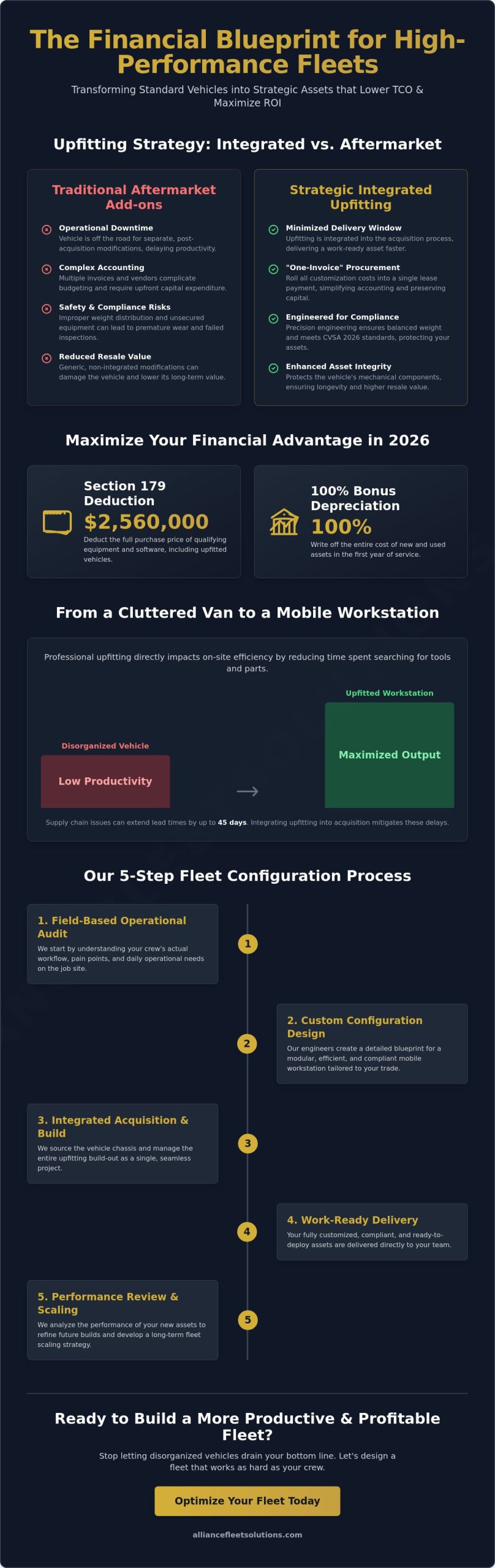
The Financial Case: Integrated Upfitting vs. Aftermarket Add-ons
Many fleet managers view vehicle customization as a retail transaction rather than a strategic financial move. However, the choice between professional vocational truck upfitting solutions and piecemeal aftermarket add-ons significantly impacts your balance sheet. While “DIY” upfitting might seem like a way to save on upfront costs, it often results in higher labor expenses and extended vehicle downtime. When your own technicians spend days installing shelving or lighting, they aren’t performing the revenue-generating maintenance that keeps your fleet moving.
Integrated upfitting offers the advantage of “One-Invoice” procurement. This model allows you to roll the entire cost of customization into a single lease payment. By doing so, you preserve your liquid capital for other operational needs while ensuring the vehicle is ready for work the moment it arrives. According to the NAFA Fleet Management Association, standardized, professional builds also simplify the remarketing process. High-quality, trade-specific upfits often increase a vehicle’s desirability on the secondary market, whereas “home-grown” modifications can lead to lease return penalties if they damage the chassis or interior panels.
Tax Benefits and Depreciation of Upfit Equipment
The 2026 tax landscape provides powerful incentives for fleet investment. For the 2026 tax year, the Section 179 deduction limit is $2,560,000. This allows your business to deduct the full purchase price of qualifying equipment and software in the first year. Combined with the 100% bonus depreciation currently in effect for 2026, you can write off the entire cost of your upfitted assets immediately. Smart fleet planning also involves considering the lifecycle of the upfit itself. In many cases, high-quality shelving and storage systems outlast the vehicle chassis. A professional partner can help you design configurations that are easily transferred to new vehicles, maximizing your initial investment across multiple lifecycles.
Reducing Total Cost of Ownership (TCO)
Real ROI is often found in the small details of daily operations. Industry data suggests that a well-organized vehicle can save a technician just 15 minutes of “search time” per day. Over a fleet of 20 vehicles, that equates to 1,250 hours of recovered productivity annually. Beyond labor, professional upfitting protects the physical asset. Moisture-resistant liners and secure partitions prevent the interior damage and rust that lead to expensive repairs. Integrating these solutions into a broader Maintenance Management Guide strategy ensures that your upfitted components are inspected and maintained alongside the vehicle’s mechanical systems, further driving down your TCO.
Designing Your Fleet: A 5-Step Process for Custom Configurations
Successful fleet managers treat vehicle design as a rigorous engineering project rather than a shopping trip. High-performance vocational truck upfitting solutions require a structured procurement process that aligns hardware with actual field behavior. This methodology prevents the common mistake of buying expensive equipment that technicians eventually bypass or remove because it hinders their workflow. By following a disciplined five-step framework, you ensure every asset is purpose-built for the task at hand.
- Step 1: Operational Audit. Spend time in the field. Observe how your crews interact with their vehicles on-site to identify bottlenecks.
- Step 2: Payload and Chassis Matching. Calculate the total weight of tools, technicians, and the upfit itself. Ensure the base vehicle chassis can handle the load without exceeding its Gross Vehicle Weight Rating (GVWR).
- Step 3: Equipment Selection. Choose trade-specific modules that maximize vertical space and keep high-frequency items within easy reach.
- Step 4: Integration Planning. Map out your electrical needs for auxiliary lighting and hard-wire your telematics systems during the build phase.
- Step 5: Lifecycle Review. Plan for the end of the vehicle’s service life. Determine if components can be transferred to a new chassis or if the upfit will enhance the asset’s remarketing value.
Conducting an Effective Operational Audit
An audit is the foundation of a productive build. Identify “high-frequency” tools that your team uses every hour; these must be the most accessible. If your technicians spend significant time on laptops or tablets, consider mobile office configurations with integrated charging ports. You should also evaluate if your team needs specialized exterior equipment, such as bed slides or cranes, to reduce the risk of lifting injuries. This data-driven approach ensures your vocational truck upfitting solutions solve real-world problems.
Chassis Selection and Payload Compliance
Selecting the wrong chassis is a costly error. Maxing out a vehicle’s GVWR leads to premature suspension wear and increased braking distances; this endangers your drivers and increases maintenance costs. You must choose between a van, service body, or flatbed configuration based on the specific volume and weight requirements of your trade. Every modification must meet national safety and DOT standards to avoid fines during CVSA inspections. To ensure your next build is perfectly balanced and compliant, you can consult with our professional fleet planning team today.
Scaling Your Fleet with Alliance: Seamless Acquisition and Upfitting
Alliance Fleet Solutions provides a comprehensive ecosystem where vehicle acquisition and vocational truck upfitting solutions converge into a single, streamlined workflow. We eliminate the traditional friction of managing multiple vendors by bringing sourcing, customization, and leasing under one roof. Our national reach ensures that whether you operate a single regional site or a multi-state logistics network, your specialized equipment arrives ready to work. We view our role as a strategic business partner rather than a simple service provider. Our goal is the long-term optimization of your fleet performance and the reduction of administrative burdens on your management team.
By integrating professional upfitting directly into the acquisition phase, we provide a “One-Invoice” solution that simplifies capital allocation. You don’t have to worry about the logistical headache of transporting new chassis to a separate upfitter. Instead, we manage the entire lifecycle of the build. This holistic approach ensures that your telematics, safety lighting, and trade-specific storage are installed correctly the first time, preventing the mechanical failures often associated with rushed, aftermarket installations.
The ‘Turn-Key’ Delivery Model
The Alliance turn-key model is specifically designed to combat the 30 to 45 day lead time extensions currently affecting the 2026 upfitting market. We coordinate directly with manufacturers and utilize bailment pools to secure chassis before they hit the general market. This proactive coordination allows us to manage the upfit process during the delivery window. Our team handles every detail, from final inspections to ensuring compliance with the latest FMCSA electronic reporting rules. This aggressive management of the production timeline significantly reduces your “Days to Service,” getting your revenue-generating assets on the road faster than traditional procurement methods.
Strategic Remarketing of Specialized Vehicles
Strategic remarketing starts at the moment of acquisition, not at the end of the lease. We help you select vocational truck upfitting solutions that maintain high desirability on the secondary market. For fleets with high-value custom equipment, our Open-End Leasing options provide the financial flexibility needed to manage assets throughout their entire functional lifecycle. When it’s time to cycle the vehicle out, our experts utilize our established remarketing channels to maximize your resale value. We ensure you capture the highest possible return on your investment, allowing you to reinvest that capital into the next generation of your fleet. Optimize your vocational fleet with Alliance Fleet Solutions and experience the difference of a truly integrated partnership.
Transform Your Fleet into a Strategic Asset
Strategic fleet management requires viewing every vehicle as a long-term investment rather than a simple expense. You’ve seen how integrating vocational truck upfitting solutions into your acquisition process allows you to maximize tax benefits while boosting technician productivity. A well-organized mobile workstation doesn’t just save time; it protects your asset’s resale value and ensures your operation remains compliant with evolving safety regulations.
Alliance Fleet Solutions acts as the essential backbone for your functional operation. We offer specialized expertise in open-end leasing and provide comprehensive lifecycle management that spans from initial acquisition to final remarketing. Our national delivery and service coordination ensure your fleet remains consistent and high-performing regardless of where the job takes you. It’s time to stop settling for generic builds and start deploying assets that are engineered for your specific success. We’re ready to help you build a fleet that works as hard as your crew does.
Request a Custom Upfitting Consultation from Alliance Fleet Solutions
Frequently Asked Questions
What is the average lead time for a custom vocational truck upfit?
Average lead times for custom vocational truck upfitting solutions currently range from 12 to 16 weeks, depending on component availability. As of early 2026, global supply chain disruptions have extended these windows by 30 to 45 days compared to historical averages. Working with a fleet management partner who utilizes bailment pools can help mitigate these delays by securing chassis and components well before the production start date.
Can upfitting costs be included in a commercial vehicle lease?
Yes, you can roll the entire cost of upfitting into a single monthly lease payment through an open-end or closed-end commercial lease. This “One-Invoice” approach preserves your liquid capital and simplifies your tax reporting for the 2026 tax year. It allows you to utilize the Section 179 deduction on the full value of the upfitted asset while managing a predictable, steady operating expense.
Does upfitting a truck void the manufacturer’s warranty?
Professional upfitting does not void a manufacturer’s base warranty, provided the modifications don’t directly cause a specific mechanical failure. Most reputable upfitters offer their own warranties on the installed equipment and labor to provide extra protection. It’s essential to verify that your upfitter is an approved partner for the vehicle manufacturer to ensure seamless service if a warranty claim arises for a related component.
How do I determine the correct payload capacity after upfitting?
You determine the remaining payload capacity by subtracting the combined weight of the upfit, tools, and occupants from the vehicle’s Gross Vehicle Weight Rating (GVWR). Professional upfitters provide a detailed weight analysis for each configuration to ensure the vehicle remains within FMCSA compliance. Overloading the chassis leads to premature wear on brakes and suspension, which increases your long-term maintenance costs and safety risks.
What are the most durable materials for vocational van interiors?
Advanced composite materials and heavy-duty galvanized steel are the most durable options for modern vocational truck upfitting solutions. Composites offer the significant advantage of being lightweight, which helps maintain higher payload capacities and improves overall fuel efficiency. For heavy-duty trades, powder-coated steel shelving and moisture-resistant liners provide the necessary impact resistance to handle industrial tools and chemicals without rusting over time.
Can I transfer an upfit package from an old truck to a new one?
You can often transfer high-quality upfit packages from an old truck to a new one if the chassis dimensions remain compatible. This is a common strategy for durable components like shelving units or specialized storage bins that outlast the vehicle’s mechanical lifecycle. A professional upfitter can assess the condition of your existing hardware and handle the re-installation to ensure it meets current 2026 safety standards.
How does upfitting affect the resale value of a vocational vehicle?
Professional upfitting typically increases the resale value of a vocational vehicle by making it “work-ready” for the next buyer in that specific trade. Standardized, high-quality builds from recognized brands are highly desirable on the secondary market. However, overly specialized or poorly installed modifications can decrease value if they require significant remediation or repair to the original chassis during the vehicle remarketing process.
What safety certifications should I look for in a professional upfitter?
Look for upfitters who are active members of the NTEA and comply with all Federal Motor Vehicle Safety Standards (FMVSS). These certifications ensure that the upfitter follows rigorous engineering and safety protocols during the installation process. You should also confirm that they are familiar with the 2026 CVSA North American Standard Out-of-Service Criteria to ensure your vehicles remain compliant during roadside inspections.