
What if every vehicle in your fleet was engineered to perform exactly 15% more efficiently than the factory standard while remaining safely within its Gross Vehicle Weight Rating? You already understand that a commercial vehicle is merely a blank canvas until it receives the right equipment. However, when truck upfitting is handled as an afterthought, it often leads to a 20% increase in unscheduled maintenance and dangerous overloading issues. We believe your fleet should work for you, not against your bottom line.
In this guide, you’ll learn how to transform standard commercial vehicles into specialized operational assets through a strategic, step by step process. We’ll show you how to eliminate the stress of inconsistent builds and ensure every truck in your national fleet meets the same high standard. By following this framework, you can expect to improve technician productivity by 12% and maximize your resale value when it’s time to cycle out your lease. We’re going to cover everything from initial weight calculations to final quality inspections to ensure your fleet stays on the road and out of the shop.
Key Takeaways
- Conduct a strategic audit to align vehicle specifications with your daily vocational requirements and ensure optimal payload capacity.
- Discover how professional truck upfitting transforms standard units into high-efficiency assets through custom service bodies and storage solutions.
- Streamline your procurement process by leveraging bailment pools and “ship-thru” logistics to significantly reduce lead times.
- Maximize your return on investment by integrating specialized equipment into your maintenance schedule to protect the vehicle’s long-term resale value.
What is Truck Upfitting and Why is it a Strategic Fleet Asset?
Professional truck upfitting transforms a base chassis into a vocational powerhouse. It’s the engineering of a vehicle to perform a specific job, moving beyond the simple addition of toolboxes or racks. This process involves the professional modification of a vehicle to meet precise operational requirements, ensuring every square inch of the platform contributes to the mission. It’s no longer about “aftermarket accessories”; it’s about integrated fleet solutions that synchronize with the vehicle’s complex electrical and structural systems.
This philosophy of transforming a standard vehicle into a high-performance machine isn’t limited to commercial fleets; it’s also the driving force in specialty markets like custom motorcycles, where enthusiasts meticulously select parts to enhance performance and style. For a look at how this plays out with high-performance carbon fiber parts, uppercarbon.com offers some great examples.
A similar dedication to precision is found in professional training fields where specialized equipment is key to honing skills. For instance, in firearms training, achieving proficiency is heavily dependent on using high-quality tools designed for specific drills. To see how this principle applies to training aids, you can learn more about the engineering behind the high-performance equipment from Axle Targets.
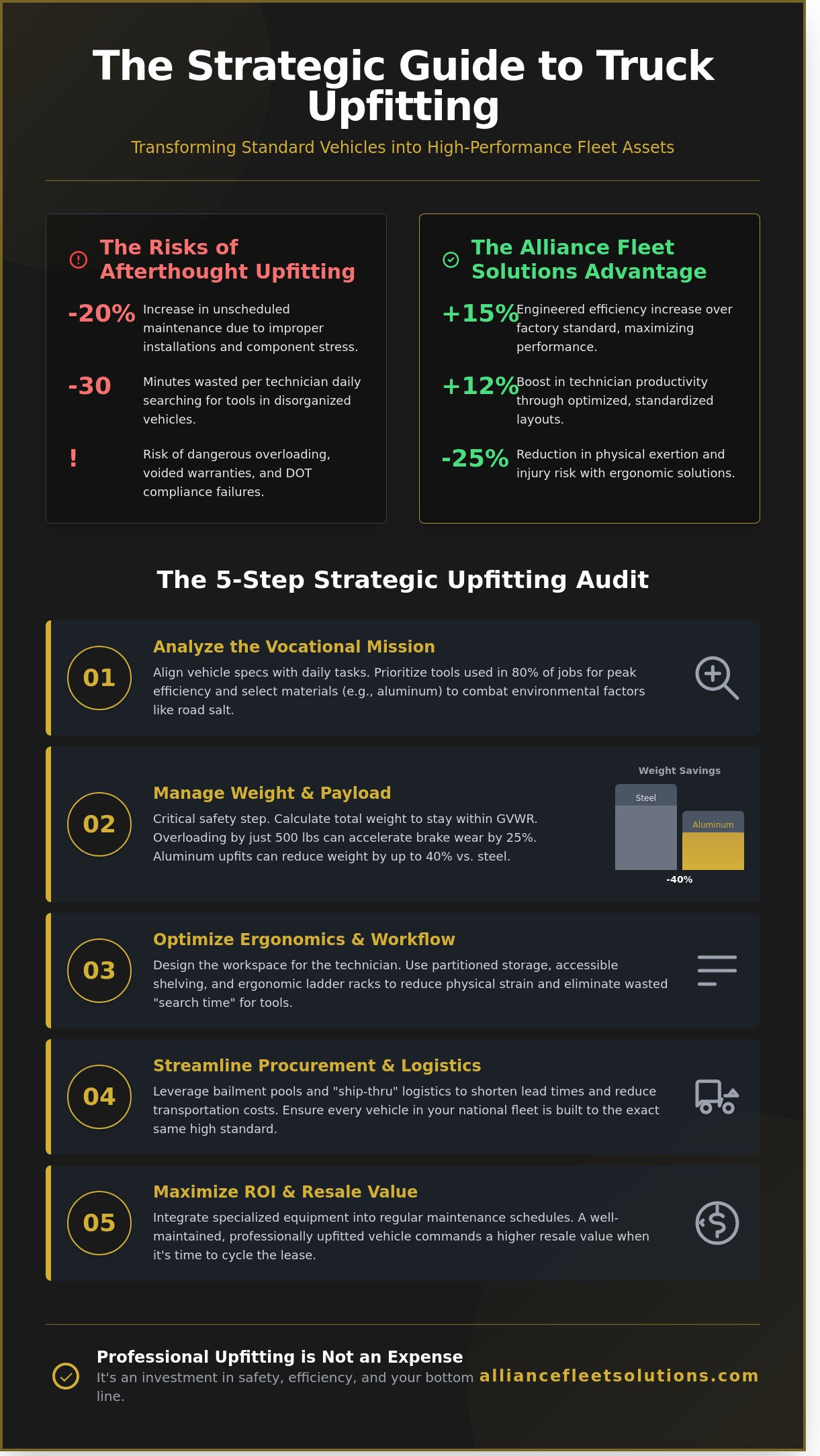
The industry has shifted from viewing modifications as optional add-ons to recognizing them as essential components of a fleet management service. While a standard lease provides a mode of transport, strategic upfitting provides a tool. This distinction is vital for safety and retention. Ergonomic ladder racks and low-profile service bodies can reduce technician physical exertion by up to 25 percent. By minimizing the strain of repetitive lifting, companies directly lower the risk of job-site injuries and long-term fatigue.
This principle of ergonomics extends to the driver’s cab as well, where proper seating is crucial for preventing fatigue during long hauls. While commercial truck seats are a specialized category, the research into long-term seated comfort is broadly applicable. For anyone looking to understand the fine details of supportive chair design, whether for work or leisure, publications like TopGamingChair.com provide comprehensive guides and reviews.
The Impact of Upfitting on Operational Efficiency
Efficiency lives in the details of the workspace. A 2023 industry study found that technicians can waste 30 minutes every day searching for tools in a disorganized van. Custom truck upfitting eliminates this “search time” through partitioned storage and specialized shelving. Adding high-capacity hardware like 5,000-pound cranes or hydraulic liftgates allows a single truck to handle heavy loads that previously required a two-man crew or a second vehicle. For national fleets, standardization is the gold standard. When every truck is configured identically, a technician can step into any vehicle in the fleet and locate critical equipment in seconds, maintaining high productivity levels across different regions.
Upfitting vs. DIY: The Professional Advantage
Trying to save costs with amateur installations often leads to expensive failures. Professional upfitters ensure that weight distribution remains within the Gross Vehicle Weight Rating (GVWR) to prevent premature tire and brake wear. Improperly wired lights or power inverters in a 2025 model-year chassis can void manufacturer warranties or cause catastrophic electrical interference. Partnering with experts is a core requirement for efficient fleet operations. Professional certification ensures that your fleet remains compliant with Department of Transportation (DOT) safety standards, protecting your business from avoidable fines and the high costs of vehicle downtime.
How to Plan Your Truck Upfit: A 5-Step Strategic Audit
Successful truck upfitting requires more than just picking a toolbox and a ladder rack. It demands a rigorous audit of how your vehicles actually function in the field. A poorly planned upfit leads to overloaded axles, disorganized technicians, and expensive retrofits. By following a structured 5-step audit, you ensure every dollar spent contributes directly to your fleet’s bottom line and operational safety.
This level of strategic planning often extends beyond the vehicles themselves, especially for companies in construction, logistics, or field services that are also scaling their physical footprint. As you map out your fleet’s future, you might also be considering land for a new yard or operations center. If so, you can learn more about available parcels for commercial use.
Once a site is selected, developing the infrastructure to support heavy vehicle traffic is the next priority; for high-quality asphalt and concrete work, Zahn Paving offers professional solutions backed by over 75 years of experience.
Step 1: Analyzing the Vocational Mission
Every vehicle in your fleet has a specific job. You must decide if a service body, a flatbed, or a van interior best serves that purpose. For example, a plumbing fleet operating in dense urban areas might prioritize a high-roof van for secure, climate-controlled storage. Conversely, a utility crew in a rural region requires a service body with off-road capability and exterior-accessible compartments. Your mission-critical equipment list should prioritize the five tools used in 80% of daily service calls to ensure maximum technician efficiency. Environmental factors also dictate material choices; fleets in the “Salt Belt” should specify stainless steel or aluminum to prevent rust-related downtime, and regular power washing philadelphia can help protect these assets from corrosive road treatments.
Similarly, a property management firm requires a fleet of well-organized service vans to handle maintenance requests efficiently. To understand the unique vocational demands of this industry, you can explore Residential Property Management and see how a diverse portfolio of rental units shapes fleet requirements.
Providing this level of service requires not only the right fleet but also the right expertise on the ground. For those in the Pacific Northwest, Local Fishing Handyman LLC exemplifies the professional approach needed to maintain properties to the highest standards, ensuring that every repair is handled with precision and care.
For businesses that manage cleaning crews, specialized van interiors are essential for transporting industrial equipment and chemicals safely. To see how these operational needs fit into a broader facility management strategy, you can explore Janitorial Services for expert project management.
Step 2: Managing Weight and Payload Limits
Payload math is the most critical safety component of truck upfitting. You must calculate the combined weight of the chassis, the upfit components, the occupants, and a full tank of fuel. If a Class 3 truck has a Gross Vehicle Weight Rating (GVWR) of 14,000 lbs, exceeding this limit by even 500 lbs can lead to a 25% faster wear rate on brake pads and suspension components. It also creates significant legal liability during DOT inspections. Switching from traditional 12-gauge steel to heavy-duty aluminum shelving can reduce upfit weight by 30% to 40%. This weight savings allows you to carry more inventory or tools without stressing the engine or violating safety regulations.
Step 3: Optimizing Workflow and Power
Design the layout based on the technician’s physical movement. Place high-frequency items at the rear or side doors to minimize the time spent climbing into the vehicle. If a technician saves 15 minutes a day through better organization, that recovers 1.25 hours of billable time per week. You must also choose between a Power Take-Off (PTO) system and battery-based inverters. PTO systems are ideal for high-demand hydraulic tools like cranes, while 3,000-watt pure sine wave inverters are better for charging cordless tools and running laptops without the noise and fuel cost of engine idling. Finalize these details in a formal specification document before seeking bids. This document acts as your blueprint, ensuring all upfitters provide quotes based on the exact same hardware and safety standards. To ensure your builds remain reliable throughout their lifecycle, consider how fleet optimization strategies can reduce long-term maintenance costs.
Just as the physical layout impacts efficiency, so does your team’s proficiency with the software used for diagnostics, scheduling, and reporting. To ensure your staff is up to speed with the digital tools of the trade, check out f2f.gr for professional training options.
Core Components of Professional Truck Upfitting
Professional truck upfitting transforms a standard vehicle into a specialized asset designed for peak operational performance. It isn’t just about adding parts. It’s about engineering a workflow that maximizes uptime and protects your investment. Most fleet managers focus on four main areas: the vocational body, interior storage, external equipment, and integrated power systems. When these components work together, the vehicle becomes more than a transport tool; it becomes a mobile headquarters.
Developing a high-performance mobile headquarters requires a focus on environmental control, a principle that is equally vital in large-scale construction. For architects and engineering teams tasked with managing noise and sound quality in complex developments, Focus Acoustics offers the specialized consultancy needed to achieve superior acoustic results.
Success in the field depends on the durability of these modifications. A service body that fails or a power system that drains the starter battery creates the very downtime you’re trying to avoid. By selecting high-quality components and following a strategic plan, you ensure that every truck in your fleet is ready for the rigors of heavy-duty use.
This commitment to quality and structural planning is also central to the world of custom construction. For those looking to see how expert design and engineering transform outdoor living spaces, you can discover Marlin Exteriors, Inc. and their specialized swimming pool solutions.
Service Bodies and Exterior Modifications
Choosing between an enclosed service body and an open utility bed is a critical decision that impacts both security and accessibility. Enclosed bodies provide total protection from theft and environmental damage, making them the standard choice for fleets carrying high-value diagnostic tools or sensitive electronics. Open beds offer the flexibility needed for transporting oversized equipment like generators or HVAC units; if your projects require high-performance climate control, you can find out more about professional heating and cooling solutions. For field security, we prioritize heavy-duty weather-stripping and multi-point locking systems. These features can reduce tool loss by 15% compared to standard factory setups.
Beyond structural changes, the vehicle’s exterior is also a critical component of brand communication. Professional graphics and vehicle wraps transform a functional truck into a mobile advertisement, enhancing brand recognition with every service call. For instance, Charlotte Sign Company provides specialized branding solutions that ensure your fleet makes a professional impact. For a look at how visual communication solutions can turn fleet vehicles into powerful marketing assets, click here.
Safety lighting is another non-negotiable exterior modification. Integrating SAE J845 Class 1 beacons and directional arrow sticks ensures your crew stays visible during roadside operations. We ensure these systems integrate with the chassis wiring without compromising the vehicle’s electrical integrity, keeping your fleet compliant with DOT regulations and improving worker safety in high-traffic zones.
Telematics and Electrical Integration
The most efficient time to install telematics solutions is during the initial truck upfitting process. Integrating GPS tracking and engine diagnostics while the vehicle is already disassembled for other modifications saves approximately 3 to 4 hours of labor per unit later. This data-driven approach allows managers to monitor fuel consumption and idling times with 98% accuracy right from day one.
Managing the electrical load is vital for modern service trucks. We install auxiliary battery systems with smart isolators to power inverters and mobile workstations. This setup prevents the common issue of chassis battery drain, which accounts for a significant portion of service calls for field units. Our team ensures all electrical work meets OEM ship-thru standards. This protects your factory warranty and ensures that complex electronic systems, like those found in Class 5 and 6 trucks, continue to function without interference. The reliability of these systems often hinges on the quality of their internal parts, which is why manufacturers of upfit electronics often partner with specialized distributors like Adage Components.
- Heavy-Duty Storage: We use drawer systems rated for 250 pounds per shelf to handle heavy hardware.
- Power Solutions: Pure sine wave inverters provide clean power for laptops and sensitive testing equipment.
- Crane Integration: Specialized reinforcements allow for cranes with lifting capacities up to 3,200 pounds.
- Ergonomic Racks: Drop-down ladder racks reduce the risk of shoulder injuries for technicians.
The Logistics of National Upfitting: Procurement to Deployment
Managing a national rollout requires more than just choosing the right equipment. It demands a logistical strategy that minimizes days-to-delivery and eliminates unnecessary transport legs. Efficient truck upfitting starts at the factory level. By leveraging ship-thru and bailment programs, fleet managers can cut hundreds of miles off the delivery odometer before a driver ever turns the key. This approach transforms procurement from a series of isolated transactions into a streamlined, high-velocity pipeline that prioritizes vehicle uptime from day one.
The Role of Bailment Pools in Fleet Acquisition
Bailment pools function as on-site chassis inventories maintained by approved upfitters. Instead of waiting for a dealer to receive and forward a vehicle, the chassis moves directly from the assembly plant to the upfitter. This typically reduces total lead times by 14 to 21 days. For the 2026 model year, using OEM ship-thru codes ensures the vehicle returns to the factory transport system, keeping freight costs low and predictable while maintaining the full factory warranty throughout transit.
Standardizing the Upfit Across a National Fleet
Inconsistency is the enemy of fleet efficiency. A Master Spec document ensures every truck in a 500-unit fleet is identical, making maintenance a repeatable science. This standardization allows for parts interchangeability, which reduces inventory costs by 12% on average. It also simplifies driver training and shortens diagnostic windows for technicians. Proactive scheduling with a 12-month forecast avoids shop bottlenecks and ensures long-lead components, such as specialized power inverters, arrive before the chassis.
- Parts Interchangeability: Identical specs mean you stock a single set of replacement components, which lowers overhead.
- Driver Familiarity: Drivers switch between vehicles without a learning curve, which improves safety and reduces accidental damage.
- Simplified Maintenance: Technicians know the layout of every vehicle, which shortens diagnostic windows and increases total uptime.
To avoid bottlenecks in the shop, establish a rolling forecast with your upfit partner. This ensures shop capacity is reserved and specialized hydraulic pumps or safety lighting are ordered 180 days in advance. This proactive scheduling keeps your deployment on track and ensures your capital starts working immediately. Ready to streamline your next rollout? Contact our team to optimize your truck upfitting and deployment strategy today.
Maximizing ROI: Maintenance and Remarketing of Upfitted Assets
Strategic truck upfitting represents a significant capital investment that requires a lifecycle perspective to truly maximize ROI. Fleet managers shouldn’t view the upfit as a static addition; it’s a dynamic asset that influences both daily operational costs and the final recovery value. By integrating these components into a structured oversight plan, you ensure the equipment works as hard as the team using it. Professional installations aren’t just about immediate utility; they’re about protecting the long-term health of your entire fleet.
Maintaining Upfitted Equipment for Longevity
Success depends on incorporating specialized equipment into your existing maintenance management schedule. Hydraulic systems, such as those found in cranes or liftgates, require fluid analysis and seal inspections at least every 500 operating hours. This proactive approach prevents the 22% increase in emergency repair costs often seen in neglected fleets. We recommend a three-point inspection strategy to keep your assets in peak condition:
- Structural Integrity: Inspect mounting points and welds for stress fractures or corrosion every 12 months to ensure safety.
- Electrical Health: Clean and coat all upfit-specific wiring harnesses to prevent salt and moisture intrusion that causes shorts.
- Documentation: Maintain detailed service records for the upfit itself, separate from the chassis logs, to build buyer confidence later.
The Remarketing Value of a Well-Upfitted Truck
The choices you make during the initial build phase dictate your success during vehicle remarketing. High-quality, name-brand upfits from manufacturers like Knapheide retain significantly more value than generic alternatives. Buyers in the secondary market search for turnkey solutions that allow them to put a truck to work on day one without additional modifications. Industry reports suggest that professionally upfitted trucks can command a 12% to 18% price premium over standard configurations when sold to the right buyer.
Alliance Fleet Solutions provides a comprehensive approach to lifecycle management. Sometimes, the most efficient move isn’t selling the upfit at all. If a high-value service body remains in excellent condition while the chassis reaches its mileage limit, our team can facilitate a transfer to a new vehicle. This strategy can save a fleet upwards of $10,000 per unit compared to purchasing a completely new setup. We don’t just fix trucks; we manage your assets to ensure every dollar spent on truck upfitting contributes to your bottom line. Our partnership ensures your fleet remains reliable, compliant, and ready for a profitable exit when the time comes. By treating truck upfitting as a strategic business asset, you turn a standard vehicle into a high-yield tool for your organization.
Drive Your Fleet Toward Long-Term Efficiency
Effective truck upfitting transforms a standard vehicle into a high-performance asset that drives bottom-line results. Success starts with a 5-step strategic audit to align equipment specs with daily operational needs. This process prevents the common pitfalls of over-spec’ing or under-utilizing assets, which often lead to unnecessary maintenance costs. Managing the full lifecycle from procurement to remarketing ensures you capture maximum value when it’s time to rotate your fleet.
Alliance Fleet Solutions provides national reach with local-level precision, delivering consistent quality across any number of deployment sites. We navigate the complexities of both open-end and closed-end lease structures, providing the technical authority needed to protect your investment. You don’t have to navigate these logistics alone. Partner with Alliance Fleet Solutions for your next professional upfitting project to streamline your operations and maximize your ROI. Your fleet is the engine of your business, and we’re here to keep it running at peak performance.
Frequently Asked Questions
How does upfitting affect my truck’s factory warranty?
Upfitting won’t void your entire factory warranty, but it may impact specific components that are modified or damaged during the installation. The Magnuson-Moss Warranty Act of 1975 protects you by requiring manufacturers to prove an aftermarket part caused a failure before they can deny a claim. Choosing a certified partner ensures your 3-year or 36,000-mile bumper-to-bumper protection remains intact on all untouched systems and structural elements.
What is the average lead time for a professional truck upfit?
Professional truck upfitting usually requires a lead time of 4 to 12 weeks depending on component availability and the complexity of your build. Standard configurations like basic shelving might take 10 business days, while custom builds with specialized hydraulic systems often extend past 90 days. We recommend starting the planning phase at least 6 months before your target in-service date to account for any supply chain fluctuations.
Can I include the cost of upfitting in my commercial lease?
You can roll the entire cost of your equipment into a single monthly lease payment through most commercial lenders. This strategy preserves your working capital and simplifies your accounting by consolidating the chassis and the upfit into one depreciation schedule. According to 2023 industry data, roughly 70% of fleet managers utilize TRAC leases to finance these modifications alongside the vehicle purchase to maximize tax benefits.
How do I calculate the maximum payload for an upfitted vehicle?
You calculate maximum payload by subtracting the vehicle’s curb weight and the total weight of the upfit equipment from the Gross Vehicle Weight Rating. If a truck has a GVWR of 10,000 pounds and a curb weight of 6,000 pounds, your initial capacity is 4,000 pounds. Adding a 1,200-pound service body reduces your remaining payload to 2,800 pounds for your tools, fuel, and crew members.
What is a bailment pool and how does it benefit my business?
A bailment pool is a dedicated inventory of chassis held by an upfitter on behalf of the manufacturer, such as Ford or RAM. This arrangement allows you to bypass the standard 4 to 6 month factory ordering process because the vehicles are already on-site and ready for modification. Utilizing a bailment pool can reduce your total acquisition time by 30%, helping you get your fleet on the road faster.
Should I choose aluminum or steel for my service body?
Choose aluminum if you need to maximize fuel efficiency and payload, or steel if your operations involve high-impact, heavy-duty environments. Aluminum bodies weigh approximately 40% less than steel, which can save 8% to 10% in fuel costs over the vehicle’s lifecycle. Steel remains the standard for durability in 24/7 construction or mining applications where the body faces constant physical abuse and heavy structural stress.
Is it possible to transfer an upfit to a new truck later?
You can transfer high-quality truck upfitting components like modular shelving and toolboxes if the new chassis dimensions match the original specifications. Transferring equipment often saves 50% compared to buying new gear, provided you replace the mounting hardware for safety. Most fleet managers retire the upfit with the vehicle after 5 to 7 years because wear and tear make relocation less cost-effective over time.
Do I need special insurance for upfitted equipment?
You must notify your insurance provider about all modifications to ensure your policy covers the full value of the equipment. Standard commercial auto policies usually only cover the factory-delivered chassis unless you add an Inland Marine rider or an Equipment Floater for the specialized bodies. Failure to document these additions can result in a 40% gap between your claim payout and the actual replacement cost.
While protecting your specialized equipment is a priority, ensuring the personal security of your team in hazardous roles is equally important. For those who may have difficulty finding standard coverage, you can learn more about life insurance options tailored for high-risk occupations.