
What if the most expensive part of your fleet isn’t the fuel or the labor, but the minutes a truck sits idle in a repair bay? You already know that every hour of unplanned downtime can cost a heavy-duty carrier between $400 and $700 in lost revenue. It’s exhausting to manage a national fleet when unpredictable repair expenses keep you in a reactive loop. This is why professional maintenance management is no longer just a shop floor task, but a critical pillar of your business’s financial health.
We’ve designed this 2026 strategic guide to help you master the technologies and proactive habits required to eliminate downtime and reduce your total cost of ownership. This isn’t just about fixing trucks; it’s about building a professional alliance between your maintenance operations and your bottom line. We’ll show you how to create predictable budgets, maximize vehicle uptime, and extend asset lifecycles to ensure your fleet remains a high-value business asset for years to come. By moving from reactive repairs to expert control, you’ll transform your fleet into a genuine competitive advantage.
Key Takeaways
- Shift from a reactive “break-fix” mindset to a proactive asset preservation model that transforms fleet reliability into a competitive business advantage.
- Master the integration of predictive and preventive maintenance management to identify potential failures before they lead to costly roadside downtime.
- Utilize telematics as the “nervous system” of your fleet to automate odometer tracking and engine fault alerts for streamlined service scheduling.
- Build a high-performance plan by auditing vehicle risk levels and implementing a centralized platform to protect warranties and service records.
- Discover how a strategic alliance simplifies national fleet oversight and maximizes the total remarketing value of your assets.
What is Maintenance Management in a Fleet Context?
In the high-stakes world of logistics, maintenance management represents the systematic control and oversight of every vehicle in a company’s inventory. It isn’t just about changing oil or replacing brake pads; it’s a strategic framework designed to ensure maximum asset reliability. For years, the industry relied on a reactive “break-fix” mentality that waited for a failure to occur before taking action. By 2026, leading organizations have pivoted toward proactive asset preservation. This shift minimizes the Total Cost of Ownership (TCO) by addressing minor wear before it evolves into a catastrophic engine failure that costs $20,000 or more in repairs and lost revenue.
Successful fleet management relies on Uptime as the primary Key Performance Indicator (KPI). When a vehicle sits in a shop, it generates zero revenue while overhead costs continue to climb. Effective maintenance management transforms these assets from liabilities into predictable, high-performing tools that stay on the road where they belong. It creates a culture of accountability where data dictates the schedule, not just a calendar date.
The Core Objectives of Maintenance Management
Reliability starts with safety. Maintenance programs prioritize compliance with national DOT standards to avoid the 25% increase in fines seen in recent regulatory cycles. Beyond legal requirements, these processes extend the operational lifespan of specialized upfitted vehicles, often adding 2 to 3 years of productive service. By integrating these workflows with comprehensive fleet management services, owners gain a holistic view of their operations. This data-driven approach ensures that every dollar spent on a technician contributes directly to the company’s bottom line.
Maintenance Management vs. Enterprise Asset Management (EAM)
While often used interchangeably, maintenance management is a specialized subset of Enterprise Asset Management (EAM). EAM handles the broad lifecycle of every asset a company owns, from office buildings to heavy machinery. In contrast, the fleet-specific approach focuses on the execution and tracking of work orders for mobile assets. Fleet managers need tools designed for the unique demands of trucks and trailers, which face environmental stressors that stationary factory equipment doesn’t encounter. These specialized tools track mileage, engine hours, and fuel consumption to trigger service alerts, ensuring that mobile assets receive the precise care they need to remain operational across thousands of miles.
The 5 Essential Maintenance Management Strategies for 2026
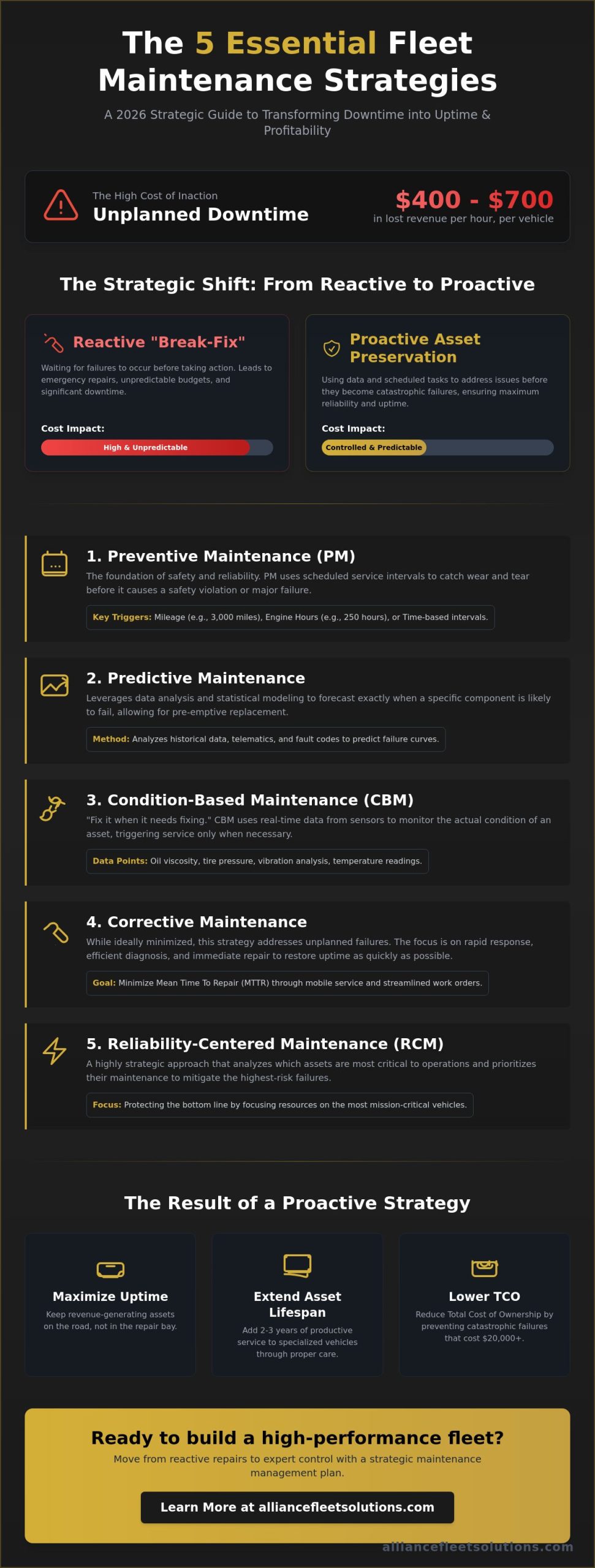
Maximizing fleet ROI requires a diverse approach to maintenance management. Relying on a single method often leads to either excessive costs or unexpected breakdowns. In 2026, the most successful fleets utilize a combination of five core strategies to ensure every vehicle stays on the road. These pillars include:
- Preventive Maintenance (PM): This remains the foundation of safety, using scheduled intervals to catch wear before it causes a safety violation.
- Predictive Maintenance: This uses statistical modeling to forecast exactly when a component will fail, allowing for pre-emptive replacements.
- Condition-Based Maintenance (CBM): Sensors monitor the actual state of the asset, such as oil viscosity or vibration levels, triggering service only when necessary.
- Corrective Maintenance: While unplanned, this strategy focuses on rapid response and mobile repair to restore uptime immediately.
- Reliability-Centered Maintenance (RCM): This involves analyzing which assets are most critical to your bottom line and prioritizing their upkeep to protect your budget.
Uptime isn’t an accident. It’s the result of choosing the right strategy for the right asset at the right time.
Implementing Preventive Maintenance Schedules
Effective PM schedules rely on rigid triggers such as 3,000-mile intervals or 250 engine hours. In 2026, standardized digital checklists are vital for maintaining quality across multiple service points. These lists ensure that a technician in one region performs the same rigorous checks as a technician in another. This consistency is particularly critical for specialized machinery; following a dedicated plan for telehandler maintenance aurora keeps construction and logistics equipment from becoming a bottleneck on the job site.
Moving Toward Predictive and Condition-Based Models
The 2026 generation of sensor technology has revolutionized how we view heavy-duty transmissions and engine blocks. These sensors identify “hidden” failures, such as micro-fluctuations in pressure, that manual inspections miss. By adopting these models, fleets can reduce “over-maintenance” by 15%, ensuring they don’t replace perfectly good parts just because a calendar says so. While the initial investment in diagnostic tools is higher, the reduction in labor hours and part waste provides a clear path to a higher ROI. If you want to optimize your fleet’s performance, shifting toward data-driven decisions is the first step. This proactive stance transforms maintenance from a cost center into a strategic advantage.
Leveraging Telematics and Data for Fleet Optimization
Telematics serves as the nervous system of a modern maintenance management program. It doesn’t just track location; it pulses vital health data from the engine to your dashboard in milliseconds. By 2026, manual tracking is a liability that your bottom line can’t afford. You need automated odometer readings and engine fault code alerts that trigger work orders the moment a threshold is crossed. This proactive approach eliminates the 20% delay typically caused by administrative lag in reporting mechanical issues.
Driver behavior also dictates your service schedule. Harsh braking and rapid acceleration increase wear on brake pads and tires by as much as 25% over a six month period. Integrating GPS data allows your dispatchers to route vehicles to the nearest authorized repair facility as soon as a critical alert triggers. This minimizes “deadhead” miles and ensures your assets stay on their planned routes without risking a catastrophic failure on the highway.
The Synergy of Telematics and Maintenance Workflows
Real-time alerts prevent the nightmare of roadside breakdowns and expensive towing fees. These systems stop a small sensor failure from turning into a $5,000 engine overhaul and a missed delivery window. In a recent study of 500 Class 8 trucks, reducing engine wear by 15% was achieved simply through consistent idle time monitoring. You can explore these high-level integrations in our strategic guide to telematics solutions.
Turning Data into Actionable Maintenance Insights
Data allows you to spot “lemon” vehicles or faulty upfits before they drain your quarterly budget. By reviewing historical repair data, you can identify specific makes or models that require 12% more frequent service than the rest of your fleet. Use these reporting tools to justify your maintenance management budget to executives by showing a clear link between data-driven repairs and increased ROI.
- Identify recurring component failures across specific routes.
- Automate service scheduling based on actual engine hours rather than calendar dates.
- Streamline technician assignments by matching fault codes to specific skill sets.
In 2026, a Digital Twin is a dynamic virtual model of a physical vehicle that uses real-time sensor data to simulate performance and predict exactly when a part will fail. This level of precision ensures that you aren’t just reacting to problems; you’re staying three steps ahead of them.
How to Build a High-Performance Maintenance Management Plan
Building a high-performance maintenance management plan starts with a comprehensive audit of your existing assets. You can’t manage what you don’t measure. Begin by identifying vehicles that have exceeded 150,000 miles or show a 15% increase in repair frequency over the last 12 months. These high-risk units often consume the bulk of your budget. Once you’ve identified these assets, migrate your data to a centralized platform. This software acts as the single source of truth for service history and warranty claims, preventing you from paying for repairs that should be covered by the manufacturer.
Your drivers are your first line of defense against unexpected downtime. Standardize daily inspections by implementing digital reporting tools that take less than five minutes to complete. This ensures that a minor fluid leak or a worn brake pad doesn’t escalate into a catastrophic engine failure or a roadside emergency. By catching issues early, you shift from a reactive stance to a proactive strategy that protects your ROI. Regularly review Mean Time Between Failures (MTBF) to identify recurring mechanical weaknesses across your specific vehicle makes and models.
Selecting the Right Maintenance Partners
For fleets crossing state lines, national coverage is non-negotiable. You need a network of vetted providers who deliver consistent quality whether your truck is in a terminal or on a long-haul route. Evaluate vendors based on their turnaround time and specialized upfitting expertise. If you operate heavy machinery or specialized equipment, you need partners who understand those specific technical requirements. For instance, securing expert telehandler repair aurora services ensures your specialized lifting equipment stays operational alongside your standard transport vehicles.
Measuring Success: Maintenance KPIs That Matter
Effective maintenance management relies on three critical metrics to gauge the health of your operation:
- Downtime Percentage: This is the ultimate measure of fleet availability. Aim for a fleet availability rate of 95% or higher to keep your delivery schedules intact.
- Maintenance Cost per Mile: Track this monthly. A sudden 5% spike often signals aging assets or poor fuel quality that requires immediate attention.
- Compliance Rate: Target 100% adherence to safety inspection deadlines. Falling below this mark risks heavy DOT fines and increased liability.
Streamline your operations and reduce your total cost of ownership by partnering with Alliance Fleet Solutions for a customized maintenance strategy that puts your uptime first.
Maximizing Asset Lifecycle with Alliance Fleet Solutions
Effective maintenance management serves as the engine room for long term profitability. It’s not just about keeping wheels turning; it’s about controlling the total cost of ownership from the day a vehicle is commissioned until it hits the auction block. Many fleets struggle with fragmented service histories and rising labor costs. Alliance Fleet Solutions bridges this gap by providing fractional fleet management. This model gives your business access to executive level oversight and technical expertise without the burden of a full time executive salary. We position proactive care as the foundational backbone of efficient fleet operations, ensuring every dollar spent on service contributes to your bottom line.
The Alliance Advantage: Proactive Partnership
Managing repairs across multiple states often leads to billing errors and inconsistent service quality. We simplify this complexity through a single point of contact, streamlining your approvals and consolidated billing into one clear process. Our clients leverage a national network of over 50,000 vetted service providers. This scale allows us to negotiate lower labor rates and significant discounts on OEM parts that smaller fleets can’t access on their own. We pay special attention to upfitted vehicles, creating custom maintenance management schedules for specialized equipment like liftgates or refrigeration units. This targeted approach protects your high value investments from premature failure.
- Direct Communication: You speak with a dedicated fleet expert, not a generic call center.
- Cost Control: National account pricing reduces average repair invoices by 15% to 20%.
- Asset Protection: Specialized service plans extend the life of expensive aftermarket upfits.
Beyond Repair: Strategic Lifecycle Management
The true value of a maintenance partner lies in the data they collect. We don’t just fix trucks; we analyze every repair order to identify trends in component failure or driver behavior. This data informs your next vehicle acquisition cycle, helping you choose models that demonstrate the lowest operating costs in your specific duty cycle. Meticulous service records are also your best asset during remarketing. Vehicles backed by “gold standard” documentation consistently command 12% to 18% higher resale values at auction. Prospective buyers pay a premium for the peace of mind that comes with a transparent, professional service history. Partner with Alliance Fleet Solutions to optimize your maintenance today.
Our approach transforms maintenance from a necessary evil into a strategic advantage. By focusing on the entire lifecycle, we reduce the frequency of breakdowns and maximize the return on every asset in your yard. We handle the technical details so you can focus on growing your core business.
Drive Your Fleet Toward Maximum Uptime
Success in 2026 requires a shift from reactive repairs to a proactive maintenance management strategy. Industry data indicates that predictive maintenance can lower maintenance costs by 25% to 30% while reducing breakdown frequency by up to 70%. You’ve seen how leveraging telematics and high-performance planning creates a resilient operation that survives market volatility. Alliance Fleet Solutions supports this transition with our expansive national service network coverage and deep expertise in specialized vehicle upfitting. We don’t just fix vehicles; we optimize them through data-driven telematics integration that anticipates issues before they cause a standstill. It’s about building an alliance that values your ROI as much as you do. When your vehicles are always ready for the next load, your business remains unstoppable. Take the first step toward a more reliable future today.
Streamline your fleet with Alliance Maintenance Management
Your journey to peak efficiency starts with a single strategic decision.
Frequently Asked Questions
What is the difference between maintenance management and fleet management?
Maintenance management is a specialized subset of fleet management that focuses exclusively on the mechanical health and technical uptime of vehicles. While fleet management handles broad tasks like driver behavior, fuel taxes, and vehicle acquisition, maintenance management ensures the physical assets remain roadworthy. According to industry data from Geotab, maintenance costs typically represent 10% to 15% of a fleet’s total operating expenses. We focus on these technical details to keep your trucks moving.
How can maintenance management software reduce my fleet’s operating costs?
Maintenance management software slashes expenses by automating service alerts and tracking parts warranties to eliminate redundant spending. Data from the American Transportation Research Institute shows that repair and maintenance costs reached $0.096 per mile in 2023. By using software to identify small faults before they become roadside emergencies, you avoid the 4x price surge associated with towing and unscheduled repairs. It transforms your shop from a cost center into a strategic asset.
Is preventive maintenance really more cost-effective than reactive repairs?
Proactive maintenance is significantly more affordable because it prevents the expensive secondary damage caused by component failure. The Department of Energy reports that a structured preventive program can save between 12% and 18% compared to reactive strategies. Our mobile technicians catch thin brake pads or minor coolant leaks during scheduled downtime. This prevents a $20,000 engine overhaul or a costly DOT fine that ruins your day’s profitability.
What are the most important KPIs to track in maintenance management?
The most vital metrics to monitor are PM Compliance, Mean Time Between Failure, and Maintenance Cost per Mile. PM Compliance measures how often your vehicles hit their service windows on time, with a target of 95% or higher for top-tier fleets. Tracking these numbers allows us to build a stronger alliance with your operations team. You’ll see exactly where your budget goes and how your uptime improves month over month.
How does telematics integrate with a maintenance management system?
Telematics provides a real-time data bridge that feeds engine fault codes and odometer readings directly into your service schedule. This integration eliminates manual data entry and ensures that service intervals are based on actual engine hours rather than guesses. When a sensor detects a high-temperature reading, the system alerts our team immediately. We can then schedule a mobile repair before the driver even notices a performance drop.
What happens if our fleet doesn’t follow a strict maintenance schedule?
Ignoring a strict schedule leads to a 30% increase in unplanned downtime and creates significant safety liabilities for your business. The FMCSA indicates that vehicle maintenance issues caused 27% of all roadside inspection violations in recent years. Beyond the legal risk, irregular upkeep causes fuel efficiency to drop by as much as 10% due to clogged filters or misaligned tires. Consistency is the only way to protect your bottom line.
Can maintenance management help extend the life of my upfitted vehicles?
Proper management extends the usable life of specialized upfits by applying rigorous inspection standards to auxiliary equipment like liftgates and cranes. These components often require lubrication and hydraulic checks every 90 days to prevent premature wear. By documenting every service, we help you get the full 7 to 10 year lifecycle out of your $50,000 custom investments. It’s about protecting the specific tools that make your business unique.
How do I choose between in-house maintenance and outsourcing to a provider?
Base your decision on the total cost of facility overhead, which often exceeds $100,000 annually for specialized tools and technician certifications. Outsourcing to a mobile provider removes the burden of managing a physical shop and recruiting scarce diesel mechanics. An external alliance gives you the flexibility to scale your fleet up or down without worrying about fixed labor costs. You get expert-level service without the administrative headache of running a garage.