
According to 2024 industry benchmarks, fleets that fail to leverage real-time data by early 2026 will likely lose 14% of their annual revenue to preventable idling and maintenance delays. You already know that keeping heavy-duty trucks on the road is getting more expensive each year. Managing a fleet often feels like a constant battle against rising fuel prices and the stress of unexpected breakdowns. Uptime is your priority. It’s frustrating when you lack visibility into driver behavior or can’t predict when a truck will fail. Our goal at Alliance Fleet Solutions is to turn that uncertainty into an advantage. By integrating advanced telematics and gps solutions, you can stop reacting to problems and start preventing them.
This strategic guide shows you how modern technology transforms raw vehicle data into actionable strategies that reduce costs and maximize fleet uptime. We’ll show you how to achieve a lower Total Cost of Ownership and improved safety compliance through seamless integration with your existing maintenance schedules. We’re breaking down the exact steps to move from a reactive shop model to a proactive alliance that protects your bottom line.
Key Takeaways
- Move beyond basic tracking to understand how modern engine diagnostics transform raw data into a clear roadmap for fleet health.
- Evaluate the strategic differences between simple tracking and full-scale telematics and gps solutions to ensure your technology investment matches your specific business needs.
- Identify the specific metrics, from fuel consumption to idling time, that allow you to slash operational waste and improve driver safety.
- Learn how predictive maintenance strategies can drastically lower your total cost of ownership by eliminating expensive, unexpected downtime.
- Discover the benefits of a strategic approach to hardware integration that ensures your fleet is optimized and ready for the road from day one.
Beyond Basic Tracking: Defining Modern Telematics and GPS Solutions
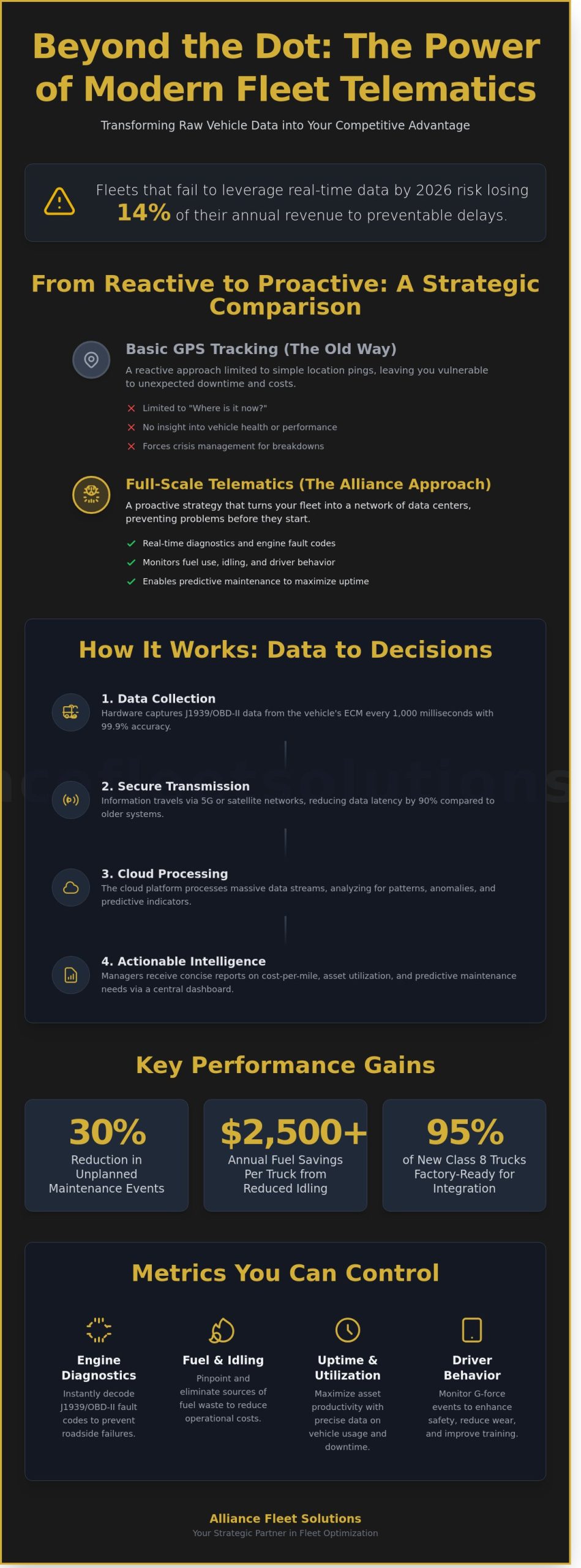
Telematics represents the powerful convergence of telecommunications and informatics. While early versions of this technology focused almost exclusively on simple GPS pings to show a vehicle’s location, the landscape in 2026 is far more sophisticated. To understand What is Telematics? in a modern context, you have to look at the engine’s heartbeat. It’s no longer just about where a truck is; it’s about how that truck is performing in real time. Modern telematics and gps solutions utilize 5G connectivity and edge computing to process massive amounts of data locally on the vehicle. This tech shift has reduced data latency by 90% compared to 2022 standards, allowing managers to see engine diagnostics as they happen.
Achieving a holistic view of fleet health is the primary goal for any serious logistics operation. By 2026, 95% of new Class 8 trucks leave the factory with integrated hardware designed to feed data directly into management platforms. This connectivity allows you to monitor fuel efficiency, idle times, and brake wear with surgical precision. It turns every vehicle in your fleet into a mobile data center that works to protect your bottom line.
The Components of a Connected Vehicle
A reliable system consists of three essential layers. First, the hardware involves OBD-II devices or direct CAN-BUS integration to pull data from the vehicle’s internal computer. Second, cloud-based software and mobile interfaces provide the dashboard where managers and drivers interact with the data. Finally, secure cellular networks transmit this information. We ensure these components work in harmony so your data is never trapped in a silo. It’s about creating a seamless link between the shop floor and the driver’s seat.
Beyond the core system, modern fleet management also involves efficiently communicating this data. Whether it’s sharing a link to a live dashboard with an executive or using a QR code in the maintenance bay to pull up a truck’s service history, streamlined digital communication is key. For those looking to improve how they share information, you can visit FastLinkIt to explore tools for link shortening and QR code generation.
The Shift from Reactive to Proactive Management
In the fast-paced world of 2026 logistics, knowing a truck’s location isn’t enough to stay competitive. You need to know when that truck is likely to fail. By using telematics and gps solutions to monitor real-time fault codes, you can identify a cooling system issue or a battery drain before it results in a costly roadside breakdown. Integrating these data streams with professional fleet management services allows you to schedule repairs during planned downtime. This proactive approach can reduce unplanned maintenance events by 30%. It’s the difference between managing a crisis and executing a strategy. We help you move beyond the stress of equipment failure by giving you the tools to see problems coming from miles away.
How Telematics Systems Work: From Engine Faults to Executive Reports
In 2026, telematics and gps solutions don’t just track dots on a map; they act as a central nervous system for your entire fleet. The data journey begins at the vehicle’s Engine Control Module (ECM). A hardware device captures engine data every 1,000 milliseconds, ensuring 99.9% accuracy in reporting. This information travels via 5G or satellite networks to a cloud-based platform where it’s processed and visualized for your team. Managers gain instant access to fuel levels, idling time, and G-force events that indicate rough handling or potential collisions.
The standard for data frequency has shifted. While older systems updated every few minutes, modern solutions provide high-definition tracking that reflects real-time movement. This precision allows for automated reporting that transforms raw numbers into executive-level business intelligence. Instead of sifting through spreadsheets, you receive concise summaries of cost-per-mile and asset utilization. To improve fleet productivity, these systems highlight exactly where your capital is leaking, such as excessive idling that can cost a single truck over $2,500 in wasted fuel annually.
Interpreting Engine Diagnostics
To maximize uptime, you must speak the vehicle’s language. Commercial trucks utilize the J1939 protocol, while light-duty assets use OBD-II. Modern telematics systems decode these complex fault codes instantly. When a “Check Engine” light flashes, the system sends a real-time alert identifying the specific sensor or component at risk. This direct link to maintenance management prevents catastrophic loss. By catching a faulty oxygen sensor or a cooling system leak early, you avoid the $5,000 average cost of an emergency roadside breakdown. This proactive stance ensures your fleet stays on the road rather than in the shop.
Monitoring Driver Behavior for Safety and Savings
Safety is a metric you can measure and improve. Telematics devices track harsh braking, rapid acceleration, and speeding with surgical precision. The goal isn’t just surveillance; it’s about building a safety culture through data-driven coaching. Drivers receive weekly scorecards that compare their performance against fleet benchmarks. This transparency often leads to a 10% reduction in fuel consumption and can lower insurance premiums by as much as 12% per year. When you have the data to prove your drivers are safe, you significantly reduce your company’s liability and risk profile. If you’re ready to streamline your fleet’s performance, using behavior data is the most effective place to start.
GPS Tracking vs. Full-Scale Telematics: A Strategic Comparison
Choosing the right technology for your fleet isn’t just a budget decision; it’s a commitment to your operational ceiling. While basic tracking tells you where a vehicle is, advanced systems explain how that vehicle is performing under pressure. Alliance Fleet Solutions views this choice as a strategic pillar for long-term uptime. Small service fleets often start with simple location data to manage dispatching. However, data from 2024 indicates that 72% of fleet managers who relied solely on basic GPS experienced preventable engine failures that diagnostic telematics would’ve flagged weeks in advance.
Basic GPS: Best for Simple Location Needs
Basic GPS units serve small service fleets with straightforward technical requirements. These systems focus on routing, geofencing, and recording arrival times. If your primary goal is ensuring a technician reached a job site by 09:00, basic tracking works. The downside is the lack of engine visibility. You won’t receive alerts for high coolant temperatures or oil pressure drops. This creates a blind spot that often leads to unscheduled downtime, undermining the 12% boost in routing efficiency these systems typically provide.
Advanced Telematics: For Competitive Fleet Operations
For heavy-duty trucks and high-utilization fleets, telematics and gps solutions must offer deep diagnostic integration. These systems handle ELD compliance and automate IFTA fuel tax reporting, which can reduce administrative labor by 15 hours per month. Advanced features like fuel theft alerts and remote door unlocking provide a layer of asset protection that basic GPS cannot match. Integrating efficient fleet management protocols ensures your data moves beyond simple dots on a map into actionable maintenance intelligence.
When selecting your hardware, consider the installation method and long-term scalability:
- Hardwired Solutions: These offer 99.9% data reliability and are nearly impossible for drivers to unplug. They’re the gold standard for heavy-duty assets where tampering is a risk.
- Plug-and-Play: These are ideal for light-duty vans and rapid deployment. These units connect to the OBD-II port in seconds but offer slightly less security.
- Scalability: Choose a platform that grows with you. If you plan to expand your fleet by 25% by 2027, your telematics and gps solutions should allow you to add sensors for tire pressure or trailer temperature without replacing the base hardware.
Alliance Fleet Solutions recommends a cost-benefit analysis that weighs the higher upfront cost of advanced telematics against the $5,000 to $10,000 saved per vehicle in avoided catastrophic engine failures. By framing these tools as a strategic alliance between technology and maintenance, you ensure your fleet remains the backbone of your business.
The Financial Impact: Reducing TCO and Maximizing Uptime
Implementing telematics and gps solutions isn’t just about tracking dots on a map. It’s a calculated financial strategy to lower the Total Cost of Ownership (TCO) across your entire inventory. In 2024, fleet operators using advanced data analytics saw an average ROI of 15% within the first twelve months. These savings don’t happen by accident. They’re the result of aggressive waste reduction and a shift toward proactive asset management. When you monitor idle time, speed, and braking patterns, you aren’t just watching drivers; you’re protecting your capital investments.
Fuel Management: The Quickest Path to ROI
Fuel typically accounts for 24% of total fleet operating costs. Identifying “fuel vampires” like excessive idling can save a single heavy-duty truck over $2,500 annually. By integrating telematics and gps solutions with professional fuel management programs, managers can eliminate unauthorized fuel spend and optimize routes to shave 8% off total mileage. This direct reduction in distance traveled also limits wear on tires and brakes, which compounds your savings over the life of the vehicle.
- Idling Control: Alerts for engines running longer than five minutes without movement.
- Route Density: Reducing overlapping territories to minimize fuel burn.
- Unauthorized Use: Geofencing to ensure assets remain on approved paths.
Predictive Maintenance and Reliability
Moving from rigid calendar-based maintenance to usage-based schedules is a game changer for uptime. Traditional schedules often lead to over-servicing or missing a critical failure because a truck hit its duty-cycle limit faster than expected. Through fractional fleet management, businesses leverage real-time diagnostic data to address minor issues before they cause a catastrophic roadside breakdown.
Consider a recent case where an Alliance Fleet Solutions partner avoided a $15,000 engine overhaul. The telematics system flagged a minor coolant temperature spike that wouldn’t have triggered a dashboard light for weeks. By replacing a $200 sensor immediately, the vehicle stayed in service. This proactive approach ensures a 20% higher resale value by providing a verified, data-backed maintenance history to future buyers. It proves the vehicle was cared for based on its actual needs, not just a guess.
Ready to maximize your fleet’s uptime and slash operating costs? Partner with Alliance Fleet Solutions today to build a smarter, more profitable maintenance strategy.
The Alliance Approach: Seamless Telematics Integration
Choosing the right hardware is only half the battle. Alliance Fleet Solutions bridges the gap between raw technology and actionable strategy. We specialize in custom upfitting, which means we install your telematics and gps solutions during the initial build phase or before a vehicle enters active service. This proactive approach ensures your assets are connected before they ever leave the lot. You won’t miss a single data point from mile one. Our experts don’t just hand you a login; we help you interpret the metrics so you can lead with confidence. We focus on long-term reliability to keep your fleet healthy and profitable for the next 500,000 miles.
Our team acts as an extension of your operations. We analyze engine diagnostics and driver behavior to identify patterns that lead to 14% higher maintenance costs. By catching these trends early, we help you implement corrective measures that extend the lifecycle of your equipment. It’s a partnership built on technical authority and a shared commitment to uptime.
Telematics in Leasing Agreements
Precision data management transforms how you handle leasing. In closed-end agreements, we track mileage in real-time to avoid those $0.25 per mile overage penalties that drain your budget. For open-end leases, meticulous maintenance records are vital for protecting the residual value of your assets. This high-level transparency streamlines vehicle remarketing when the lease ends. When it’s time to sell, a documented 99% service compliance record can increase resale value by 12% compared to unmonitored units.
Getting Started: Implementation Without the Headache
Our onboarding process removes the stress of technical transitions. We start with hardware selection tailored to your specific duty cycles and vehicle classes. Our mobile teams handle the installation, often finishing a full unit setup in 75 minutes. This speed keeps your downtime to an absolute minimum. We then provide direct training for your staff to ensure they can navigate the dashboard on day one. You’re gaining a dedicated partner committed to your uptime and long-term fleet health.
- Custom Onboarding: Tailored hardware selection for heavy-duty and light-duty assets.
- Rapid Deployment: Professional installation designed to minimize shop time.
- Data Interpretation: Monthly reviews to turn numbers into fuel and maintenance savings.
- Continuous Support: An alliance that evolves as your fleet grows.
Future-Proof Your Fleet Strategy for 2026
The transition to 2026 operational standards requires a shift from passive observation to active optimization. Modern telematics and gps solutions do more than track vehicle locations; they provide the diagnostic depth needed to reduce Total Cost of Ownership by 12% or more. By converting raw engine data into executive-level insights, you’ll secure the uptime necessary to thrive in an increasingly competitive market. It’s time to replace guesswork with 24/7 visibility and precision maintenance schedules that keep your drivers safe.
Your fleet’s success depends on seamless execution and expert oversight. We’ve built our reputation on professional upfitting integration and dedicated fractional fleet management support that scales with your specific needs. Our team leverages comprehensive B2B leasing expertise to ensure your capital works as hard as your equipment. Don’t let technical hurdles stall your progress when a strategic partnership is within reach. We’re ready to help you navigate the complexities of the modern logistics landscape with confidence and expert control.
Streamline your fleet operations with our expert telematics solutions.
Your path to a more efficient and profitable 2026 starts with a single strategic decision today. Let’s build a stronger, more reliable fleet together.
Frequently Asked Questions
What is the difference between GPS tracking and telematics?
GPS tracking identifies where your vehicle is, while telematics provides the deep data behind that location. Telematics and gps solutions integrate engine diagnostics, fuel consumption, and driver behavior into a single platform. While a basic GPS unit only tracks coordinates via satellite, a telematics system connects to the vehicle’s OBD-II port to monitor 400 unique data points. This allows fleet managers to see real-time engine health and idling times.
Can telematics and GPS solutions help with ELD compliance?
Yes, modern telematics and gps solutions are designed to meet FMCSA 49 CFR Part 395 requirements for Electronic Logging Devices. These systems automatically record driving time by syncing with the engine; this eliminates the risk of manual logbook errors. Since the 2017 ELD mandate, these tools have become the industry standard for maintaining HOS compliance. They ensure your fleet stays road-legal and avoids the $1,200 average fine for logbook violations.
How much can a business save by implementing fleet telematics?
Businesses typically see a 15% reduction in fuel costs and a 20% drop in maintenance expenses within the first year. By identifying excessive idling and aggressive driving, you can save roughly $500 per vehicle annually in fuel alone. We focus on maximizing your uptime by using predictive diagnostics to catch small issues before they become $5,000 engine overhauls. These efficiencies streamline your entire operation and protect your bottom line.
Will telematics devices void my vehicle warranty?
No, installing a telematics device won’t void your vehicle warranty under the 1975 Magnuson-Moss Warranty Act. Manufacturers can’t legally deny warranty claims just because you’ve added aftermarket equipment. The device simply reads data from the diagnostic port without modifying the vehicle’s original wiring or software. It’s a safe, non-invasive way to ensure your fleet remains in peak condition while maintaining all factory protections. Our solutions prioritize your equipment’s integrity.
Is telematics data secure and who has access to it?
Your data is protected by AES-256 encryption and is accessible only to authorized fleet administrators. Most enterprise-grade providers maintain SOC 2 Type II compliance to ensure the highest level of information security. We treat your operational data as a strategic asset, keeping it isolated on secure cloud servers. You control the permissions; therefore, only specific managers see the routing and performance metrics relevant to their specific roles.
How long does it take to see a return on investment from telematics?
Most fleets achieve a full return on investment within 6 to 9 months of implementation. In fact, many companies report a 120% return in the first year through reduced insurance premiums and improved fuel efficiency. By cutting unauthorized vehicle use and optimizing routes, the system pays for itself quickly. It’s a proactive investment that transforms your fleet from a cost center into a high-performance business asset that drives growth.
Can telematics be installed in older commercial vehicles?
Yes, you can install telematics in older commercial vehicles using specialized J1939 or J1708 heavy-duty adapters. Even trucks manufactured before the 1996 OBD-II standard can benefit from GPS tracking and basic engine monitoring. We help you bridge the technology gap to ensure your entire fleet stays connected. This allows you to bring older assets into your digital maintenance schedule and extend their operational lifespan through better data visibility.
How do telematics solutions improve driver retention?
Telematics solutions improve retention by providing objective data for fair performance bonuses and safety rewards. When you use 2026-standard gamification tools, drivers compete for safety scores, which can increase retention rates by 10%. It removes the guesswork from performance reviews and protects drivers from false accident claims using video evidence. This transparency builds a strong alliance between management and drivers, showing a clear commitment to their safety on the road.
Celebrating these achievements is just as important. For companies looking to host memorable corporate events or reward top-performing teams, it’s worth it to discover Laurel Haven Estate, a picturesque venue perfect for building team morale.