
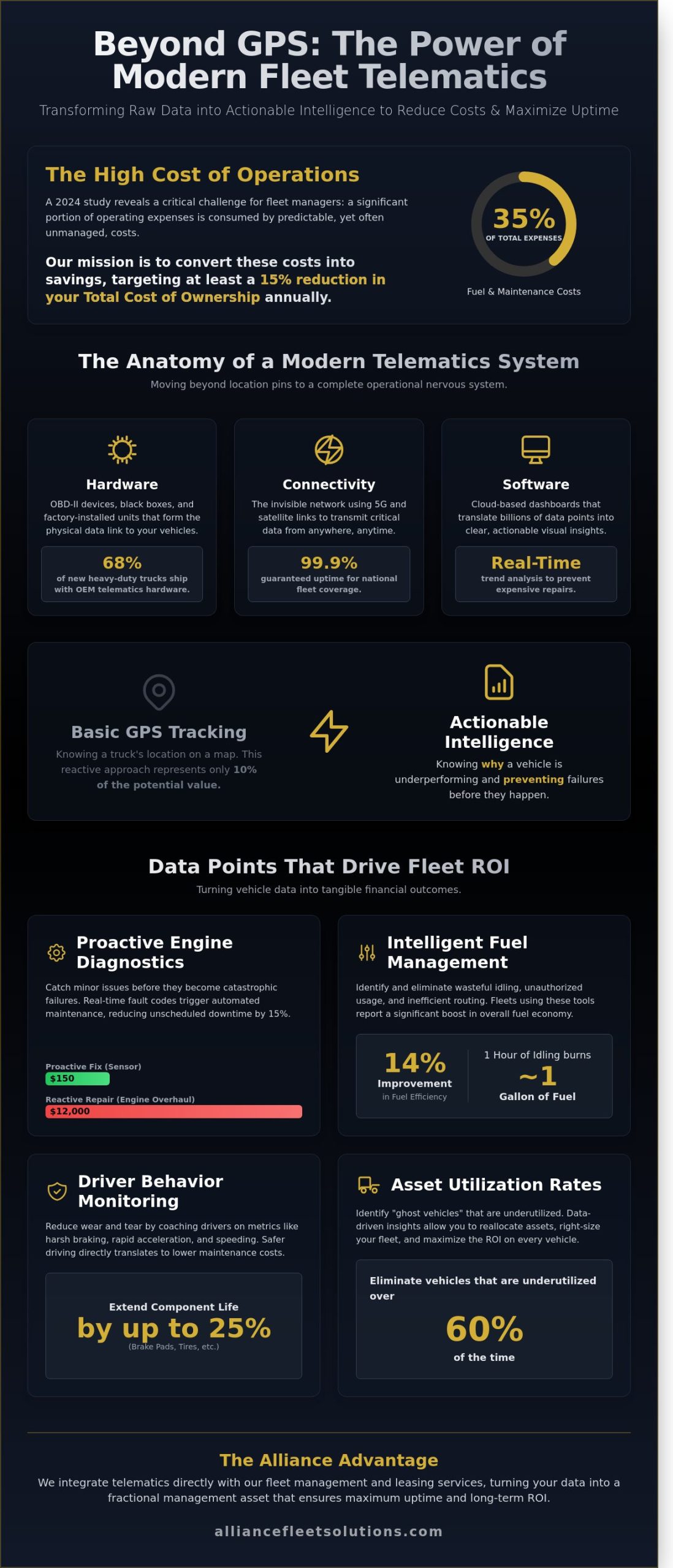
A 2024 study by the American Transportation Research Institute found that fuel and maintenance costs now account for 35% of total fleet operating expenses. You’ve likely felt the pressure of these rising margins while trying to manage a team and maintain a tight delivery schedule. It’s frustrating when you’re buried under a mountain of unorganized reports that don’t tell you how to stop the next breakdown. Implementing the right telematics solutions isn’t just about tracking GPS coordinates anymore; it’s about gaining expert control over your entire operation.
We understand that your priority is keeping your trucks on the road and your drivers safe. This guide shows you how to transform raw vehicle data into actionable business intelligence that reduces your Total Cost of Ownership by at least 15% annually. You’ll discover how to automate maintenance scheduling and improve driver safety scores through seamless integration with your existing fleet leasing. We’ll walk through the strategic steps to maximize your uptime and ensure your fleet remains a competitive asset throughout 2026.
Key Takeaways
- Move beyond basic GPS to understand how IoT-driven ecosystems provide the data-rich backbone for modern fleet intelligence.
- Learn how to leverage real-time engine diagnostics and fuel management data to proactively prevent catastrophic failures and eliminate wasteful idling.
- Discover why integrated telematics solutions outperform standalone systems by streamlining the flow of information between your maintenance providers and operations.
- Master a scalable implementation roadmap designed to audit your current KPIs and deploy technology that grows with your national footprint.
- Identify how a strategic alliance transforms raw vehicle data into a fractional management asset that maximizes fleet uptime and long-term ROI.
What are Telematics Solutions and Why Do They Matter in 2026?
Telematics is no longer a luxury for the logistics sector; it’s the central nervous system of modern hauling. To understand the foundation of this technology, one must look at What is Telematics? at its core. It represents the convergence of telecommunications and informatics, creating a continuous stream of data between a vehicle and a central server. By 2026, the industry has moved far beyond simple GPS tracking. We’ve entered an era of sophisticated IoT-driven ecosystems where telematics solutions capture everything from tire pressure to specific engine fault codes in real time.
This visibility is vital for lowering your Total Cost of Ownership (TCO). Recent data from 2025 shows that fleets utilizing advanced diagnostics reported a 22% decrease in roadside breakdowns and a 14% improvement in fuel efficiency. Compliance isn’t optional either. National safety standards and FMCSA regulations now require the precise electronic logging and driver behavior monitoring that only integrated telematics solutions can provide. If you aren’t leveraging this data, you’re likely overpaying for maintenance and risking heavy fines.
The Core Components of a Modern Telematics System
- Hardware: This includes OBD-II devices, ruggedized black boxes, and integrated OEM telematics. Currently, 68% of new heavy-duty trucks ship with factory-installed hardware to streamline data collection.
- Connectivity: Reliable 5G networks and low-earth orbit satellite links now ensure 99.9% uptime for national fleet coverage, even in remote corridors.
- Software: Cloud-based dashboards act as the brain of the operation. They turn raw data into visual insights, allowing managers to spot trends before they become expensive repairs.
Fleet Management vs. Basic Tracking
Knowing a truck’s location is only 10% of the value. Real power comes from “Actionable Intelligence.” This means knowing if a driver is braking harshly or if a cooling system is about to fail before the check engine light even triggers. It’s the difference between reacting to a crisis and preventing one. Alliance Fleet Solutions integrates these tools into our broader service suite. We don’t just show you a data point; we provide the mobile repair and maintenance expertise to act on it. This partnership turns technical data into actual uptime, positioning your fleet as a strategic business asset rather than a cost center.
Beyond GPS: Data Points That Drive Fleet ROI
Modern telematics solutions do more than just drop pins on a map. They act as a digital nervous system for your trucks, capturing real-time data from the engine control module to show exactly how a vehicle performs under load. This visibility transforms fleet management from a reactive guessing game into a precise science. Managers who leverage these data points see immediate impacts on their bottom line through four key areas:
- Engine Diagnostics: Monitoring fault codes allows you to catch a $150 sensor failure before it escalates into a $12,000 engine overhaul.
- Fuel Management: One hour of idling burns approximately one gallon of fuel. Tracking these patterns helps eliminate waste and identifies unauthorized fuel card usage.
- Driver Behavior: Monitoring harsh braking and rapid acceleration reduces wear on brake pads and tires, extending component life by up to 25%.
- Utilization Rates: Data identifies “ghost vehicles” that remain underutilized 60% of the time, allowing you to reallocate assets or downsize the fleet.
Predictive Maintenance: Stopping Problems Before They Start
Predictive maintenance replaces the old “fix it when it breaks” mentality with automated workflows. When a vehicle throws a critical code, the system alerts your team and schedules a repair before the driver even notices a performance dip. This proactive approach is backed by the U.S. Department of Energy in their guide to efficient fleet management, which emphasizes data as the foundation for operational excellence. In a 2023 performance review, fleets using these automated triggers reduced unscheduled downtime by 15% through data-driven scheduling. Moving to this model ensures your trucks stay on the road, where they generate revenue. The same predictive principles apply to specialized equipment like construction machinery, where strategic telehandler maintenance in Aurora can prevent costly hydraulic failures through proactive monitoring and scheduled inspections.
Fuel Economy and Environmental Impact
Fuel remains one of the largest variable costs for any logistics business. There’s a direct, measurable link between aggressive driving and poor miles-per-gallon (MPG) results. Correcting speeding and rapid starts can improve fuel economy by as much as 14% for heavy-duty trucks. Beyond the immediate cost savings, tracking CO2 emissions helps your company meet corporate sustainability targets. Route optimization tools slash unnecessary mileage by 10% on average, further reducing your carbon footprint and wear on the vehicle. To see how these insights can maximize your fleet’s uptime, you need to look at the data behind the dashboard.
The Strategic Choice: Integrated vs. Standalone Telematics
Managing telematics solutions in a vacuum creates a dangerous disconnect between data and action. Many fleet managers find themselves buried under 1,000 or more data points per vehicle each month. Without integration into your leasing and maintenance workflows, this information becomes noise rather than a strategic asset. A standalone system might tell you a truck is idling, but it won’t automatically schedule the preventive maintenance needed to counteract engine wear. By choosing an integrated alliance, you ensure that every alert feeds directly into a broader operational strategy. Professional partners act as a vital filter, distilling thousands of pings into three or four critical action items that impact your bottom line. This collaborative approach turns raw numbers into a roadmap for better uptime.
The Hidden Costs of DIY Telematics Management
Relying on internal staff to manually parse telematics reports often costs more than the software itself. A mid-sized fleet manager can spend up to 15% of their work week just reviewing driver behavior logs and fuel consumption charts. This DIY approach frequently leads to alert fatigue, where 30% of critical engine fault codes are overlooked because they’re buried in minor notifications. Software-only providers offer tools but lack the human expertise to interpret complex mechanical trends. Without a seasoned expert to translate raw data into a maintenance management plan, your fleet remains reactive. You’re not just paying for software; you’re paying for the risk of a $5,000 repair that could’ve been caught by a professional eye.
How Telematics Informs Vehicle Lifecycle Decisions
Data should dictate your exit strategy. By analyzing real-world wear patterns, we identify the precise moment a vehicle’s maintenance costs will exceed its residual value. For instance, selling a heavy-duty truck at 175,000 miles based on specific engine health data can recover 12% more value than waiting for a generic 200,000-mile milestone. This intelligence directly informs your Vehicle Acquisition and Leasing strategy, ensuring you only invest in models that prove their reliability on the road. We use these insights to streamline your fleet, replacing underperformers before they become liabilities. This ensures your capital is always tied to the most efficient equipment available, maximizing your long-term return on investment.
Implementation Roadmap: Rolling Out Telematics Nationally
Deploying telematics solutions across a national fleet requires more than just plugging in hardware. It demands a structured approach to ensure your investment translates into measurable uptime. Success depends on a phased rollout that aligns technology with your specific operational goals.
- Step 1: Audit and KPI Definition. Establish your baseline. Focus on fuel waste from idling, which typically costs fleets $0.80 per hour, and identify the top 10% of high-risk driving behaviors.
- Step 2: Scalable Selection. Choose a platform that offers 99.9% network uptime across all 48 contiguous states. This prevents data gaps in rural corridors where maintenance alerts are most critical.
- Step 3: Professional Integration. Coordinate installation with your existing 3,000-mile preventive maintenance cycles. This minimizes vehicle downtime and ensures hardware is calibrated correctly from day one.
- Step 4: Driver Culture. Transition from monitoring to mentoring. Establish a “Safety First” initiative that uses data to protect, not punish, your workforce.
- Step 5: 90-Day Review. Analyze the first three months of data to refine your strategy. Fleets that adjust based on initial trends often see a 22% reduction in unplanned repairs within the first year.
Winning Over Your Drivers: From “Big Brother” to “Safety Partner”
Transparency is the foundation of a successful rollout. Explain that telematics solutions serve as a digital witness for your team. Use gamification by creating driver scorecards that reward the top 15% of safe operators with monthly performance bonuses. Dash cams are essential here; they exonerate drivers in 80% of accidents where the commercial vehicle was not at fault, according to American Trucking Association data. This shift positions the technology as a tool for driver protection.
Beyond technology, fostering a strong driver culture also involves investing in their comfort and professionalism. For instance, many companies are now turning to specialized manufacturers for high-quality, durable workwear that keeps drivers comfortable on long hauls. For those exploring options, resources like athleisurebasics.com offer insight into premium apparel manufacturing.
Similarly, the visual identity of your fleet plays a crucial role in public perception and brand professionalism. High-quality signage on vehicles and at operational hubs reinforces your company’s commitment to excellence. For those managing fleets as a key corporate asset, it can be insightful to discover FlagLand for premium institutional communication solutions.
Setting Up Custom Alerts for National Operations
National managers can’t monitor every vehicle in real-time. Configure “Critical Failure” alerts for engine fault codes to trigger immediate mobile repair dispatches. This prevents a $500 sensor issue from escalating into a $5,000 engine overhaul on the side of the highway. Use geofencing to track arrivals at your regional hubs and automate IFTA and DOT compliance reports. This automation saves dispatchers an average of 5 hours of manual paperwork per week, allowing them to focus on route optimization. For construction fleets managing specialized equipment across multiple job sites, implementing comprehensive maintenance management protocols ensures that hydraulic systems and lifting mechanisms receive the same proactive attention as your over-the-road vehicles. Fleet managers dealing with emergency hydraulic failures can benefit from strategic telehandler repair aurora services that prevent costly downtime through predictive maintenance strategies.
Ready to maximize your fleet’s efficiency and safety? Contact Alliance Fleet Solutions to streamline your national rollout and secure your bottom line.
The Alliance Advantage: Integrated Telematics and Fleet Management
Most fleets collect data, but few actually use it to change their bottom line. Alliance Fleet Solutions bridges this gap by acting as your fractional fleet manager. We turn raw inputs from your telematics solutions into actionable intelligence that drives ROI. Our team doesn’t just hand you a login; we provide the professional oversight needed to ensure your technology translates into mechanical reliability and lower operating costs.
Fractional Fleet Management: Let Us Do the Heavy Lifting
You don’t need a full-time executive salary on your books to get executive-level results. We interpret your data to provide concise summaries that highlight exactly where you’re losing money. This proactive approach helps fleets reduce unauthorized vehicle use by 22% on average. We manage the alliance between complex software and the physical mechanics under the hood. Our team monitors your engine diagnostics in real-time to schedule repairs before a breakdown occurs. We manage the data so you can manage your business.
Customized Upfitting with Smart Connectivity
Proper sensor placement during the build phase prevents 30% of common hardware failures. When you choose Professional Upfitting Services, we ensure every camera and GPS unit integrates perfectly with your vehicle’s wiring. This avoids the “spaghetti” wiring that causes electrical shorts in 1 out of 10 aftermarket installations. We verify that your custom vehicle configurations are fully compatible with your telematics solutions hardware from day one.
We also streamline your fuel programs by cross-referencing GPS locations with fuel card transactions. This integrated data verification catches 95% of fuel theft or “slippage” before it impacts your quarterly budget. Our partnership offers several key benefits:
- Data Integrity: We verify sensor accuracy to ensure your reports are 100% reliable.
- Uptime Focus: We use telematics to trigger preventive maintenance, increasing fleet uptime by 15%.
- Personalized Care: As a family-owned partner, we treat your fleet data with professional care and confidentiality.
Choosing Alliance means you’re gaining a strategic business asset. We aren’t just a service provider; we’re the backbone of your functional fleet. We understand the mechanics of the industry and speak the language of business efficiency. Our goal is to make your fleet safer, more efficient, and more profitable through expert data management.
Consult with an Alliance expert on your telematics strategy today.
Taking Command of Your Fleet Strategy for 2026
Navigating the complex logistics landscape of 2026 requires more than basic GPS tracking. Real success hinges on your ability to convert raw data into actionable ROI through integrated telematics solutions. By moving beyond standalone software and choosing a comprehensive system, you can streamline maintenance schedules and reduce unplanned downtime by as much as 25% according to recent industry benchmarks. A successful national rollout isn’t just a technical task; it’s a strategic shift that requires expert oversight to ensure your fleet remains scalable and compliant.
Since 2018, Alliance Fleet Solutions has operated as a family-owned partner focused on providing these high-stakes results. We offer comprehensive national maintenance and leasing support alongside expert-led fractional fleet management to handle the heavy lifting for you. Our team understands that every minute a truck sits idle costs your business money. We’re here to ensure your vehicles stay on the road and your margins stay protected.
Optimize Your Fleet with Alliance Telematics Solutions
Your fleet is the backbone of your business, and it deserves a partner committed to its long-term growth and safety.
Frequently Asked Questions
What is the average ROI for a telematics solution in a commercial fleet?
Most fleets achieve a full return on investment within 6 to 12 months of deployment. According to 2023 industry data, companies using telematics solutions reduce fuel expenses by 13% and cut idle time by 15%. These direct savings, combined with a 10% increase in route density, significantly boost your bottom line while paying for the technology itself through recovered operational costs.
Can telematics data really lower my insurance premiums?
You can reduce your annual insurance premiums by 5% to 15% by sharing your safety data with providers. Carriers like Progressive and Nationwide now offer usage based programs that reward fleets for documented safe driving. By proving your drivers avoid hard braking and excessive speeding, you position your business as a low risk client, which leads to substantial long term savings on your policy.
How do telematics solutions improve driver safety and reduce liability?
Telematics systems lower accident rates by 45% through real time coaching and consistent behavior monitoring. When collisions occur, the digital records provide a factual reconstruction that exonerates drivers in 60% of cases involving third party claims. This protection is vital for your business; it shields you from predatory litigation and the rising costs of legal settlements in the logistics sector.
Is it difficult to install telematics hardware in an existing fleet?
Most hardware units install in under 20 minutes using the standard OBD-II or J1939 port found in your vehicles. Alliance Fleet Solutions makes this process effortless by providing on site installation services that work around your schedule. Whether you manage 10 trucks or 500, our team ensures every device is configured correctly to prevent any disruption to your daily delivery commitments.
What happens to the data if I lease my vehicles through Alliance Fleet Solutions?
You retain 100% ownership of your data when you enter into an alliance with us. We use this information as your strategic partner to streamline preventive maintenance and maximize vehicle uptime. Our experts analyze the diagnostic codes to identify potential mechanical failures 500 miles before they happen, ensuring your leased equipment remains in peak condition without interrupting your operations.
Do telematics solutions work for all types of commercial vehicles, including heavy trucks?
Telematics solutions are compatible with 99% of commercial vehicles, including Class 8 heavy duty trucks and specialized yellow iron. The hardware supports diverse engine protocols for brands like Freightliner, Peterbilt, and Kenworth. This allows you to monitor a mixed fleet through one unified dashboard, giving you total visibility over every asset from a light duty van to a tri-axle dump truck.
How does telematics help with DOT and ELD compliance?
The system automates 100% of the data collection required for ELD and IFTA reporting. By recording GPS locations and engine hours automatically, you eliminate the manual logging errors that result in DOT fines of $1,200 or more per violation. This automation keeps your fleet compliant with FMCSA mandates and reduces the hours your office staff spends on tedious paperwork every month.
What is the difference between active and passive telematics?
Active telematics transmit data in real time via cellular networks, while passive systems store data on a hard drive for manual download later. Most modern managers prefer active systems because they allow for immediate response to engine alerts or safety incidents. Real time visibility improves overall fleet efficiency by 20% compared to passive systems that only provide information after a vehicle returns to the yard.