
With commercial auto insurance premiums climbing by as much as 30% in 2026, simply maintaining a safe fleet isn’t enough to protect your bottom line. You’ve likely felt the frustration of rising costs while struggling to find a clear path for using telematics data to lower insurance premiums. It’s a common challenge for managers who see the hard work their teams put in but lack the objective evidence needed to convince skeptical underwriters. We know that in the high-stakes logistics sector, every percentage point matters for your operational efficiency and long-term stability.
The good news is that your fleet’s digital footprint is more than just a monitoring tool; it’s a powerful negotiation lever. In this article, you’ll learn the strategic framework for transforming raw metrics into a compelling safety narrative that insurers can’t ignore. We’ll walk through how to leverage real-time insights to build a “credit score” for your fleet that commands respect during renewals. From identifying high-impact safety KPIs to presenting data that reduces risk profiles, this guide provides the roadmap to a safer culture and a lower total cost of ownership.
Key Takeaways
- Move beyond generic industry averages by leveraging real-time usage-based insurance models that reflect your fleet’s actual risk.
- Identify the specific aggressive driving indicators and contextual metrics underwriters prioritize when you’re using telematics data to lower insurance premiums.
- Shift from surveillance to a driver-first culture using transparency and gamification to turn monitoring into a tool for engagement.
- Establish a 90-day negotiation framework to audit your risk scorecard and remediate outliers before your next insurance renewal.
- Explore how Fractional Fleet Management helps you analyze complex risk data to transform your telematics into a strategic business asset.
The Shift from Actuarial Averages to Real-Time Fleet Data
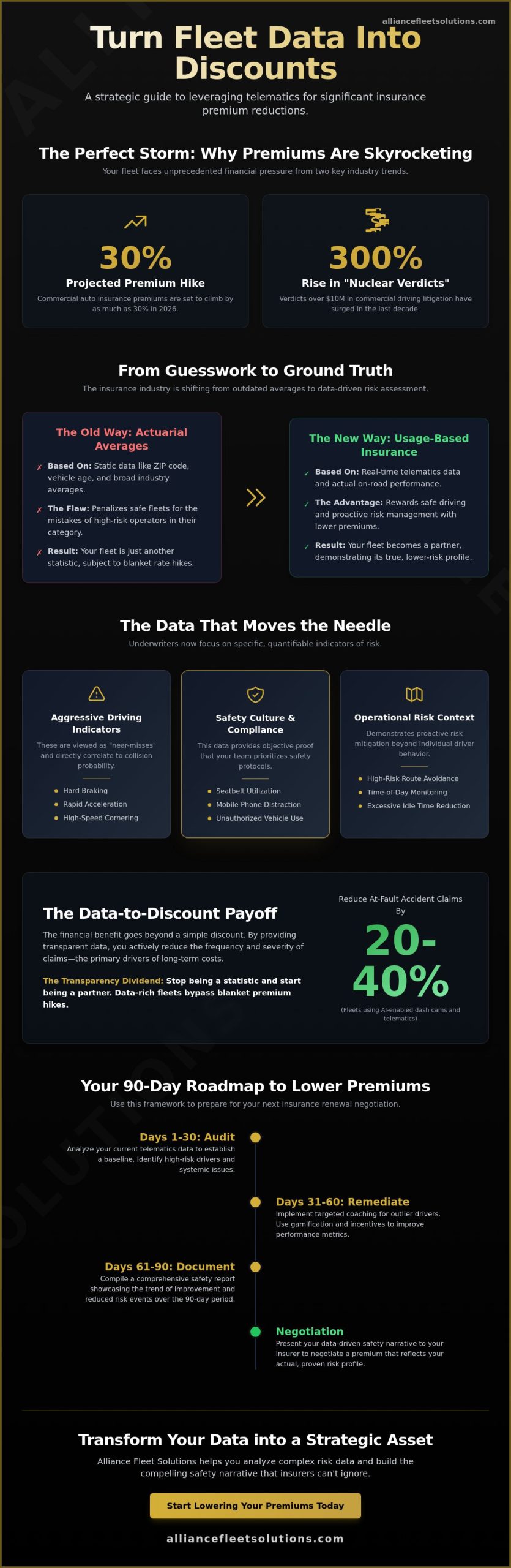
Traditional underwriting is reaching its expiration date. For decades, insurers calculated your risk based on static actuarial models: your ZIP code, the age of your vehicles, and general industry averages. These models are inherently flawed because they penalize safe fleets for the mistakes of their neighbors. In 2026, the industry has moved toward Usage-based insurance (UBI) as the new standard for commercial coverage. This model replaces guesswork with ground truth, allowing managers to prove their safety through real-time performance metrics rather than historical assumptions.
This transition creates what we call the “Transparency Dividend.” When you provide underwriters with a clear view of your operations, you stop being a statistic and start being a partner. Data-rich fleets are increasingly able to bypass the blanket premium hikes that hit the rest of the market. By using telematics data to lower insurance premiums, you move your business from a reactive stance to a proactive one. Instead of waiting for an accident to happen and watching your rates climb, you use data to prevent the incident entirely.
Why Commercial Premiums are Rising in 2026
The logistics and heavy-duty industrial sectors face a perfect storm of economic pressure. Commercial auto insurance premiums have surged by as much as 30% across the U.S. in 2026. This isn’t just inflation; it’s a response to the “nuclear verdict” crisis. Over the last decade, verdicts of $10 million or more in commercial driving litigation have increased by 300%, with the median reaching a staggering $23.8 million. Insurers are scared. They’re raising rates across the board to cover these massive liabilities. Telematics acts as your shield, providing the objective evidence needed to distance your fleet from these high-risk industry trends.
The ROI of Data-Driven Underwriting
The financial benefit of using telematics data to lower insurance premiums goes far beyond a simple line-item discount. It directly impacts the frequency and severity of claims, which are the primary drivers of long-term costs. Research shows that fleets utilizing AI-enabled dash cams can reduce at-fault accident claims by 20% to 40%. For a modern fleet manager, the “Data-to-Discount” ratio is simple: the more granular and transparent your safety data, the lower your risk profile becomes in the eyes of the underwriter.
Insurers now actively favor fleets that have integrated telematics and GPS solutions into their daily operations. They recognize that a fleet with 24/7 visibility is a fleet that is actively managed. When you can demonstrate a consistent reduction in harsh braking, speeding, and unauthorized vehicle use, you provide the tangible proof insurers need to justify preferred rates. It’s a shift from paying for the “average” risk to paying for your actual, documented performance.
Key Telematics Metrics That Influence Insurance Underwriters
Underwriters in 2026 are looking for specific data points that correlate directly with claim frequency. They’ve moved past simple mileage tracking. Today, using telematics data to lower insurance premiums requires a deep dive into aggressive driving indicators. Hard braking, rapid acceleration, and high-speed cornering are the primary red flags in an underwriter’s risk model. These events are viewed as near-misses. A driver who frequently brakes hard is likely tailgating, which statistically increases the probability of a rear-end collision. By documenting the reduction of these events, you present a mathematical case for lower risk.
Beyond the physical movement of the truck, compliance metrics are now essential. Seatbelt utilization and mobile phone distraction alerts, often captured via AI-enabled dash cams, provide proof of a safety-first culture. When you can show an insurer that your drivers are compliant with basic safety protocols, you remove the human error variable that often leads to nuclear verdicts. This level of transparency is your strongest defense against industry-wide rate hikes.
Behavioral vs. Operational Risk Metrics
It’s vital to distinguish between how a driver operates and the environment they’re in. While behavioral metrics focus on the driver’s skill, operational metrics look at the context of the trip. High-risk route avoidance and time-of-day monitoring are key. For instance, excessive idle time can be an indirect indicator of driver fatigue or poor scheduling. By optimizing routes to avoid high-accident corridors, you’re actively reducing the fleet’s exposure to risk. This proactive approach shows insurers that you manage the mission, not just the vehicle.
Maintenance Management as a Risk Signal
A vehicle’s mechanical health is just as important as the person behind the wheel. Proving a consistent “Culture of Maintenance” through digital logs shows underwriters that you aren’t cutting corners. Effective maintenance management ensures that every vehicle in your fleet is roadworthy, reducing the chance of a mechanical failure leading to a lawsuit. A single brake failure can lead to a multi-million dollar settlement; digital proof of inspection negates that narrative before it starts.
Underwriters see a well-maintained fleet as a lower-liability fleet. If you can prove that your brakes, tires, and safety sensors are serviced on schedule, you eliminate a major point of contention in post-accident litigation. Integrating these logs with your telematics and GPS solutions creates a comprehensive safety profile. This level of detail is exactly what’s needed when using telematics data to lower insurance premiums in a competitive market.
Addressing the ‘Big Brother’ Barrier: Transparency vs. Surveillance
Many drivers initially view telematics as a digital leash. This “Big Brother” stigma is the most significant hurdle to building a data-driven safety culture. You must frame these systems as a tool for driver advocacy rather than a mechanism for punishment. When your team understands that using telematics data to lower insurance premiums is what keeps the company competitive and their jobs secure, the narrative shifts from surveillance to partnership. Transparency is the antidote to suspicion; be clear about what data is collected and how it’s used to reward excellence.
In 2026, a “Driver-First” culture relies on gamification and tangible rewards. Instead of only highlighting failures, use your telematics platform to identify your top performers. Publicly recognizing drivers with the highest safety scores creates a healthy competitive environment. By linking safety milestones to bonuses or preferred routes, you turn the data into a benefit for the driver. This approach doesn’t just improve morale; it creates the high-quality data set that insurance underwriters demand during renewal negotiations.
Privacy concerns are also at an all-time high. While legislative efforts like the Consumer Driving Data Protection Act highlight the public’s focus on data rights, your internal policies must be the primary safeguard. Ensure your data management practices comply with current standards, focusing only on professional performance metrics. This balance protects the driver’s privacy while providing the fleet manager with the insights needed to maintain a low-risk profile.
From Monitoring to Coaching
The real power of telematics lies in real-time coaching. Modern systems provide in-cab alerts that allow drivers to correct risky behaviors, like speeding or tailgating, before an incident occurs. This immediate feedback loop is far more effective than a retrospective meeting days later. One fleet recently reported a 40% reduction in hard braking events within just six months by implementing a weekly coaching cycle based on these reports. This consistent improvement directly impacts your loss runs, making your fleet much more attractive to insurers.
Exoneration: The Hidden Value of Telematics
Telematics data is often the only thing standing between your company and a fraudulent “he-said, she-said” liability claim. Video telematics and GPS breadcrumbs provide an objective record of events that can exonerate a driver on the spot. In the courtroom, telematics data carries more legal weight than eyewitness testimony in 2026 because it provides an immutable record of velocity, position, and driver input at the millisecond of impact. Avoiding even a single “not-at-fault” claim can save your business hundreds of thousands of dollars in legal fees and deductible costs, proving that using telematics data to lower insurance premiums is as much about defense as it is about discounts.
Negotiation Framework: Turning Data into Premium Reductions
Securing a better rate isn’t a matter of luck; it’s a matter of preparation. To succeed in using telematics data to lower insurance premiums, you must treat your fleet data like a corporate credit score. This process begins exactly 90 days before your policy renewal. This three-month window provides enough time to audit your current “Risk Scorecard” and identify the specific outliers that might trigger a rate hike. If your data shows a spike in speeding or harsh braking, you have roughly 60 days to remediate those behaviors through targeted coaching before the underwriter requests your final report.
Once you’ve cleaned up the data, the next step is to formalize a safety policy that mandates telematics usage for every asset in your fleet. Underwriters are far more likely to offer preferred pricing to businesses that demonstrate a top-down commitment to technology. By documenting that your drivers are monitored and coached daily, you reduce the perceived risk of a catastrophic claim. Finally, leverage this data to solicit competitive quotes from carriers that specialize in usage-based insurance (UBI). These providers are often willing to offer 15% to 25% reductions for fleets that can prove their safety through hard evidence.
Building the Fleet Safety Pro-forma
Your broker needs more than just a spreadsheet; they need a narrative. Compile a “Fleet Safety Pro-forma” that includes your loss runs, safety scores, and maintenance logs. Don’t worry if your baseline scores were low six months ago. Insurers value “improvement trends” almost as much as high static scores. Showing a 30% reduction in aggressive driving events over a quarter proves that your management team is active and effective. Highlighting your commitment to efficient fleet operations in this proposal shows that safety and profitability are linked in your business model.
Choosing the Right Insurance Partner
Not every carrier is equipped to handle real-time data. You must distinguish between “telematics-agnostic” insurers, who use traditional tables, and “telematics-driven” insurers, who build custom risk profiles. Ask your broker specifically which carriers offer UBI credits for commercial fleets and what their data sharing requirements are. This is where Fractional Fleet Management becomes a strategic advantage. Having an expert who understands both the technical side of telematics and the financial side of insurance allows you to speak the underwriter’s language fluently.
If you’re ready to stop accepting market-average rates and want to start using telematics data to lower insurance premiums, our team at Alliance Fleet Solutions can help you audit your data and build a winning negotiation strategy.
Leveraging Alliance Fleet Solutions for Data-Driven ROI
Alliance Fleet Solutions understands that technology is only as effective as the strategy behind it. We integrate telematics and gps solutions into every open-end and closed-end lease we manage. This isn’t just about tracking location. It’s about providing the technical backbone for using telematics data to lower insurance premiums. By building these tools into the vehicle’s lifecycle from the day of acquisition, we ensure you have a continuous stream of safety data to present to underwriters.
One of our most significant advantages is our Fractional Fleet Management model. Most businesses don’t have the internal resources to pore over thousands of data points every week. Our experts act as an extension of your team, analyzing complex risk data to identify trends before they become liabilities. We translate raw metrics into the “Risk Scorecard” discussed earlier, ensuring your negotiation leverage is maximized. We don’t just provide the hardware; we partner with you to interpret the results and implement coaching strategies that stick.
Comprehensive Fleet Management as a Risk Hedge
We believe in a holistic approach to safety. By merging vehicle acquisition, maintenance management, and telematics into a unified strategy, we create a robust risk hedge for your business. This includes our professional upfitting services. A vehicle that’s properly configured with the latest safety sensors and ergonomic layouts is statistically less likely to be involved in an equipment-related claim. Our fleet management services are designed to provide long-term premium stability by eliminating the variables that cause rates to spike.
Underwriters appreciate the “Alliance Standard” because it represents a controlled environment. When every asset is professionally upfitted, regularly maintained, and constantly monitored, the likelihood of a “nuclear verdict” drops significantly. This comprehensive oversight is the most effective way of using telematics data to lower insurance premiums while simultaneously reducing your total cost of ownership. We don’t just fix trucks; we optimize your entire financial exposure.
Next Steps: Your Data-Driven Fleet Audit
The path to lower premiums starts with an objective look at your current operations. We offer a comprehensive telematics assessment to help you understand where your fleet stands today. We’ll look at your existing data, identify gaps in your safety policy, and outline a roadmap for a more profitable 2026. Don’t let skyrocketing insurance costs dictate your operational budget. Secure your fleet’s financial future by partnering with a team that speaks the language of both heavy-duty logistics and financial performance. Contact Alliance Fleet Solutions today to begin your audit and take control of your insurance renewals.
Secure Your Competitive Edge in a High-Risk Market
Industry leaders in 2026 don’t wait for renewal notices to react to rising costs. They proactively manage their risk profiles by turning technical insights into financial leverage. We’ve seen how a commitment to transparency and a rigorous negotiation framework can transform your insurance relationship from a cost center into a strategic asset. Using telematics data to lower insurance premiums empowers you to dictate your own terms based on documented safety performance rather than regional averages. It’s about proving your value through ground truth.
Alliance Fleet Solutions acts as your essential backbone in this transition. We offer expert Fractional Fleet Management and customized professional upfitting to ensure your fleet meets the highest safety standards. Our national B2B service coverage provides the reliability you need to focus on growth while we handle the complexities of risk data. We’re committed to your long-term success and operational stability. Partner with Alliance Fleet Solutions to optimize your telematics ROI and build a resilient, data-driven fleet today.
Frequently Asked Questions
Can telematics data actually raise my insurance premiums?
While it’s technically possible for poor data to influence rates negatively, most insurers use these programs to reward safe performance. The primary goal of using telematics data to lower insurance premiums is to prove you are a lower risk than the industry average. If your data reveals chronic safety violations, it provides an opportunity for immediate coaching to fix behaviors before your next renewal cycle begins.
What is the best telematics metric to focus on for insurance savings?
Underwriters prioritize “predictive” events, specifically hard braking and speeding. These metrics are the most reliable indicators of future crash probability in a commercial context. Focusing on reducing these specific incidents provides the clearest evidence of improved driver behavior. Managers should also monitor “near-miss” data from AI dash cams to provide a more comprehensive safety narrative during premium negotiations.
How much can a commercial fleet realistically save using telematics?
Fleets that effectively demonstrate safe behavior often see premium reductions between 15% and 25%. In some cases involving high-performing fleets with consistent safety records, savings can reach as high as 40%. These reductions depend on the insurer’s specific Usage-Based Insurance (UBI) model and your ability to maintain a clean, documented safety profile over the duration of the policy term.
Is driver privacy a legal concern when using telematics for insurance?
Compliance with state and federal privacy laws is essential, though many regulations specifically allow data collection for professional safety and insurance purposes. Legislative developments like California’s AB 1833 demonstrate the ongoing focus on data protection in 2026. You should implement clear internal policies that define how data is collected and used to ensure transparency with your team while staying legally compliant.
Do all commercial insurance companies offer telematics discounts?
Not every carrier offers a direct telematics discount, but the number is growing rapidly. Approximately 60% of insurers reported using telematics in multiple areas of their business by the start of 2026. Even if a carrier doesn’t have a formal UBI program, presenting your safety data can still serve as a powerful lever for negotiating better discretionary rates during the renewal process.
What happens to our insurance if we have a high-risk driver on the team?
A high-risk driver can skew your fleet’s overall safety score and lead to higher premiums if the behavior isn’t addressed. Telematics allows you to identify these individuals through objective data rather than waiting for an accident to occur. Once identified, you can use targeted coaching or reassignment to remediate the risk and protect your fleet’s standing with your insurance provider.
How long does it take to see a reduction in premiums after installing telematics?
Most underwriters require at least 90 days of consistent, high-quality data to consider it in their risk assessment. While you might not see an immediate drop mid-policy, the data you collect now becomes the foundation for your next renewal negotiation. Establishing a baseline today ensures you have the necessary proof for using telematics data to lower insurance premiums during your next cycle.
Does telematics help with more than just insurance costs?
Yes, the benefits extend significantly into operational efficiency and the total cost of ownership. Fleets frequently report fuel savings between 5% and 15% through improved routing and reduced idling. Additionally, integrating telematics with maintenance management helps maximize vehicle uptime by identifying mechanical issues before they lead to expensive breakdowns or safety hazards on the road, further protecting your bottom line.